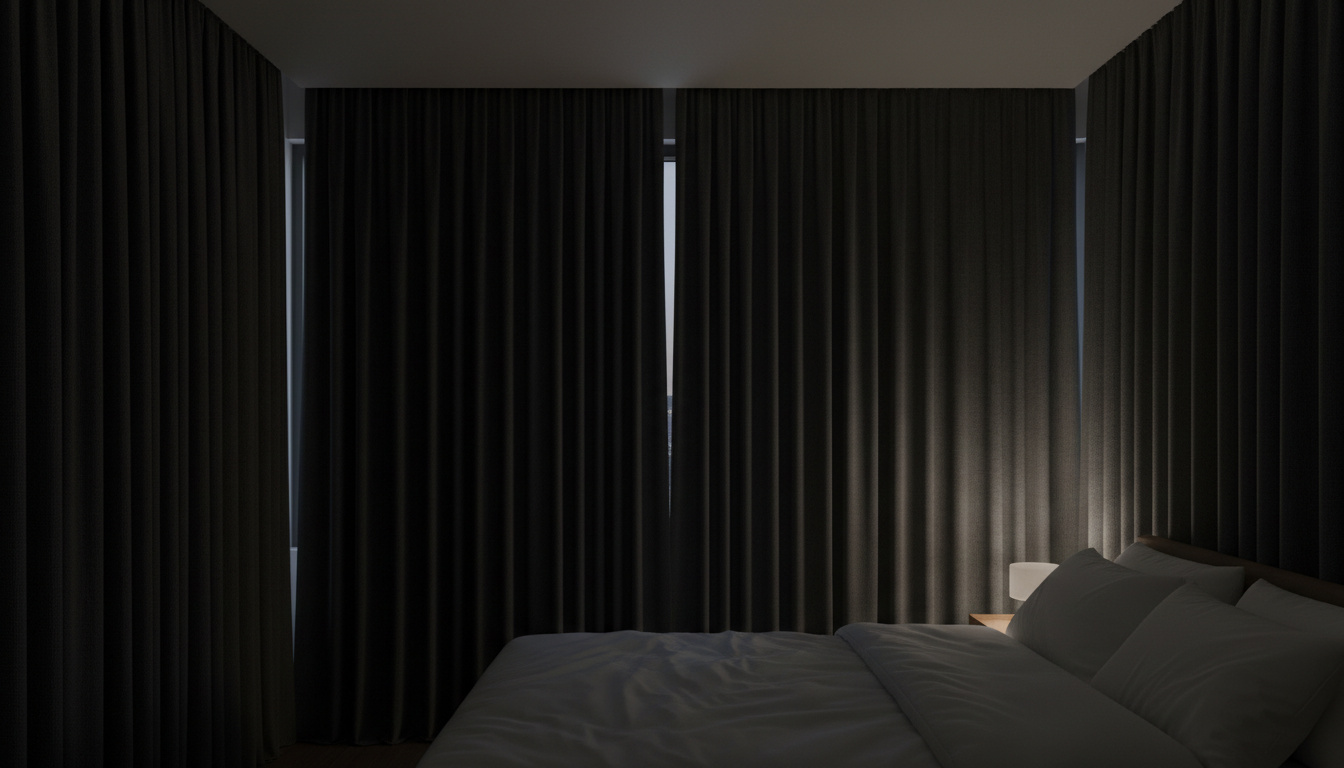

Complete darkness remains elusive for many sleepers despite widespread marketing claims. Laboratory testing reveals that only specific constructions achieve true 100% light blocking, with foam-backed polyester and densely woven velvet outperforming standard lined fabrics. The best blackout curtains for bedroom use in 2024 balance absolute opacity with thermal regulation and acoustic dampening, factors that independent evaluations show vary dramatically even among top-rated brands.
Price points range from approximately $24 per panel for budget-friendly options to premium investments exceeding $100, yet cost does not always correlate with performance. Consumer Reports testing found that several affordable models matched or exceeded the opacity of luxury alternatives, while certain expensive linen options failed to achieve complete darkness. Material composition, hanging hardware compatibility, and maintenance requirements ultimately determine long-term satisfaction more than brand recognition.
This guide synthesizes findings from three major testing protocols—Consumer Reports laboratory analysis, Good Housekeeping Institute evaluations, and Apartment Therapy real-world assessments—to identify which products deliver measurable sleep benefits. We examine selection criteria, installation requirements, and the factual limits of blackout technology to help you navigate specifications without marketing interference.
Which Blackout Curtains Deliver Verified Performance?
Top Overall Pick
Sun Zero Nordic
100% light blocking, 45% noise reduction, 50% energy savings. Foam-backed polyester with grommet installation. Approximately $24 per panel on Amazon.
Best Budget Option
Amazon Basics
Matches premium opacity in lab tests with white blackout lining. Matte polyester finish. Less durable in wash tests but highly affordable.
Premium Upgrade
West Elm Velvet
Thick recycled polyester with blackout lining. Rod pocket style. Noticeable noise and temperature improvement. Requires ironing after washing.
Heavy Duty Thermal
Eclipse
Foam-backed structure provides 100% opacity even in white patterns. Cools rooms without air conditioning. Available at Home Depot. Narrower panels than competitors.
Critical Performance Insights
- True 100% light blocking requires foam backing or specific woven constructions; many marketed “blackout” curtains leak significant light, particularly in lighter colors.
- Independent testing confirms that darker shades consistently outperform identical constructions in lighter colorways.
- Grommet hanging systems facilitate easier installation on standard rods but may not accommodate all decorative hardware.
- Thermal insulation claims of 50% energy savings are laboratory-verified only for specific foam-backed models like Sun Zero Nordic.
- Noise reduction capabilities vary from minimal (thin woven fabrics) to substantial 45% reduction (foam-backed and velvet options).
- Machine washability is standard across polyester options, though budget models like Amazon Basics show faster deterioration of blackout properties after repeated washing.
- Size availability ranges from 29-inch widths for small windows to 120-inch lengths for floor-to-ceiling installations.
| Feature | Sun Zero Nordic | West Elm Velvet | Amazon Basics | Eclipse |
|---|---|---|---|---|
| Light Blocking | 100% | Near-perfect opacity | 95-100% | 100% |
| Noise Reduction | 45% | Noticeable improvement | Limited | Moderate |
| Thermal Insulation | 50% energy savings | Draft control | Cooling effect | High efficiency |
| Material | Polyester, foam-backed | Recycled polyester velvet | Polyester with lining | Foam-backed synthetic |
| Hanging Style | Grommets | Rod pocket | Grommets | Grommets or rod pocket |
| Size Range | 6 sizes (52×54 to 52×120) | 3 sizes (40×63 to 40×95) | Standard lengths | Narrower panels |
| Care | Machine wash cold, tumble low | Machine wash, requires ironing | Machine wash (durability varies) | Machine washable |
| Price Point | Budget (~$24/panel) | Premium | Budget | Affordable |
How Do You Select the Right Specifications?
Choosing appropriate blackout curtains requires moving beyond marketing terminology to verify specific construction details. Consumer Reports laboratory testing of 18 curtains from nine major brands revealed that only two manufacturers achieved complete light blocking across both light and dark color options when subjected to 5,000-lumen flashlight evaluation. This disparity underscores the necessity of examining backing materials rather than relying on product categorization.
Evaluating Light Blocking Technology
True blackout performance derives from either foam backing applied to polyester face fabric or densely woven blackout yarns integrated into the material structure. Good Housekeeping Institute evaluations found that woven yarn constructions, such as those used in Nicetown (now TheHues) panels, achieve near 100% opacity despite thinner profiles, though they sacrifice thermal and acoustic benefits. Conversely, foam-backed options like Sun Zero Nordic provide structural rigidity that improves insulation but adds bulk.
Assessing Thermal and Acoustic Benefits
Energy efficiency claims require scrutiny against standardized testing. Verified 50% energy savings appear limited to foam-backed models specifically engineered with thermal coatings. Noise reduction correlates directly with mass; velvet and heavy foam constructions dampen sound significantly more than lightweight woven alternatives. Apartment Therapy editor testing confirmed that West Elm’s recycled polyester velvet noticeably reduced street noise compared to standard polyester panels.
Heavy fabrics including velvet and linen require sturdy mounting hardware with supportive anchors. Lightweight polyester grommet panels install easily on standard rods, but tension rods should be avoided for any blackout curtain exceeding three pounds per panel to prevent sagging.
Matching Size and Configuration
Standard sizing requires panels measuring 52 to 55 inches in width for adequate coverage of typical bedroom windows. Length options range from 45-inch cafe styles to 120-inch floor-to-ceiling installations. Grommet configurations offer smoother sliding action for daily adjustment, while rod pocket styles provide cleaner aesthetic lines but require more effort to open and close. Installation guidance emphasizes measuring frame width plus overlap rather than glass dimensions alone.
What Do Independent Test Results Reveal?
Objective laboratory analysis contradicts several assumptions prevalent in consumer marketing. Understanding these verified findings prevents costly misalignment between expectations and product capabilities.
Consumer Reports Laboratory Methodology
Rigorous testing protocols employed 5,000-lumen flashlights to evaluate opacity across color variations. Consumer Reports findings weighted scores heavily on blackout performance in both lightest and darkest available shades, revealing that many popular options—including some from major retailers—fail to achieve true darkness in lighter colors. Only two tested brands blocked light completely across their full color range.
Good Housekeeping Performance Evaluations
Extended at-home testing supplemented laboratory measurements. Nicetown velvet panels achieved near-perfect opacity ratings, while Amazon Basics demonstrated performance matching premium competitors in initial lab tests despite lower price points. However, wash testing revealed durability concerns, with Amazon Basics showing faster degradation of blackout properties compared to mid-range alternatives.
Apartment Therapy Real-World Assessment
Editor evaluations focused on practical bedroom integration, testing for style integration, weight distribution on rods, and subjective sleep quality improvements. Apartment Therapy testing identified Sun Zero Nordic as the top performer specifically because it achieved 100% blackout even in white color options—a rarity among budget-priced panels—while maintaining lightweight handling that does not strain standard curtain rods.
How Do Materials and Maintenance Compare?
Fabric composition determines not only aesthetic qualities but also longevity, care requirements, and functional performance. Each material category presents distinct trade-offs between luxury feel and practical maintenance.
Polyester and Synthetic Constructions
Budget and mid-range options predominantly utilize polyester face fabrics with either foam or woven yarn blackout layers. Good Housekeeping product analysis notes that matte polyester finishes can simulate upscale appearances while offering machine washability. However, foam-backed varieties may develop cracks in the thermal layer after repeated washing, particularly in budget models.
Velvet and Luxury Textiles
West Elm’s recycled polyester velvet represents the premium category, offering superior draping quality and enhanced noise dampening. These materials require cold water washing and invariably need post-wash ironing to restore appearance. The substantial weight demands reinforced hanging hardware but provides the best thermal insulation and acoustic blocking among tested options.
Linen and Natural Fiber Options
Pottery Barn’s linen blackout curtains demonstrate that natural fibers can achieve laboratory opacity superior to competing linen products, though they remain heavier than synthetic alternatives. Testing revealed these require the most robust installation hardware, with supportive anchors mandatory to prevent rod bowing or wall damage.
Amazon Basics and similar budget options exhibit reduced durability in wash tests. Always use cold water and low tumble settings to preserve blackout backing integrity. Avoid bleach and fabric softeners, which degrade foam layers and woven blackout coatings.
Laboratory evaluations consistently show that lighter colored blackout curtains leak more light than darker shades of identical construction. White and cream options should be reserved for rooms where near-darkness suffices, or paired with external blackout liners for complete opacity.
What Is the Process for Bedroom Installation?
- Measurement Phase: Measure window frame width and add 4-6 inches for overlap. Determine length from rod to floor or sill, accounting for grommet positioning. Sizing guidelines recommend 52-55 inch width panels for standard windows.
- Material Selection: Prioritize foam-backed polyester for thermal efficiency and noise reduction, woven polyester for lightweight handling, or velvet for luxury aesthetics and maximum acoustic dampening.
- Hardware Preparation: Install supportive rods or tracks rated for curtain weight. Velvet and linen require heavy-duty anchors; lightweight polyester grommet panels install on standard decorative rods.
- Hanging and Adjustment: Steam or iron wrinkles prior to hanging. Install panels and test for light leakage at midday by examining edges and overlap points. Adjust rod height or add side channels if gaps persist.
- Testing Protocol: Verify complete darkness using a flashlight from outside the window at night, or inspect for light bands during peak daylight hours. Address leaks with magnetic strips or additional panels as needed.
Which Claims Are Proven Versus Misleading?
Established Facts
- 100% light blocking is achievable with foam-backed designs like Sun Zero Nordic and Eclipse, verified by flashlight testing.
- Darker colors consistently outperform lighter shades in opacity measurements across identical constructions.
- Specific models reduce energy costs by up to 50% through thermal insulation, confirmed by temperature differential testing.
- Grommet installation is objectively faster and requires less hardware complexity than rod pocket systems.
Uncertain or Misleading Claims
- Universal “blackout” labeling lacks standardization; many products marketed as blackout fail to achieve total darkness in laboratory conditions.
- Exact correlations between thread count and light blocking remain unverified across different manufacturers.
- Long-term durability of thermal backing after 20+ wash cycles lacks comprehensive longitudinal data for most brands.
- Claims regarding specific sleep quality improvements lack clinical validation beyond general darkness correlation.
Why Has Complete Bedroom Blackout Become Essential?
Urban light pollution has increased ambient bedroom illumination levels significantly over the past decade, disrupting melatonin production and circadian rhythms. Sleep environment research indicates that even small amounts of light leakage during sleep hours can suppress melatonin and reduce sleep quality metrics. This biological reality has driven demand for window treatments that guarantee absolute darkness regardless of external conditions.
Concurrently, energy efficiency concerns have elevated thermal window treatments from luxury to necessity in many climates. Department of Energy guidelines recognize insulated curtains as effective thermal barriers, particularly for east and west-facing bedrooms experiencing significant solar heat gain. The intersection of sleep health and energy conservation has created a market where functional performance outweighs purely decorative considerations.
The integration of blackout technology with smart home systems further contextualizes current trends. As bedrooms increasingly serve as multimedia centers and remote workspaces, the ability to control light completely supports both sleep hygiene and screen viewing optimization. Homeowners managing property investments, such as calculating How Much Stamp Duty Will I Pay – UK Rates and Thresholds 2024-2025, recognize that quality window treatments represent recoverable value additions for rental or resale markets.
What Do Experts and Testing Labs Recommend?
“Testing 18 curtains from nine brands using 5,000-lumen flashlights revealed significant performance disparities. Only two manufacturers achieved complete light blocking across both their lightest and darkest available colors, indicating that backing construction matters more than marketing claims.”
— Consumer Reports Laboratory Analysis, 2024
“Nicetown velvet achieved near-perfect opacity in our evaluations, while Amazon Basics demonstrated that budget pricing need not compromise initial light-blocking performance. However, wash testing revealed durability trade-offs that consumers should consider for long-term use.”
— Good Housekeeping Institute Product Reviews
“Sun Zero Nordic panels delivered 100% blackout even in white color options during our bedroom integration tests, a rare combination of aesthetic flexibility and absolute performance that justifies their top ranking for sleep improvement.”
— Apartment Therapy Editorial Testing
What Are the Next Steps for Sleep Improvement?
Prioritize laboratory-verified 100% light blocking capabilities when selecting blackout curtains for bedroom renovation, ensuring the specific colorway chosen has been tested for opacity. Measure window dimensions carefully to accommodate 52-55 inch panels with adequate overlap, select grommet hanging systems for ease of use unless rod pockets are aesthetically mandatory, and choose foam-backed polyester for thermal efficiency or velvet for acoustic dampening. Pair your installation with complementary sleep hygiene measures, perhaps drawing inspiration from lifestyle adjustments discussed in features like Kate Middleton Prince Louis Royal Balcony – 2024 Cheeky Moments, to create a comprehensive rest environment that supports consistent, high-quality sleep.
Frequently Asked Questions
Do blackout curtains actually block 100% of light?
Only specific constructions achieve true 100% blocking. Foam-backed designs like Sun Zero Nordic and Eclipse pass laboratory flashlight tests, while many standard “blackout” curtains leak light, particularly in lighter colors.
Can I machine wash blackout curtains?
Most polyester options are machine washable in cold water on gentle cycles. However, budget models like Amazon Basics show reduced durability after washing. Velvet requires ironing afterward, and foam backing may degrade with repeated cleaning.
Are white blackout curtains effective?
Generally, lighter colors leak more light than darker shades of identical construction. Only specific models like Sun Zero Nordic achieve 100% blackout in white. Most white options provide room darkening rather than complete blackout.
How much should quality blackout curtains cost?
Effective budget options start around $24 per panel, with premium velvet or linen constructions costing significantly more. Price does not always indicate performance; some affordable models match premium opacity in lab tests.
Do blackout curtains reduce noise?
Foam-backed and velvet options provide measurable noise reduction up to 45%, while thin woven fabrics offer minimal acoustic benefits. Heavy materials perform significantly better than lightweight constructions for sound dampening.
Should I choose grommet or rod pocket styles?
Grommets slide easily on standard rods and facilitate daily opening and closing. Rod pockets offer cleaner visual lines but require more effort to adjust and may not suit heavy fabrics without substantial hardware support.

Henry Wallace is Managing Editor at RegionalReport.co.uk, running the daily news list, the regional publishing schedule and newsroom workflow.