Oscar Wilde was an Irish playwright, poet, and author who became one of the most celebrated—and later, most infamous—literary figures of the Victorian era. His razor-sharp wit, flamboyant style, and masterpieces such as The Picture of Dorian Gray and The Importance of Being Earnest have cemented his legacy as a giant of English literature.
Born in Dublin and educated at Oxford, Wilde rose to fame as a leading proponent of the Aesthetic movement, which championed the idea of “art for art’s sake.” His career was marked by brilliant success on the London stage, followed by a dramatic public downfall and imprisonment for his sexuality.
He died in poverty in Paris at the age of 46, but his works have outlived the scandal that destroyed him. Today, Wilde is remembered not only for his literary genius but also as a tragic symbol of Victorian hypocrisy and a lasting icon of wit and rebellion.
What Is Oscar Wilde Famous For?
Oscar Wilde is famous for his exceptional wit, his brilliant plays and novel, and his role as a leading figure in the Aesthetic movement. He is also known for his highly publicised trial and imprisonment for homosexuality, which marked a dramatic end to his public life.
Quick Overview
Key Insights
- Oscar Wilde was a leading figure of the Aesthetic movement, championing ‘art for art’s sake’.
- His only novel, ‘The Picture of Dorian Gray’, remains a classic of Gothic fiction.
- Wilde’s comic plays, such as ‘The Importance of Being Earnest’, are masterpieces of Victorian drama.
- His downfall and imprisonment for homosexuality made him a tragic symbol of Victorian hypocrisy.
- Today, Wilde is celebrated as a gay icon and his wit is legendary.
- Wilde studied at Trinity College, Dublin and Magdalen College, Oxford, where he gained notice as a wit, scholar, and devotee of the aesthetic movement.
- After university, he became a celebrated London literary figure, known for his dress, conversation, and public persona as a dandy and aesthete.
Snapshot Facts
| Category | Detail |
|---|---|
| Full Name | Oscar Fingal O’Flahertie Wills Wilde |
| Born | 16 October 1854, Dublin, Ireland |
| Died | 30 November 1900, Paris, France (age 46) |
| Occupation | Playwright, novelist, poet, essayist |
| Nationality | Irish |
| Notable Works | The Picture of Dorian Gray, The Importance of Being Earnest, Lady Windermere’s Fan, Salome |
| Cause of Death | Cerebral meningitis (controversial, some suspect syphilis) |
What Are Oscar Wilde’s Most Famous Works?
Wilde’s literary reputation rests on a relatively small but exceptionally high-quality body of work. As noted by Britannica, his most celebrated works include his only novel, The Picture of Dorian Gray, and a series of brilliant comedies of manners.
The Picture of Dorian Gray
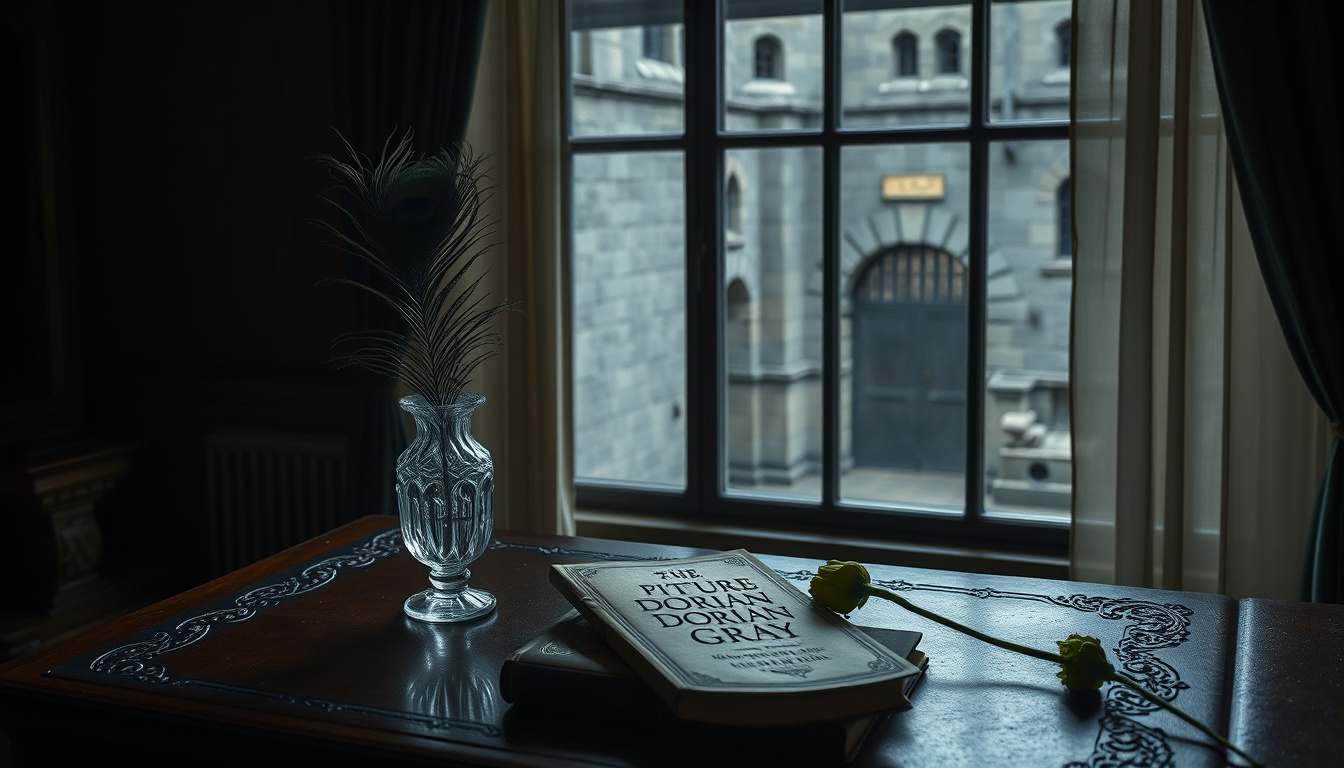
Published in 1891, The Picture of Dorian Gray is Wilde’s only novel. It was highly controversial upon release, with Victorian critics deeming it immoral. According to Poetry Foundation, the novel explores themes of youth, beauty, corruption, and the dangers of pursuing a life of pure sensation. The story of a man who remains eternally youthful while his portrait ages and bears the marks of his sins has become a cornerstone of Gothic fiction.
The Picture of Dorian Gray is often read as a powerful allegory for the tension between public reputation and private morality, a theme that would later come to define Wilde’s own life.
The Importance of Being Earnest
Premiering in 1895, The Importance of Being Earnest is widely regarded as Wilde’s greatest comic achievement. As Biography.com states, the play is a masterful satire of upper-class Victorian society, using wit, paradox, and farce to expose the absurdities of social conventions. It remains one of the most frequently performed plays in the English language.
Other Major Works
Beyond his novel and most famous play, Wilde wrote several other successful works for the stage. These include Lady Windermere’s Fan (1892) and An Ideal Husband (1895). According to BBC History, he also published poetry, including the well-received Poems (1881), and a collection of fairy tales for children, further demonstrating his range as a writer.
How Did Oscar Wilde Die?
Oscar Wilde died on 30 November 1900 in Paris at the age of 46. His final years were marked by poverty and ill health following his imprisonment. The official cause of death was cerebral meningitis, but uncertainty remains among historians.
There is an ongoing historical debate about the exact cause of Oscar Wilde’s death. While his death certificate records “cerebral meningitis,” many biographers have speculated that he may have been suffering from tertiary syphilis, a common and often stigmatised disease at the time. Others suggest a complication from a chronic ear infection, possibly acquired during his time in prison, may have been the true cause. This lack of certainty is a recognised gap in Wilde’s biography.
After his release from prison in 1897, where he served two years of hard labour for “gross indecency,” Wilde fled to France. He lived under the assumed name Sebastian Melmoth, in exile and financial ruin. He spent his final days at the Hôtel d’Alsace in Paris, where he converted to Catholicism on his deathbed, though the exact circumstances of this conversion are also disputed by some.
What Are Oscar Wilde’s Most Famous Quotes?
Oscar Wilde is one of the most quoted writers in the English language. His epigrams and paradoxes are celebrated for their ability to convey profound truths through wit and humour. While many quotes are widely attributed to him, and his works are filled with such lines, they have become part of popular culture.
Some of his most famous and frequently cited sayings include:
- “We are all in the gutter, but some of us are looking at the stars.”
- “Be yourself; everyone else is already taken.”
- “I can resist everything except temptation.”
- “To live is the rarest thing in the world. Most people exist, that is all.”
- “The only way to get rid of temptation is to yield to it.”
- “The truth is rarely pure and never simple.”
While these quotes are universally associated with Oscar Wilde, some are not always found in his published works and may have been popularised by subsequent sources. Experts and biographers continue to verify the exact origins of many of his most famous epigrams.
Timeline of Oscar Wilde’s Life
The following timeline outlines the major events in Oscar Wilde’s life, from his birth in Dublin to his death in Paris.
- 1854: Born in Dublin to Sir William Wilde and Jane Wilde.
- 1871-1874: Studied at Trinity College Dublin, then Magdalen College, Oxford.
- 1881: Published ‘Poems’ and embarked on a lecture tour of the US.
- 1884: Married Constance Lloyd; had two sons.
- 1890: Published ‘The Picture of Dorian Gray’ in Lippincott’s Monthly Magazine.
- 1891: Published revised novel; wrote ‘Lady Windermere’s Fan’.
- 1895: Premieres of ‘An Ideal Husband’ and ‘The Importance of Being Earnest’.
- 1895: Sued the Marquess of Queensberry for libel, leading to his own trial for gross indecency.
- 1895-1897: Imprisoned at Pentonville, Wandsworth, and Reading Gaol.
- 1897: Released; wrote ‘The Ballad of Reading Gaol’.
- 1900: Died in Paris at the Hôtel d’Alsace.
What Is Certain and Uncertain in Wilde’s Biography?
While the broad strokes of Oscar Wilde’s life are well documented, some details remain debated by scholars. The table below distinguishes established facts from elements of his life story that carry an element of uncertainty.
| Established Information | Information That Remains Unclear |
|---|---|
| Oscar Wilde died on 30 November 1900 in Paris. | The exact cause of death is debated: official record says cerebral meningitis, but many biographers suspect tertiary syphilis or a complication of a previous ear infection. |
| He was imprisoned for ‘gross indecency’ under the Criminal Law Amendment Act 1885. | The circumstances of his final days (e.g., whether he converted to Catholicism on his deathbed) are disputed. |
| His works are widely celebrated and remain in print. | The precise origin of some of his most famous quotes is not definitively verified in his published writing. |
What Is the Context of His Life and Work?
Oscar Wilde’s life is a story of tension between artistic freedom and rigid Victorian social norms. He rose to fame as a wit and playwright, embodying the Aesthetic movement’s philosophy of “art for art’s sake.” His work is a sharp critique of society’s hypocrisy, celebrating beauty and intellect over conventional morality.
His dramatic fall from grace, stemming from his conviction for homosexual acts, only reinforced the themes in his own writing. The trial and imprisonment not only destroyed his health and finances but also turned him into a tragic, symbolic figure of the persecuted artist. Today, his exploration of identity, duplicity, and social performance in works like The Importance of Being Earnest continues to resonate with modern audiences.
Sources and Quotes
The information in this article draws on several authoritative biographical sources. The following are key references used to substantiate the facts of Oscar Wilde’s life.
“We are all in the gutter, but some of us are looking at the stars.”
— Attributed to Oscar Wilde
“The only way to get rid of temptation is to yield to it.”
— Attributed to Oscar Wilde
Key sources for this biographical overview include BBC History, The British Library, and Encyclopedia.com.
Where Should You Start with Oscar Wilde?
For anyone new to Wilde, the best place to begin is with his most celebrated works. First, read his only novel, The Picture of Dorian Gray, for a compelling introduction to his Gothic style and philosophical ideas. Then, experience his genius for comedy by watching or reading The Importance of Being Earnest, a masterpiece of the English stage.
To understand the full arc of his tragic but brilliant life, consider also his later writings from prison, such as the poignant letter De Profundis and the poem The Ballad of Reading Gaol. For another story of a brilliant life cut short, explore the life of the poet Sylvia Plath – Biography, Poems, Death and Legacy. The tragic story of Wilde’s final years shares some themes with the mysterious end of another iconic figure, Jim Morrison – Cause of Death, Grave and the Skier Myth.
Frequently Asked Questions About Oscar Wilde
How do you pronounce Oscar Wilde?
Oscar Wilde is pronounced /ˈɒskər waɪld/ (OSS-kər WYLD).
Is there an Oscar Wilde restaurant?
Yes, there is a famous restaurant ‘Oscar Wilde’ in Paris at the Hôtel d’Alsace, where he died. There are also other restaurants named after him, such as ‘Oscar Wilde’s’ in New York and London.
What is Oscar Wilde’s most famous book?
His most famous book is ‘The Picture of Dorian Gray’ (1890/1891), a Gothic novel about a man who remains youthful while his portrait ages.
What was Oscar Wilde’s wife’s name?
Wilde married Constance Lloyd in 1884. They had two sons together, Cyril and Vyvyan.
What was the name of Oscar Wilde’s last play?
Wilde’s final completed play was ‘The Importance of Being Earnest’, which premiered in 1895, just before his arrest.
How long was Oscar Wilde in prison?
Oscar Wilde was sentenced to two years of hard labour. He served his sentence from 1895 to 1897 in Pentonville, Wandsworth, and Reading Gaol.
Where is Oscar Wilde buried?
Oscar Wilde is buried in the Père Lachaise Cemetery in Paris. His tomb, designed by sculptor Jacob Epstein, is a major tourist attraction.
What is aestheticism?
Aestheticism was a 19th-century movement that championed “art for art’s sake.” It valued beauty and artistic form over moral or political messages, and Wilde was its most famous spokesman.

Henry Wallace is Managing Editor at RegionalReport.co.uk, running the daily news list, the regional publishing schedule and newsroom workflow.