Every parent faces the moment when their child outgrows their first car seat and needs a booster. The rules in the UK are clear, but the range of options can be confusing. Whether you are looking for a budget-friendly backless cushion or a high-backed seat with extra protection, knowing the legal minimums and safety trade-offs is essential.
This article covers the law, the different types of booster seats, what to look for when shopping at retailers like Argos and Halfords, and answers common questions about age, height, and weight. All information is based on official UK government guidance and independent safety organisations. For more general family reading, you might enjoy Resting Heart Rate – Complete Guide To Normal Ranges.
What is the booster seat law in the UK?
- UK law requirement – Children must use a child car seat until they are 12 years old or 135 cm tall, whichever comes first.
- Age/height quick reference – A backless booster is legal only for children over 125 cm and 22 kg; high-back boosters can be used from about 4 years and 15 kg.
- Main types – High-back booster, backless booster cushion, and ISOFIX booster seats. Each has different safety features and installation methods.
- Top picks approach – For most families, a high-backed ISOFIX booster offers the best balance of safety and ease of use. Backless models are suitable for older, taller children.
- UK law requires booster seats until 135 cm tall or 12 years old (whichever comes first).
- Children must use an appropriate child car seat for their weight and height – backless booster seats are legal for children over 125 cm or 22 kg (approx. 4+ years).
- ISOFIX boosters offer easier installation but must be compatible with the vehicle.
- High-back booster seats provide head and side protection; backless seats are portable and often cheaper.
- Retailers like Argos, Halfords, and Amazon offer a wide range, but safety ratings from independent tests (e.g., Which?) should guide purchases.
| Fact | Detail |
|---|---|
| Legal minimum age/height | Child car seat required until 12 years or 135 cm (GOV.UK). |
| Weight groups (Group 2/3) | Group 2: 15–25 kg (approx. 4–6 years); Group 3: 22–36 kg (approx. 6 years and up). |
| Types of booster seats | High-back (with side wings and headrest), backless cushion, ISOFIX (anchored to car). |
| Common retailers | Argos, Halfords, Amazon, and independent specialist stores. |
| Backless booster requirements | Legal for children over 125 cm and 22 kg for new models approved after March 2017. |
| High-back booster benefits | Better head and side-impact protection; suitable for children who sleep in the car. |
| ISOFIX installation | Simpler fitting, reduces misuse; not mandatory but recommended. |
| Seat belt use | Some backless boosters use the adult seat belt only; no ISOFIX connection. |
At what age can a child use a booster seat?
Age and height requirements
UK law does not specify a single age for booster seats. Instead, it requires a child to use a suitable car seat until they are 12 years old or 135 cm tall, whichever comes first. For booster seats specifically, a high-backed booster can generally be used from about 4 years old and 15 kg, while a backless booster cushion is only permitted for children over 125 cm and 22 kg if the seat is a new model approved after March 2017. Older backless boosters approved under previous standards remain legal.
Most children move to a high-back booster between 4 and 6 years old. A backless booster is usually suitable from around 6 to 7 years, but always check your child’s height and weight against the seat’s limits.
Weight groups and i-Size
Traditional seats are grouped by weight. Group 2 covers 15–25 kg (roughly 4–6 years), and Group 3 covers 22–36 kg (roughly 6 years and up). Newer i-Size (R129) seats are based on height, commonly covering 100–135 cm or 100–150 cm. This system aims to simplify fitting and improve safety.
Rear-facing and forward-facing rules
Children must remain rear-facing until they are over 15 months old if using a height-based seat. After 15 months, forward-facing seats are allowed. Booster seats are always forward-facing.
What are the different types of booster seats? (ISOFIX, backless, high back)
High-backed booster seats
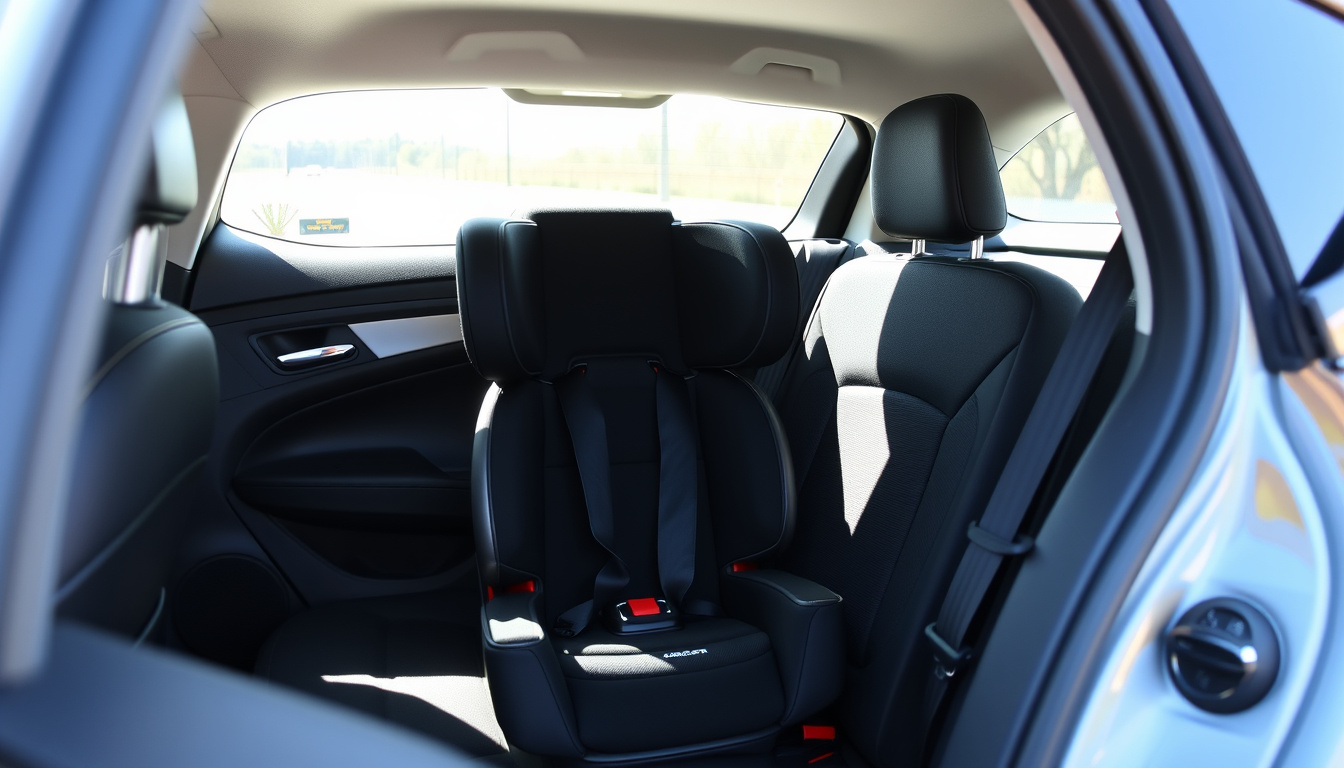
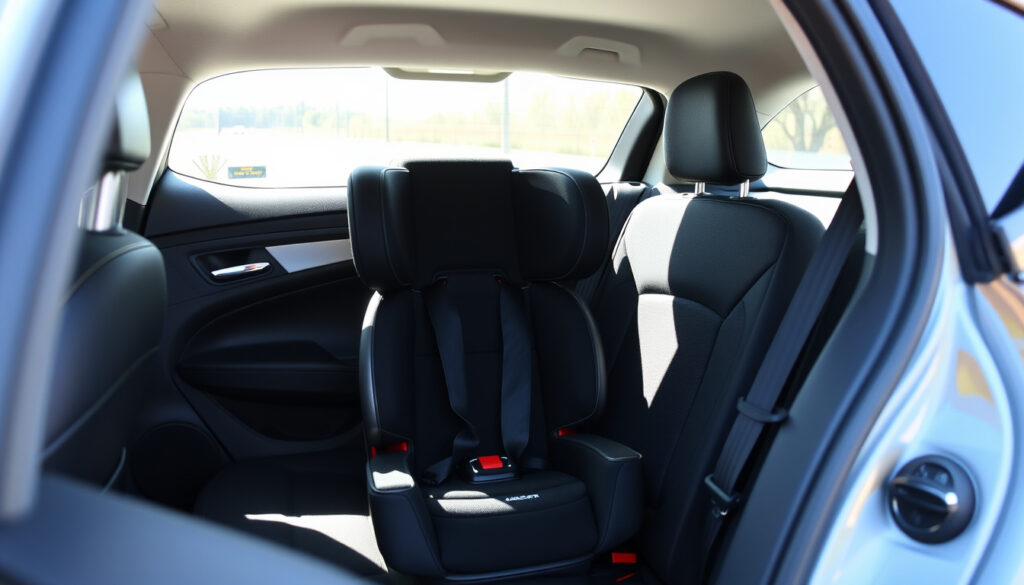
These seats have side wings, a headrest, and belt positioning support. They offer better head and side-impact protection than backless cushions. High-backed boosters are often recommended for younger children or those who sleep in the car.
Backless booster cushions
Backless boosters raise the child so the adult seat belt fits correctly across the shoulder and lap. They are portable and less expensive, but they provide less side-impact protection. They are legal only for children over 125 cm and 22 kg for new models.
Backless booster seats do not offer the same level of side-impact protection as high-back models. If your child is still growing or sleeps in the car, a high-back booster is generally safer.
ISOFIX vs seat-belt installation
ISOFIX uses anchor points built into the car to secure the seat, making installation simpler and reducing the risk of incorrect fitting. Some boosters, especially backless cushions, rely on the adult seat belt alone. A high-backed ISOFIX booster is often the best everyday choice for families who want ease of use and better protection.
What are the best backless booster seats in the UK?
What to look for
Choose a backless booster only if your child is at least 125 cm tall and 22 kg. Check that the seat has UK legal approval: either ECE R129 (i-Size) or the older R44/04 standard. Also ensure the seat fits your car, whether you use ISOFIX or the seat belt. Side-impact protection is limited, so consider a high-back booster if you want more support.
When shopping at Argos, Halfords, or Amazon, filter by your child’s height and weight, and look for models with good independent safety ratings from Which? or RoSPA.
Retailer guidance
Argos offers a wide range of backless boosters, often with price filters. Halfords provides in-store fitting advice and a product range that includes own-brand seats. For both, confirm the seat’s approval standard and ensure it is suitable for your car. Independent reviews can help narrow down the best options for your budget.
Which Argos booster seat should I choose?
Key selection criteria
When browsing Argos, focus on the same legal and safety requirements: UK approval (R129 or R44/04), correct fit for your child’s height and weight, vehicle compatibility, and side-impact protection. High-back boosters are generally recommended over backless cushions for children under 125 cm or 22 kg.
Popular categories
Argos groups booster seats by type and price. You will find budget-friendly backless cushions, mid-range high-back seats, and ISOFIX models. For most families, a high-backed ISOFIX booster from a reputable brand is a reliable choice. Always check the product details for the ECE approval number.
When did UK booster seat regulations change?
- 2006 – ECE R44/04 regulation introduced, setting weight-based child car seat groups.
- 2013 – Introduction of i-Size (R129) regulation, moving to height-based seats and stricter side-impact tests.
- March 2017 – New rules for backless booster seats: new models approved after this date are only legal for children over 125 cm and 22 kg.
- 2025 – Current enforcement: i-Size seats are becoming more common, but R44/04 seats remain legal. No major changes expected, but parents should check for updates on GOV.UK.
Are backless booster seats as safe as high-back ones?
| Established information | Information that remains unclear |
|---|---|
| UK law requires a child car seat up to 12 years or 135 cm. | Whether backless booster seats offer equivalent side-impact protection to high-back seats is still under research. Currently, high-back seats are considered safer in side impacts. |
| Backless boosters are legal from 125 cm and 22 kg for new models. | ISOFIX is not mandatory for booster seats, but it is recommended to reduce installation errors. Some older vehicles may not have ISOFIX points. |
| High-back boosters provide head and side support. | Not all car models provide the same fit for booster seats; compatibility should be checked individually. |
Why do booster seats matter and how do different types compare?
Booster seats are essential because they position the adult seat belt correctly across the child’s stronger bones – the shoulder and pelvis – rather than the soft abdomen. Without a booster, the belt can ride up and cause serious injury in a crash. UK law mandates their use because children are not tall enough to use an adult seat belt safely until they reach 135 cm.
Comparing types: high-back boosters offer better protection, especially for head and neck, and are preferred for younger children. Backless cushions are lightweight and easy to move between cars, but provide less support. ISOFIX models simplify installation, which is a key advantage given that many seats are fitted incorrectly. The trade-off between cost, portability, and safety is central to choosing the right seat.
UK regulations align with broader European standards, but the height-based i-Size system is gradually replacing the older weight-based groups. This shift aims to make it easier for parents to select the correct seat and reduce misuse.
What do official sources and experts say about booster seats?
“Children must normally use a child car seat until they’re 12 years old or 135 centimetres tall, whichever comes first.”
— GOV.UK, Child car seats: the rules
“For most children, a high-backed booster seat is the best choice as it provides head and side-impact protection and helps the seat belt fit correctly.”
— Child Car Seats (childcarseats.org.uk), Booster seats information
“A backless booster cushion is only suitable for children over 125 cm and 22 kg, and even then, a high-back booster offers better protection.”
— RoSPA, Child car seat safety
What should you take away from this guide?
The key to choosing a booster seat is matching the seat to your child’s height and weight, understanding the legal minimums, and prioritising safety features. For most UK families, a high-backed ISOFIX booster is the most practical and protective option. Backless boosters can work for older, taller children, but they should be used with awareness of their limitations. Always check the latest official guidance on GOV.UK and independent reviews from Which? or RoSPA before buying. For more general family reading, you might enjoy Would You Rather Questions – Funny, Deep and Extreme Picks.
Frequently asked questions about booster seats
Can a child use a booster seat in a taxi?
Yes, but the law requires that a child uses a suitable car seat if one is available. Taxis are exempt from the legal requirement to provide a child seat, but it is recommended to bring your own booster when possible.
Do booster seats expire?
Yes, most booster seats have an expiry date stamped on the seat or in the manual. Typical lifespans are 6 to 10 years from manufacture. After a crash or if the seat is older than its expiry date, it should be replaced.
Can I use a backless booster without ISOFIX?
Yes, many backless boosters are designed to be used with the adult seat belt only. They do not require ISOFIX anchors, but ISOFIX versions are available for added stability.
Is it legal to use a second-hand booster seat?
It is legal, but safety experts advise against it because you may not know the seat’s history. A used seat could have been in a crash or may be missing parts. Always check the manufacture date and condition.
What is the difference between i-Size and R44/04?
i-Size (R129) is a newer regulation that uses height instead of weight, requires rear-facing until 15 months, and includes stricter side-impact tests. R44/04 is the older weight-based standard. Both are legal, but i-Size is considered safer.
Can a child stop using a booster seat at 12 years?
Only if they are at least 135 cm tall. If a child is 12 but shorter than 135 cm, they must still use a booster seat. The requirement is based on the earlier of 12 years or 135 cm.
Are booster seats safe for children with special needs?
Some booster seats may not be suitable for children with certain medical conditions. It is important to consult a healthcare professional or a specialist car seat clinic for personalised advice.
Can I wash the cover of a booster seat?
Most covers are removable and machine washable. Always check the manufacturer’s instructions. Some covers require hand washing to avoid damage.
Do I need a booster seat for a child who is 135 cm tall but only 5 years old?
No, once a child reaches 135 cm, they are legally allowed to use an adult seat belt. Height is the key measure, not age.
What is the best booster seat for a small car?
Backless booster seats are often the most compact option. However, some high-back boosters with slim profiles are also available. Check the seat’s dimensions and your car’s back seat space before buying.

Oliver Reeves leads fact-checking, source verification and editorial standards at RegionalReport.co.uk.