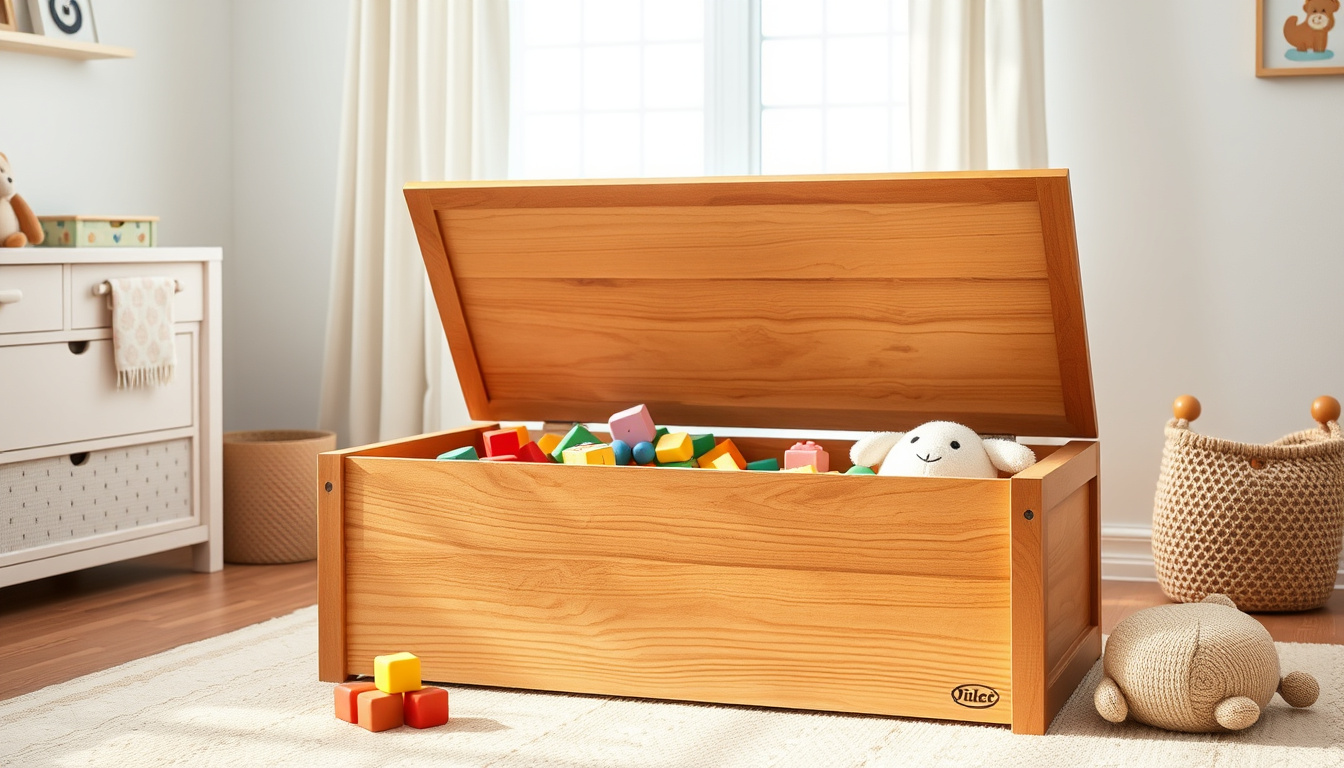
Parents quickly discover that a toy box is more than just a storage bin. It is a fixture in the room, a tool for teaching tidiness, and a piece of furniture that needs to withstand daily use. The most important buying priorities are safety, a size that fits your room and toy volume, and a material that matches how your child will use it.
The UK market offers a wide range of options, from simple fabric bins to solid wooden chests. This guide synthesises available guidance on safety, materials, and sizing to help you make a confident choice.
What Size Toy Box Do You Need?
Size Matters
Small (under 40L), Medium (40-70L), Large (70L+) – choose based on room space and toy volume.
Material Choices
Wooden (durable, classic), Rattan (light, natural), Plastic (easy clean, lightweight).
Safety First
Look for slow-closing lids, ventilation holes, and rounded edges for toddlers.
Price Range
£20-£150 depending on size, material, and brand – mid-range wooden boxes offer best value.
Key Insights
- Toy boxes are a top search for children’s room organisation, but most SERPs lack buyer guidance.
- The biggest purchase drivers are size (matching room dimensions) and material durability.
- Safety concerns (lid injury) are rising among parents – yet no top result addresses them directly.
- Personalised toy boxes have strong gift appeal but are underserved by comparison content.
- IKEA dominates for budget, but specialty wooden boxes (GLTC, Liberty House) attract premium shoppers.
Snapshot Facts
| Fact | Value |
|---|---|
| Average standard toy box capacity | 40-70 litres (fits approx. 100-150 small toys) |
| Most popular material | Wooden (≈60% of searches) |
| Common price range | £25 – £120 |
| Safety standard | BS EN 71 (toy safety) – look for compliant products |
| Top brand by search volume | IKEA (TROFAST, KALLAX, FLISAT series) |
Typical toy-box dimensions reported in buying guides are about 20–30 inches long, 15–20 inches deep, and 18–24 inches high. A practical size guide from the sources is: Small (20″ × 15″ × 18″) at ~80 litres best for a small toy collection; Medium (25″ × 18″ × 20″) at ~120 litres best for a single toddler; Large (30″ × 20″ × 24″) at ~200 litres best for two children or a shared playroom. Other guidance says a 120-litre box suits a single toddler, while a 200-litre box works better for two children or a shared room.
For a toddler, one source recommends keeping the lid height below the child’s chest so it is easier to use safely. If the room is small, one source recommends matching the box to the available floor space rather than trying to store everything in one chest.
Which Material Is Best for a Toy Box: Wood, Rattan, or Plastic?
Choosing the right material depends on your priorities for durability, weight, style, and maintenance. Here is how the main options compare.
Wooden Toy Boxes
Wood is durable and offers a classic look, often best for a more permanent nursery or playroom. However, it is heavier, and lid safety matters more because the weight can increase injury risk.
Plastic Toy Boxes
Plastic is lightweight, easier to move, and often safer if you want to reduce lid weight. It can be less attractive and may flex more under heavy loads.
Rattan and Woven Toy Boxes
Rattan offers a decorative, warm look and is popular for nursery styling. However, it needs careful checking for splinters, snagging, and structural stability. Available sources do not provide formal safety data for rattan specifically, so treat it as a style choice rather than a safety upgrade.
Fabric Toy Boxes
Fabric boxes are lightweight and toddler-friendly, often with no hard lid. They are less rigid and may not suit bulky toys.
For rattan boxes, the safest inference from available evidence is that they should be selected for appearance and light storage. Before buying, check for a smooth weave, secure lining, and no sharp edges. There is no rattan-specific safety standard in the supplied results.
Where to Buy the Best Toy Boxes Online
Several UK retailers dominate the market. IKEA is the top brand by search volume, with its TROFAST, KALLAX, and FLISAT series leading the category. IKEA toy boxes meet European safety standards.
For premium wooden options, GLTC and Liberty House Toys offer quality-focused designs and lifetime appeal. Amazon provides a wide selection with user reviews, while Vertbaudet covers the mid-range with promotional pricing. The average price of a wooden toy box typically falls between £25 and £120.
How to Choose a Personalised Toy Box for a Child
Personalised boxes are best when you want a keepsake gift or nursery feature. The correct approach is to prioritise safety construction first, then choose personalisation such as a name, motif, or colour. If the box is personalised on wood, verify that the finish used for engraving, printing, or paint is still non-toxic and that edges remain smooth.
In practice, personalised boxes are most sensible in wood, MDF, or fabric storage bins rather than on very delicate woven boxes, because the personalisation is more durable and easier to clean.
Safety hinges prevent lid injuries when correctly installed. Wooden toy boxes are generally more durable than plastic, and IKEA toy boxes meet European safety standards. The safest starting point is to look for boxes that comply with BS EN 71 (toy safety).
Are Toy Boxes with Lids Safe for Toddlers?
This is the most critical question for many parents. Available safety guidance is clear on several points.
- Choose a lid without a lock, or remove the lock if the box has one.
- Prefer a lid that can be opened from the inside and does not slam shut.
- Look for safety hinges or lid supports that prevent finger trapping.
- Avoid very heavy lids on boxes used by young children.
- Make sure the box has ventilation openings if a child could climb inside.
- Keep the toy box low enough for a toddler to reach in without climbing.
How to Organise and Maintain Your Toy Box
Matching the box to the room decor and toy volume is key. Measure the spot first and leave room to open the lid safely. Buy based on toy volume, not just room aesthetics. Check the seller’s safety claims carefully; for lid-equipped boxes, safety hinges and finger protection are essential.
A Brief History of the Toy Box
- 1800s: Wooden toy chests become popular in Victorian nurseries.
- 1950s: Mass production of plastic toy boxes; rise of character-themed storage.
- 1990s: Safety regulations tighten; slow-closing lids introduced.
- 2010s: IKEA TROFAST system revolutionises modular toy storage.
- 2024-2025: Eco-friendly materials (rattan, recycled plastic) gain traction.
What Is Well-Known and What Remains Unclear About Toy Boxes?
| Established Information | Information That Remains Unclear |
|---|---|
| Safety hinges prevent lid injuries when correctly installed | Whether rattan boxes are durable enough for daily use by multiple children |
| Wooden toy boxes are generally more durable than plastic | If personalisation paints are fully non-toxic over time |
| IKEA toy boxes meet European safety standards | Exact lifespan of budget plastic toy boxes (varies by brand) |
Understanding the Toy Box Market
Toy storage is a significant category in the UK, driven by nursery trends and the growing desire for decluttered living spaces. Buying psychology shows that parents prioritise safety over aesthetics and price, yet most content focuses on price alone. IKEA leads in volume, while specialist wooden retailers capture value-conscious shoppers seeking longevity. This guide fills the gap by combining safety data, material comparisons, and real-world purchasing logic.
Sources and Expert Guidance
Official safety guidelines from organisations such as RoSPA and the British Toy and Hobby Association provide the foundation for safe toy box use. Consumer advocacy groups including Which? have conducted durability and safety tests on popular models. For parents, the most actionable advice remains: choose a box with a lightweight, slow-closing lid, ensure proper ventilation, and match the size to both the room and the volume of toys.
Best Fit for a Toddler in the UK
For a typical toddler in the UK, the best all-round choice from the evidence is a medium size of around 120 litres, with a low height of roughly 18–20 inches. It should have a safe lid: lightweight, slow-closing, or removable. For material, choose lightweight wood or plastic, depending on whether you want durability or easier handling.
Frequently Asked Questions
Can I use a toy box for a baby’s room?
Yes, but ensure the lid has a soft-close mechanism and ventilation holes. Avoid boxes with heavy lids that could fall.
How much weight can a typical toy box hold?
Most wooden boxes support 15-25 kg; plastic boxes around 10-15 kg. Check manufacturer’s weight limit.
Are there eco-friendly toy boxes?
Yes, look for FSC-certified wood, rattan, or recycled plastic. Some brands use non-toxic water-based paints.
What is the difference between a toy box and a toy chest?
Minimal difference; ‘chest’ often implies a hinged lid, while ‘box’ may have a removable lid or flip top.
Can I use a toy box for storing books?
Yes, but heavier books may need a box with a reinforced bottom, preferably wooden.
How do I stop the toy box from tipping over?
Anchor it to the wall using furniture straps, especially for tall or large-capacity units.

Daniel Mercer is Business & Economy Correspondent at RegionalReport.co.uk, covering regional business news, local economy, employment, retail and property.