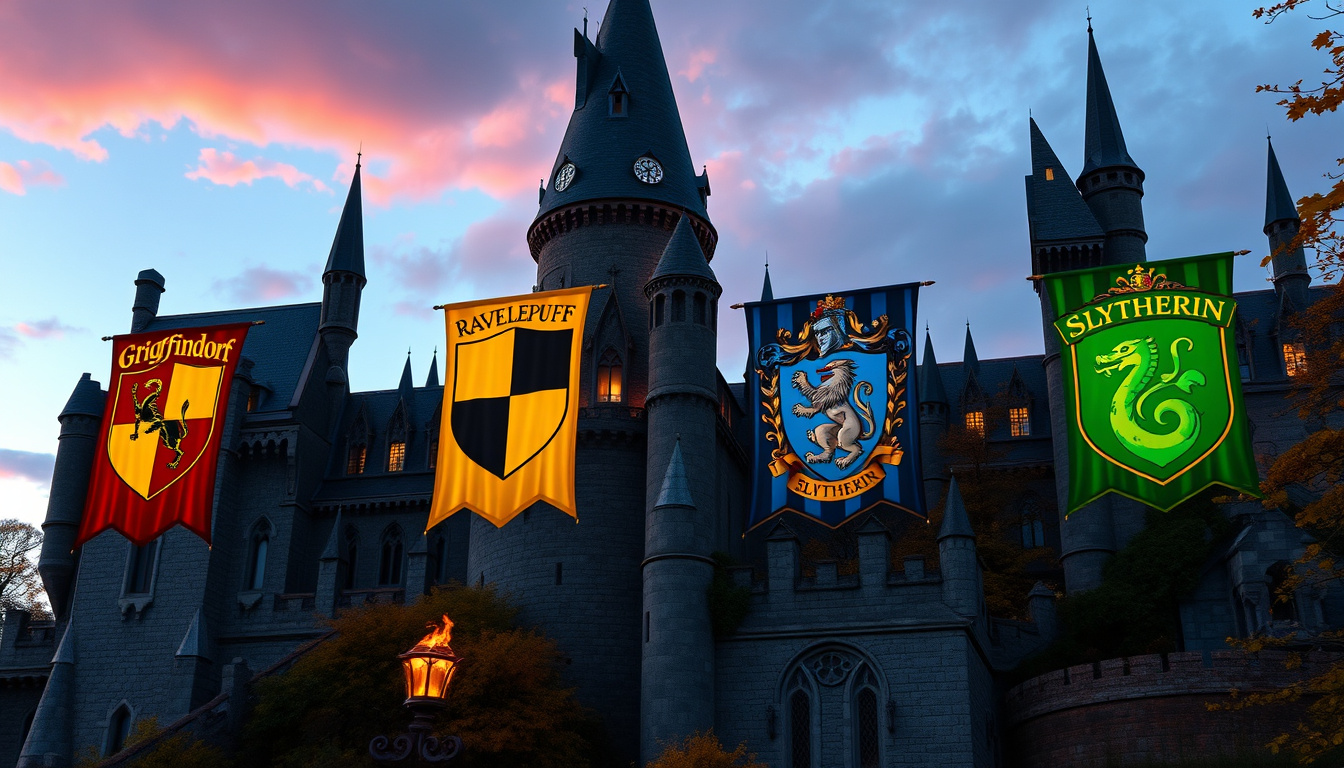
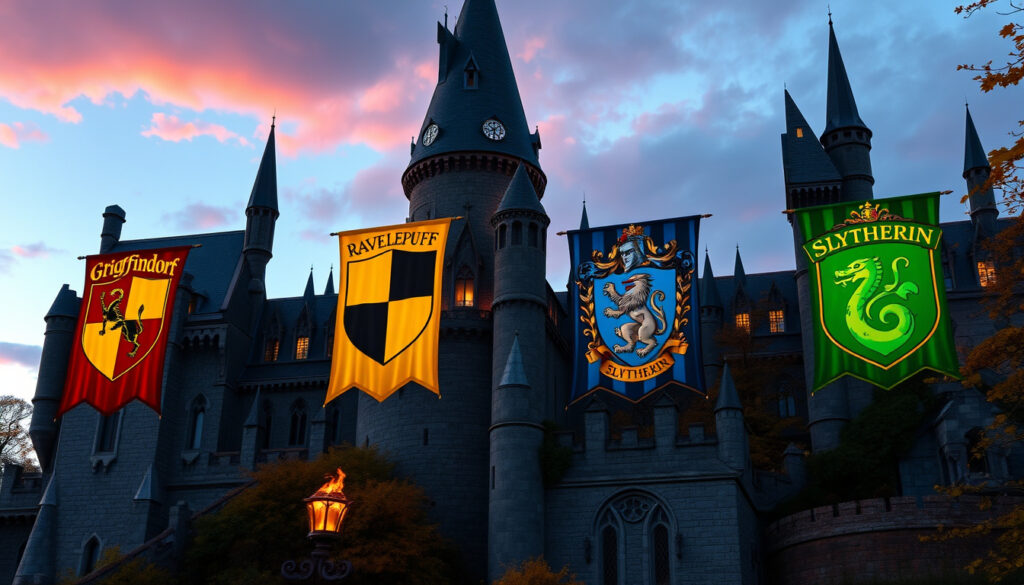
For millions of readers and moviegoers, the four Hogwarts houses are the heart of the Harry Potter universe. Gryffindor, Hufflepuff, Ravenclaw, and Slytherin are more than just dormitory assignments—they represent distinct philosophies, values, and communities that shape the entire series. This guide breaks down the traits, colors, founders, and symbolism of each house, and explains how the Sorting Hat decides where you belong.
The houses were established roughly a thousand years ago by the four founders of Hogwarts School of Witchcraft and Wizardry. Each founder handpicked students who shared their own values, creating the enduring legacies that survive to this day. Whether you are revisiting the books or discovering them for the first time, understanding the houses is essential to understanding the story.
From the courageous acts of a young wizard to the quiet loyalty of a steadfast friend, the houses provide a framework for personality, conflict, and growth. They also raise a fun question that every fan asks: which one are you?
What Are the Four Hogwarts Houses?
The four houses are Gryffindor, Hufflepuff, Ravenclaw, and Slytherin. Each is named after its founder and has its own set of core traits, colors, and a symbolic animal. Below is a quick overview of each house, followed by a detailed reference table.
Gryffindor
Founder: Godric Gryffindor | Colors: Scarlet and gold | Animal: Lion | Element: Fire
Traits: Courage, bravery, chivalry
Notable Character: Harry Potter
Hufflepuff
Founder: Helga Hufflepuff | Colors: Yellow and black | Animal: Badger | Element: Earth
Traits: Loyalty, hard work, patience
Notable Character: Cedric Diggory
Ravenclaw
Founder: Rowena Ravenclaw | Colors: Blue and bronze | Animal: Eagle | Element: Air
Traits: Intelligence, wisdom, creativity
Notable Character: Luna Lovegood
Slytherin
Founder: Salazar Slytherin | Colors: Green and silver | Animal: Serpent | Element: Water
Traits: Ambition, cunning, resourcefulness
Notable Character: Severus Snape
- The houses are loosely aligned with the four classical elements: fire (Gryffindor), earth (Hufflepuff), air (Ravenclaw), and water (Slytherin), according to official Harry Potter material.
- The Sorting Hat takes the wearer’s choice into account—a fact demonstrated when Harry Potter asks not to be placed in Slytherin.
- House points are a key mechanic in the books, encouraging inter-house competition and camaraderie.
- Slytherin is often portrayed as the “villain” house, but many Slytherins (e.g., Snape, Regulus Black) show bravery and redemption.
- Each house has a unique common room location and entry method, from a password to a riddle.
- House ghosts—Nearly Headless Nick, the Fat Friar, the Grey Lady, and the Bloody Baron—serve as spiritual mascots.
| House | Founder | Values | Element | Ghost | Common Room Location | Enter Password? |
|---|---|---|---|---|---|---|
| Gryffindor | Godric Gryffindor | Courage, nerve, chivalry | Fire | Nearly Headless Nick | Gryffindor Tower | Yes (portrait of Fat Lady) |
| Hufflepuff | Helga Hufflepuff | Hard work, patience, loyalty | Earth | Fat Friar | Near the kitchens | No (tapping barrel) |
| Ravenclaw | Rowena Ravenclaw | Intelligence, wisdom, creativity | Air | Grey Lady | Ravenclaw Tower | Yes (riddle required) |
| Slytherin | Salazar Slytherin | Ambition, cunning, resourcefulness | Water | Bloody Baron | Slytherin Dungeon | Yes (password) |
What Are the Traits of Each Harry Potter House?
The traits associated with each house go beyond simple labels. They reflect the qualities that the founders valued most and that the Sorting Hat looks for in new students. Understanding these traits helps explain character motivations and plotlines throughout the series.
What traits define Gryffindor?
Gryffindor values bold action, moral courage, and standing up for what is right. The house is associated with bravery, daring, nerve, and chivalry, according to official house meanings. Gryffindors are often impulsive but act with conviction, whether facing a dragon or a Dark Lord.
What are Hufflepuff’s characteristics?
Hufflepuff prizes loyalty, fairness, patience, and steady effort. Helga Hufflepuff famously accepted any student who wished to join, making the house the most inclusive. Hufflepuffs are known for their strong work ethic and dedication to their friends, as noted in Collider’s house breakdown.
What values does Ravenclaw prize?
Ravenclaw values intelligence, knowledge, curiosity, creativity, and wit. Rowena Ravenclaw sought students with sharp minds and a love of learning. The house’s common room requires solving a riddle to enter, reflecting the house’s intellectual bent. The animal emblem is an eagle, representing vision and the sky.
What is Slytherin known for?
Slytherin is associated with ambition, cunning, leadership, resourcefulness, and self-preservation. Salazar Slytherin prized students who would go to great lengths to achieve their goals. While often cast as antagonistic, the house has produced many complex characters who defy simple categorization, as discussed in Harry Potter Insider.
What Is the Meaning Behind Each Hogwarts House?
The houses represent more than just personality types; official material frames them as communities built around shared values, according to J.K. Rowling’s writing. They create a sense of identity and belonging for students, and for readers, they offer a lens through which to examine themes of prejudice, redemption, and unity.
Inter-house rivalry—especially between Gryffindor and Slytherin—drives much of the plot but also illustrates the dangers of prejudice. The series ultimately challenges house stereotypes: Neville Longbottom starts as a timid Gryffindor and grows into a leader; Severus Snape, a Slytherin, is one of the most morally complex characters in the story.
Each house animal carries symbolic weight. The lion represents courage and royalty (Gryffindor); the badger symbolizes tenacity and loyalty (Hufflepuff); the eagle stands for vision and intellect (Ravenclaw); and the serpent embodies cunning and transformation (Slytherin). These connections are drawn from the official Harry Potter website and fan-consolidated sources like the Hogwarts Houses Wiki.
The division of houses has been criticized for sorting children into fixed categories. However, the books show that character can change, and that one’s house does not define one’s destiny. Hermione Granger, for example, possesses strong Ravenclaw traits but was sorted into Gryffindor, demonstrating that people are complex.
What Are the Colors and Symbols of the Harry Potter Houses?
The colors and symbols of each house are among the most recognizable elements of the Harry Potter franchise. They appear on banners, robes, and merchandise, and they carry deeper meaning tied to the classical elements.
Gryffindor: scarlet and gold
The colors scarlet and gold are often interpreted as representing courage, passion, and energy. The lion emblem reinforces the house’s connection to bravery and leadership. In the elemental scheme, Gryffindor corresponds to fire, as noted by J.K. Rowling’s own commentary.
Hufflepuff: yellow and black
Yellow is linked to friendship and joy, while black connects to the earth. Together, the colors evoke wheat and soil, grounding the house in its elemental association with earth. The badger is a fitting symbol for a house that values hard work and loyalty.
Ravenclaw: blue and bronze
Blue and bronze are tied to sky imagery and intellectual symbolism. The eagle, not a raven despite the house name, soars above, representing wisdom and a broad perspective. The house’s element is air, reflecting the pursuit of knowledge.
Slytherin: green and silver
Green and silver are associated with water, ambition, and adaptability. The serpent emblem evokes cunning and transformation, fitting for a house that prizes resourcefulness and self-preservation. Some fans also interpret the colors as representing wealth and mystery.
Which Harry Potter House Are You? (Take the Quiz)
The Sorting Hat determines a student’s house based on their values and qualities rather than simple outward behavior. This is why quizzes that try to determine your house usually ask about preferences, decision-making, bravery, loyalty, curiosity, or ambition—they approximate the traits the Sorting Hat would weigh, as explained by Collider’s analysis.
Several free quizzes are available online, including the official one on the Harry Potter website. These quizzes typically present scenarios and ask users to choose their response, then tally the answers to suggest a house. While no quiz is definitive (the Sorting Hat also considers the student’s own choice), they are a fun way to explore which house best aligns with your personality.
If you are unsure where you belong, consider which values resonate most with you. Do you value courage above all? Gryffindor might be your home. Do you prize fairness and friendship? Hufflepuff could be a strong fit. For those driven by knowledge and creativity, Ravenclaw is a natural match, while ambition and cunning point toward Slytherin.
Which Harry Potter Characters Belong to Each House?
Many of the series’ most memorable characters are strongly associated with specific houses, though canon emphasizes that people can show traits from multiple houses. Below is a summary of well-known characters linked to each house, based on fan-consolidated sources like Collider and Planet of HP.
Gryffindor characters
Harry Potter, Ron Weasley, Hermione Granger, Neville Longbottom, Fred and George Weasley, Ginny Weasley, and Albus Dumbledore are all associated with Gryffindor. The house’s focus on courage is embodied by these characters, who repeatedly face danger to protect others.
Hufflepuff characters
The provided sources do not give a definitive list of famous Hufflepuffs beyond house traits, though the house is commonly linked to Cedric Diggory in broader canon. Hufflepuff’s emphasis on loyalty and fairness suggests that many unsung heroes of the series belong here.
Ravenclaw characters
The sources emphasize the house’s intellectual profile rather than providing a full character list. Luna Lovegood and Cho Chang are notable Ravenclaws. The house’s value on wit and curiosity is reflected in their personalities.
Slytherin characters
Draco Malfoy, Severus Snape, and Tom Riddle (Lord Voldemort) are among the most famous Slytherins. The house’s association with ambition and cunning is clear in these characters, but as sources like Harry Potter Insider note, many Slytherins show complexity and even redemption.
Timeline of the Hogwarts Houses
While detailed historical records are sparse in canon, a brief timeline of key events helps contextualize the houses within the wizarding world’s narrative.
- c. 990 AD — Hogwarts is founded by four wizards: Godric Gryffindor, Helga Hufflepuff, Rowena Ravenclaw, and Salazar Slytherin. Each establishes their own house.
- c. 1000 AD — Slytherin leaves Hogwarts after a dispute over admitting Muggle-born students. The remaining founders continue, and the Sorting Hat is created to carry on the selection process.
- 1991-1998 — Harry Potter attends Hogwarts. During these years, inter-house conflicts are prominent, culminating in the Battle of Hogwarts where houses unite against Voldemort.
- 1998 — The Battle of Hogwarts takes place. Students from all four houses fight together, symbolizing the overcoming of long-standing divisions.
What Is Certain and What Remains Unclear About the Houses?
It is important to distinguish between established canon facts and fan interpretations when discussing the houses. The following table clarifies what is certain and what remains open to interpretation.
| Established Information | Information That Remains Unclear |
|---|---|
| The four houses, their founders, and core traits are established in the books and by J.K. Rowling. | The exact class/medieval analogy (knights, nobles, etc.) is a fan theory, not canon. |
| The Sorting Hat can place a student in any house but respects the student’s choice (e.g., Harry’s request). | Whether every character perfectly fits their house traits is not canon; many exhibit traits of multiple houses. |
| House colors and symbols are consistently described in official sources. | Some non-official fan sources mix up details like specific founders’ names or color descriptions. |
What Is the Thematic Role of the Houses in the Story?
The houses serve a deeper narrative purpose beyond group identity. They create a sense of belonging and community for characters and readers alike. The inter-house competition—especially the Gryffindor vs. Slytherin rivalry—drives much of the plot while also showing the destructive nature of prejudice and stereotyping.
Crucially, the series challenges house stereotypes. Neville Longbottom begins as a timid boy but grows into a courageous leader, embodying true Gryffindor values. Severus Snape, a Slytherin, is a deeply complex character whose actions defy simple labels. The Battle of Hogwarts, where houses unite, underscores the message that division can be overcome.
The houses also raise thoughtful questions about identity. Is your house defined by your traits, or by your choices? The books suggest it is a combination of both, making the sorting process a meaningful moment for every witch and wizard.
What Do Key Sources and Quotes Tell Us About the Houses?
Several key quotes from the books and J.K. Rowling’s writing illuminate the philosophy behind the houses.
“It is our choices, Harry, that show what we truly are, far more than our abilities.”
— Albus Dumbledore, Harry Potter and the Chamber of Secrets
“There’s nothing wrong with Hufflepuff. They’re a lot of duffers, but they’re nice duffers.”
— Fred Weasley, Harry Potter and the Goblet of Fire (humorous, balanced with positive later portrayals)
“Slytherin will help you on the way to greatness.”
— The Sorting Hat’s song (canon)
Summary: What You Need to Know About Harry Potter Houses
The four Harry Potter houses—Gryffindor, Hufflepuff, Ravenclaw, and Slytherin—are foundational to the wizarding world. Each has a unique founder, set of traits, colors, animal symbol, and elemental association. The Sorting Hat places students based on their values and qualities, and the student’s own choice can influence the decision. While the houses create identity and community, the series ultimately challenges rigid categorization, showing that bravery, loyalty, intelligence, and ambition exist in everyone.
Frequently Asked Questions
Can you change your Hogwarts house?
In canon, the Sorting Hat considers a student’s choice, but the decision is final. There is no official process to change houses. Some fan fiction explores this, but it is not canon.
What is the oldest Hogwarts house?
All four houses were founded at the same time (around 990 AD). No house is older than the others.
Which house has the most members?
In the books, Gryffindor and Slytherin are depicted as the largest, but actual numbers are not specified. J.K. Rowling has said that Hufflepuff is the most inclusive and likely has many members.
Are house points still used in the story?
Yes. In the books, house points are awarded throughout the school year and contribute to the House Cup. They are a key part of Hogwarts culture.
Can a Muggle-born be in Slytherin?
Yes. There is no canon rule preventing Muggle-born students from being sorted into Slytherin. The Sorting Hat looks for ambition and resourcefulness, not blood status.
What are the house common room passwords?
Gryffindor uses changing passwords (e.g., “Caput Draconis,” “Fortuna Major”). Slytherin uses a password. Ravenclaw requires answering a riddle. Hufflepuff requires tapping a barrel in a specific rhythm.
Is it possible to be in more than one house?
No. In canon, each student belongs to exactly one house. However, characters can and do exhibit traits of multiple houses, as seen with Hermione Granger (Gryffindor with strong Ravenclaw traits).
What is the Sorting Hat made of?
The Sorting Hat is an enchanted hat that once belonged to Godric Gryffindor. The four founders enchanted it to sort students into houses after they were no longer able to do so themselves.
Do the house colors appear in the films the same as in the books?
Mostly, yes. However, Ravenclaw’s colors in the films are blue and silver (instead of blue and bronze), which is a notable difference from the books. The official Harry Potter website uses the book colors.
Can the Sorting Hat make a mistake?
The Sorting Hat is said to have considered placing Harry Potter in Slytherin but ultimately respected his choice for Gryffindor. It is not generally considered to make errors, but it does weigh a student’s preference.

Jack Sutton is Senior Reporter at RegionalReport.co.uk, covering breaking regional news, councils, transport, business and community stories across the UK.