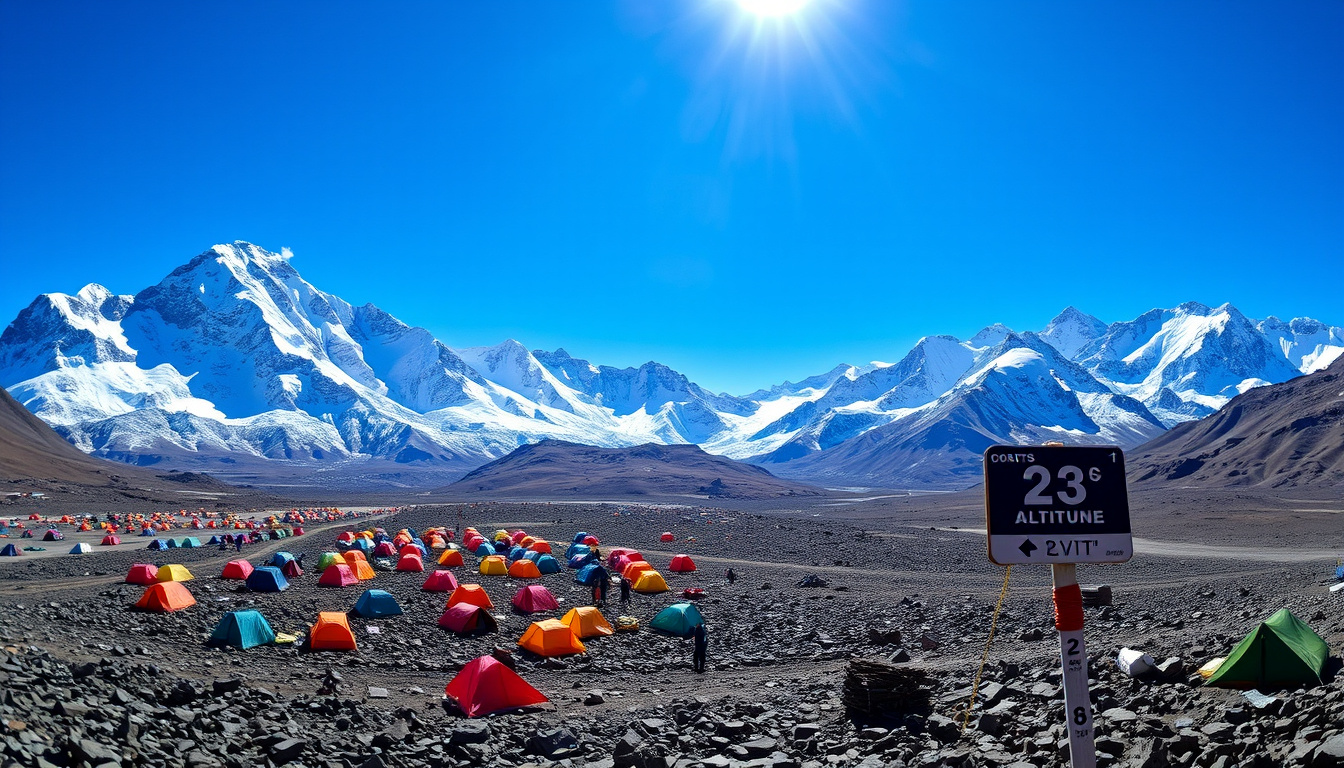
The Everest Base Camp trek is one of the world’s most iconic multi-day hikes, drawing around 40,000 trekkers annually to the foot of the highest mountain on Earth. This guide covers everything you need to know, from the exact altitude and cost to the best time to go and what to pack.
Standing at the base of Mount Everest is a dream for many, but the journey requires careful planning. The trek is not a technical climb, but it demands respect for altitude, weather, and endurance. With the right preparation, it is an achievable goal for most reasonably fit people.
This article provides a fact-based overview of the Everest Base Camp trek, drawing on multiple sources to help you plan your trip. It covers the key questions: how high, how much, how long, and what to expect.
How High Is Everest Base Camp?
The South Base Camp in Nepal sits at an altitude of 5,364 meters (17,598 feet), according to Wikipedia. The North Base Camp in Tibet is slightly lower, at 5,150 meters (16,900 feet). These elevations place the camps well above the altitude where most people begin to feel the effects of reduced oxygen.
5,364 m (17,598 ft)
5,150 m (16,900 ft)
$1,200 – $4,000+ USD
12–15 days
- The Everest Base Camp trek is a bucket-list item for many, but altitude and duration are major challenges.
- Cost varies hugely depending on service level; budget trekkers can do it independently with permits.
- Weather windows are narrow – spring and autumn offer the best conditions.
- Acclimatization is critical; rushing can lead to serious altitude sickness.
- Guided treks provide safety and local knowledge but add cost; many travelers choose them for peace of mind.
| Fact | Detail |
|---|---|
| Location | South Base Camp in Nepal, North Base Camp in Tibet |
| Height South | 5,364 m (17,598 ft) |
| Height North | 5,150 m (16,900 ft) |
| Distance from Lukla | ~65 km round trip (South) |
| Average Days | 12–15 days standard |
| Best Months | March–May and September–November |
| Cost Range | USD $1,200 (budget) to $4,000+ (luxury) |
| Permits Required | TIMS, Sagarmatha National Park entry |
How Much Does the Everest Base Camp Trek Cost?
The cost of the Everest Base Camp trek varies significantly depending on the level of service. A standard 12–14-day guided tour from a local Nepali agency typically ranges from $1,200 to $2,500, according to multiple operators including Green Valley Nepal Treks and Himalayan Hero. Luxury packages can reach $3,500 to $6,000 or more, while independent trekkers can manage on $500 to $1,000 by handling permits and logistics themselves.
Typical Package Prices (2025)
A standard guided package from a local Nepali agency generally falls between $1,200 and $2,500. This range covers permits, round-trip flights to Lukla, a guide, a porter, teahouse accommodation, and meals. Luxury packages from international operators like Intrepid Travel can cost $3,500 to $6,000 or more, often including higher-end lodges and additional support.
What’s Included in a Standard Package?
A typical guided package includes the following: round-trip flights from Kathmandu to Lukla ($350–$500), all required permits (TIMS card, Sagarmatha National Park entry, and Khumbu Rural Municipality fee, totaling roughly $50–$60), a guide ($25–$35 per day), a porter shared between two trekkers ($20–$25 per day), teahouse accommodation, and three meals per day. Most local agencies bundle these into a single price.
Hidden Costs and Tips for Saving Money
Additional expenses not always included in the package price include a Nepal visa ($30–$50), travel insurance covering up to 5,500 meters and helicopter evacuation ($100–$300), gear rental ($200–$500), and personal items like snacks, alcohol, and hot showers. Independent trekkers can reduce costs by handling permits and logistics themselves, but they still need to budget for permits, accommodation, and food along the route.
Independent trekkers can complete the Everest Base Camp trek for $500–$1,000 by paying for permits, teahouse stays, and meals separately. This option requires self-navigation and no guide or porter, but it is the most affordable way to experience the trail.
How Long Does the Everest Base Camp Trek Take?
The standard duration for the Everest Base Camp trek is 12 to 16 days, with 11 to 14 days spent trekking and the remainder for acclimatization. Most itineraries include two dedicated rest days to help the body adjust to the altitude.
The Standard 15-Day Itinerary
A typical 15-day itinerary begins with a flight from Kathmandu to Lukla, followed by a gradual ascent through Sherpa villages. Key stops include Namche Bazaar (3,440 m), Tengboche (3,810 m), Dingboche (4,410 m), and Lobuche (4,940 m). The trek reaches Everest Base Camp on day 8 or 9, with an optional early morning hike to Kala Patthar (5,545 m) for panoramic views of Everest. The return journey follows the same route back to Lukla.
Is a 7-Day Everest Base Camp Trek Possible?
Some operators offer a 7-day Everest Base Camp trek, but this is not recommended by most experts. A compressed itinerary skips essential acclimatization days, significantly increasing the risk of altitude sickness. Helicopter returns are sometimes used to shorten the descent, but the trade-off in safety and enjoyment is considerable.
Factors That Affect Duration
Weather is the most unpredictable factor. Flight delays from Kathmandu to Lukla are common, especially during the monsoon season (June–August) and winter. Individual fitness levels, group pace, and side trips such as the hike to Kala Patthar can also add or subtract days from the schedule.
What Is the Weather Like at Everest Base Camp?
Weather at Everest Base Camp varies dramatically by season. Spring (March to May) and autumn (September to November) are the most popular windows, offering the most stable conditions. Summer brings monsoon rains, and winter brings extreme cold.
Seasonal Temperature Ranges
In spring, daytime temperatures at lower elevations range from 10°C to 15°C, while at Base Camp they drop to between -5°C and 0°C. Autumn offers similar temperatures with drier conditions. Winter temperatures at Base Camp can fall to between -15°C and -20°C, and snowstorms are possible. The monsoon season (June–August) brings heavy rain, cloud cover, and leeches on the trail, along with a higher risk of flight delays to and from Lukla.
Best Time to Trek: Spring vs Autumn
Spring (March to May) is the most popular season, with clear skies and moderate temperatures. Autumn (September to November) offers equally good visibility and slightly drier conditions, often with fewer crowds. Both seasons provide reliable weather windows for the trek.
Packing for Everest Base Camp Weather
Layering is essential. A down jacket rated to -20°C, insulated boots, thermal base layers, a waterproof outer shell, and trekking poles are standard recommendations. A 40–50 liter backpack is sufficient for the essentials. Sun protection, including sunglasses and high-SPF sunscreen, is important even in cold conditions due to the intense high-altitude UV radiation.
Travel insurance is mandatory for the Everest Base Camp trek. It must cover emergency helicopter evacuation up to an altitude of 5,500 meters. Without this coverage, rescue costs can be extremely high.
Are There Guided Tours to Everest Base Camp?
Yes, guided tours are widely available and are the most common way to complete the trek. They range from budget group trips with local Nepali agencies to premium packages offered by international operators.
Popular Tour Operators (2025)
International companies like Intrepid Travel and Responsible Travel offer well-organized group treks with experienced guides. Local Nepali agencies such as Green Valley Nepal Treks and Nepal Hiking Team provide more affordable options. Each operator typically includes permits, flights, guides, porters, accommodation, and meals in their package.
Group vs Private Guided Treks
Group treks are more affordable and offer a social experience, while private treks provide greater flexibility in pace and itinerary. Private guides cost more but allow for personalized attention and adjustments along the route.
What to Look for in a Guided Trip
When choosing a guided trip, look for certified guides, a strong safety record, clear inclusions, and positive recent reviews. Reputable operators will provide details on guide qualifications, emergency procedures, and what is covered in the price.
What Should You Know Before Hiking to Everest Base Camp?
Preparation is key to a safe and enjoyable trek. The following sections cover fitness, altitude sickness, permits, and the decision to hire a guide or porter.
Fitness and Training Recommendations
A training period of 3 to 6 months is recommended, focusing on cardiovascular exercise such as hiking, running, and cycling, combined with leg strength work. Prior multi-day hiking experience is beneficial but not essential if you are in good shape.
Altitude Sickness: Prevention and Symptoms
Altitude sickness, or Acute Mountain Sickness (AMS), is a real risk above 2,500 meters. Symptoms include headache, nausea, dizziness, and fatigue. More severe forms, HAPE and HACE, can be life-threatening. Prevention relies on a gradual ascent, proper hydration, and the two acclimatization days built into the standard itinerary. Descending is the only reliable treatment for serious symptoms.
Permits and Regulations
Three permits are required for the Everest Base Camp trek: the Sagarmatha National Park entry fee ($22–$30), the Khumbu Pasang Lhamu Rural Municipality fee ($15–$20), and the Trekkers’ Information Management System (TIMS) card ($17–$20). The total cost is approximately $50–$60, and these are usually included in guided tour packages.
Should You Hire a Guide or Porter?
Hiring a guide or porter is not mandatory, but it is strongly recommended for safety and convenience. Guides provide navigation, local knowledge, and support in case of altitude sickness. Porters carry your main bag, allowing you to hike more comfortably. Hiring local staff also supports the regional economy.
Altitude affects individuals differently, and it is impossible to predict who will develop symptoms. Even fit and experienced hikers can suffer from altitude sickness. The two acclimatization days in Namche Bazaar and Dingboche are non-negotiable for reducing risk.
Typical Everest Base Camp Trek Itinerary (15 Days)
The following is a standard 15-day itinerary used by many operators. It includes two acclimatization days and the optional hike to Kala Patthar.
- Day 1: Arrive in Kathmandu, fly to Lukla (2,860 m), trek to Phakding (2,610 m)
- Day 2: Trek from Phakding to Namche Bazaar (3,440 m)
- Day 3: Acclimatization day in Namche Bazaar – hike to Everest View Hotel
- Day 4: Trek from Namche to Tengboche (3,860 m)
- Day 5: Trek from Tengboche to Dingboche (4,410 m)
- Day 6: Acclimatization day in Dingboche
- Day 7: Trek from Dingboche to Lobuche (4,940 m)
- Day 8: Trek from Lobuche to Gorak Shep (5,170 m) and visit Everest Base Camp (5,364 m)
- Day 9: Early hike to Kala Patthar (5,545 m) then descend to Pheriche (4,240 m)
- Day 10: Trek from Pheriche to Kyangjuma (3,550 m)
- Day 11: Trek to Namche Bazaar
- Day 12: Trek from Namche to Lukla
- Day 13: Fly from Lukla to Kathmandu
What You Can and Cannot Be Sure About
| Established Information | Information That Remains Unclear |
|---|---|
| Everest Base Camp altitude is fixed (South 5,364 m, North 5,150 m). | Exact cost depends on operator, season, and bargaining. |
| Trek duration generally takes 12–15 days for proper acclimatization. | Weather conditions can change rapidly; temperatures vary by year. |
| Permits are mandatory (TIMS, National Park). | Altitude affects individuals differently – cannot predict who will get sick. |
| Peak seasons are spring and autumn. | Flight delays from/to Lukla are common due to weather. |
| 7-day treks are possible but risk altitude sickness and are not recommended by experts. |
Why Trek to Everest Base Camp?
The Everest Base Camp trek is one of the world’s most famous multi-day hikes. It offers stunning Himalayan scenery, a chance to experience Sherpa culture, and the thrill of standing at the foot of the highest mountain on Earth. With around 40,000 trekkers annually, it is a well-trodden route that demands respect for altitude and endurance. The trek is not a technical climb but requires good fitness and preparation.
Authoritative Sources
“There are two base camps on Mount Everest, South Base Camp is in Nepal at an altitude of 5,364 metres (17,598 ft) North Base Camp is in Tibet at 5,150 metres.”
– Wikipedia – Everest base camps
“At 5,364m, Base Camp is over half the height of Everest, as the mighty mountain measures an enormous 8,848m. Around 40,000 people trek to Everest Base Camp annually.”
– Responsible Travel
“The trek reaches 18,520 feet (5,645m) on Kala Patthar, above 14,272 feet (4,350m). This is 7 to 8 hours of hiking.”
– Ian Taylor Trekking
What’s Next?
Once you have the basics covered, the next step is to compare Everest Base Camp trek packages from different operators, review detailed packing lists, and read up on altitude sickness prevention. For those considering a summit attempt, separate guides on Everest climbing camps are available.
Frequently Asked Questions
Is Everest Base Camp trek dangerous?
While not technically dangerous, risks include altitude sickness, weather changes, and flight delays. Proper preparation and acclimatization reduce risks significantly.
Can I trek to Everest Base Camp alone?
Yes, but it’s recommended to hire a guide or join a group for safety and navigation. Solo trekkers need permits and must be self-sufficient.
Do I need climbing experience for Everest Base Camp?
No, it’s a trekking route, not a climb. However, a good level of fitness and prior hiking experience are beneficial.
What is the best month for Everest Base Camp trek?
April and May (spring) offer the most stable weather and clear skies. October and November (autumn) are also excellent with fewer crowds.
How much does a permit cost?
TIMS card: around $20–$50 depending on whether you have a guide. Sagarmatha National Park entry: $30 per person (all approximate).
Can I use a cell phone at Everest Base Camp?
Mobile coverage is good along the route; some providers offer data. WiFi is available in most tea houses for a fee.

Oliver Reeves leads fact-checking, source verification and editorial standards at RegionalReport.co.uk.