Diego Armando Maradona, born on October 30, 1960, in Villa Fiorito, a poor neighbourhood in Lanús, Buenos Aires, rose from poverty to become one of the most celebrated and controversial figures in football history. Over a 21-year professional career, he dazzled fans with extraordinary ball control, creativity, and a fierce competitive spirit that led Argentina to World Cup glory in 1986. His sudden death on November 25, 2020, at age 60, triggered a global outpouring of grief and renewed debates about his health, his genius, and his legacy.
Maradona’s life was marked by breathtaking highs and devastating lows. He captained his country to its second World Cup title, delivered two Serie A championships to Napoli, and scored a goal later voted the greatest in World Cup history. Yet his later years were overshadowed by addiction, legal troubles, and chronic health issues that ultimately contributed to his early death. This article presents the verified facts about his biography, career statistics, the infamous “Hand of God,” his net worth, and the official cause of death.
The following sections answer the most common questions people ask about Diego Maradona, drawing on authoritative sources such as Britannica, FIFA, and major news obituaries.
Who Was Diego Maradona? Full Name, Birth & Early Life
Diego Armando Maradona was the fifth of eight children in a humble family. His father, Diego Sr. (“Chitori”), worked at a chemical factory, and his mother, Doña Tota, raised the children in Villa Fiorito. From an early age, Maradona showed a natural gift for football, playing barefoot in the dusty streets before joining the youth team of Argentinos Juniors at age 10. There he earned the nickname “El Pibe de Oro” (The Golden Boy).
Key insights from his early life include:
- He began his professional career at age 15, making his debut for Argentinos Juniors in 1976.
- He met Claudia Villafañe while playing for Argentinos Juniors; they married in 1984 and had three daughters: Dalma, Giannina, and a son named Diego (though some sources list only two daughters with Claudia; additional children were recognised later).
- His playing position was attacking midfielder or forward, and he was famously left‑footed.
- At 1.65 m (5 ft 5 in), his low centre of gravity made him nearly impossible to dispossess.
- His 1981 transfer to Boca Juniors cost US$4 million, a record fee at the time.
- He later played for Barcelona, Napoli, Sevilla, and Newell’s Old Boys before retiring in 1997.
| Fact | Value |
|---|---|
| Full Name | Diego Armando Maradona |
| Date of Birth | 30 October 1960 |
| Date of Death | 25 November 2020 |
| Cause of Death | Acute pulmonary edema / CHF |
| Net Worth (at death) | Estimated $500,000 – $1 M (debt‑ridden) |
| Height | 1.65 m (5 ft 5 in) |
| Position | Attacking Midfielder / Forward |
What Was Diego Maradona’s Cause of Death?
Official medical report
According to Biography.com, Maradona died of a heart attack (acute cardiac failure) on November 25, 2020, in Tigre, Buenos Aires. He had recently undergone emergency brain surgery to remove a blood clot caused by a subdural haemorrhage. The official cause listed on the death certificate was acute pulmonary edema secondary to congestive heart failure.
Health struggles before death
Maradona’s later years were marked by severe health problems. He battled cocaine addiction, which led to multiple suspensions during his playing career. He also struggled with obesity and heart issues. In 2000, he nearly died from a heart attack linked to drug use, and he underwent gastric bypass surgery in 2005 to control his weight. Despite these interventions, his health continued to decline.
Maradona was 60 years old at the time of his death. He had been in hospital for brain surgery just weeks earlier. The combination of pre‑existing heart disease, recent surgery, and a history of substance abuse created a high‑risk profile. Official investigations found no evidence of foul play, though some conspiracy theories persist online without credible support.
Diego Maradona’s Career Stats, Jersey & the Hand of God
Career statistics overview
Maradona’s professional career spanned from 1976 to 1997. He played 490–491 club matches, scoring 259 goals, and earned 91 caps for Argentina, netting 34 times. His most productive period came at Napoli (1984–1991), where he won two Serie A titles and the UEFA Cup, transforming the club into a European force.
Jersey number
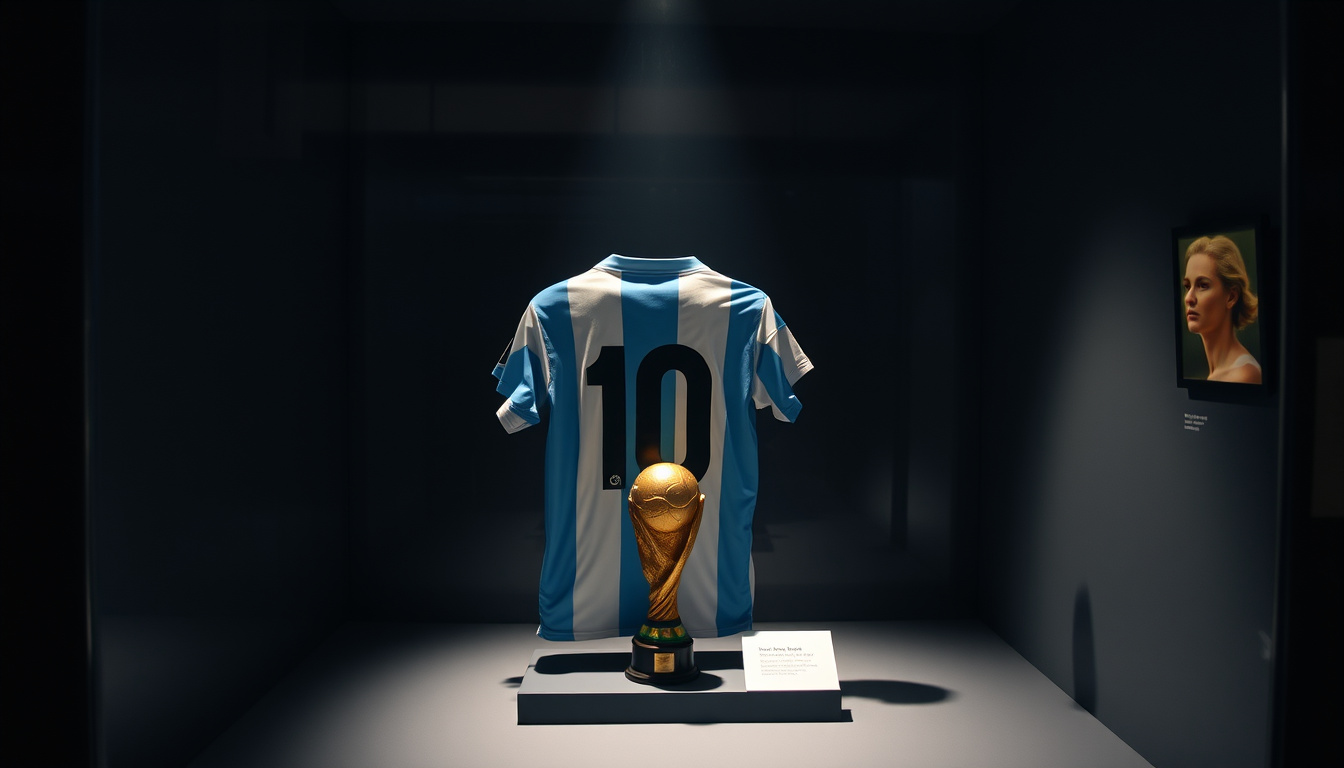
Maradona wore the iconic number 10 jersey for both club and country throughout his prime. That number became synonymous with creative playmaking and remains a symbol of his legacy.
Hand of God goal
During the 1986 World Cup quarterfinal against England, Maradona scored two goals that defined his career. The first, which he later called the Hand of God goal, was punched into the net with his left hand, unbeknownst to the referee. Maradona cheekily said it was “a little bit the hand of God.” Less than five minutes later, he dribbled past five English defenders and the goalkeeper from midfield to score what was later voted the “Goal of the Century.”
The 1986 FIFA World Cup in Mexico was the pinnacle of his career. He captained Argentina to its first‑ever World Cup title, played every minute of every match, contributed 5 goals and 5 assists, and was unanimously voted Player of the Tournament. He also appeared in the 1982, 1990 (runner‑up), and 1994 World Cups.
Manager career
After retiring, Maradona managed several clubs, including Al Wasl (Dubai) and Dorados de Sinaloa. He was named head coach of the Argentine national team in 2008 and led them to the 2010 World Cup in South Africa, where they reached the quarterfinals.
Goal counts vary slightly among sources because some records include friendly matches and lower‑division appearances. The figures here (259 club goals, 34 international goals) are the most commonly cited by Britannica and Transfermarkt.
What Was Diego Maradona’s Net Worth & Legacy?
Financial reality at death
Despite earning massive sums during his playing days, Maradona’s net worth at death was surprisingly low. Estimates range from $500,000 to $1 million, largely due to unpaid taxes, a costly divorce from Claudia Villafañe, and legal fees. He owed millions to the Italian tax authorities and was forced to sell assets. His brand and memorabilia continue to generate revenue posthumously, but exact figures remain unconsolidated.
Family and children
Maradona had five recognised children: Diego Maradona Jr., Dalma, Giannina, Jana, and Diego Fernando. His relationship with his daughters Dalma and Giannina, from his marriage to Claudia Villafañe, was close. He also had a son, Diego Jr., from an earlier relationship. In his later years, he publicly acknowledged paternity of Jana and Diego Fernando.
No public probate record fully confirms Maradona’s exact financial situation at death. While most sources agree he was heavily in debt, a few claim he still held significant assets. The $500,000–$1 million figure is widely repeated but not independently verified by a single authoritative document.
Lasting legacy
Maradona remains a cultural icon in Argentina and beyond. His impact on Napoli and Argentine football is immeasurable. His death triggered a national period of mourning and renewed debates about athlete health and addiction. Compared to modern stars like Lionel Messi and Cristiano Ronaldo, Maradona’s career was shorter but his influence at club level with Napoli is often described as more transformative.
What Were the Key Milestones in Maradona’s Life?
- 1960: Born in Lanús, Argentina.
- 1976: Professional debut at Argentinos Juniors.
- 1982: Transferred to FC Barcelona.
- 1984: Moves to Napoli, leads them to two Serie A titles.
- 1986: Captains Argentina to World Cup victory; scores “Hand of God” goal.
- 1997: Retires from professional football.
- 2008–2010: Manager of Argentina national team.
- 2020: Dies at age 60 in Tigre, Argentina.
Certainty vs. Uncertainty: Clarifying Maradona’s Death & Rumors
| Established Information | Information That Remains Unclear |
|---|---|
| Cause of death officially confirmed as acute pulmonary edema secondary to congestive heart failure. No foul play determined. | Some conspiracy theories persist online, but no credible evidence challenges the official report. |
| Net worth at death widely reported as low (under $1 M) due to debts, divorce, and unpaid taxes. | Exact figures vary by source; no public probate record fully confirmed. |
| Hand of God goal: Maradona admitted to hitting the ball with his hand. Referee error. | No uncertainty; it is a recorded historical fact. |
What Was Maradona’s Impact on Football and Culture?
Maradona’s influence on Argentine football and Napoli’s history cannot be overstated. He remains a cultural icon in Argentina, where his image adorns murals, T‑shirts, and stadiums. His death triggered a national period of mourning and renewed debates about athlete health and addiction. Compared to modern stars like Lionel Messi and Cristiano Ronaldo, Maradona’s career was shorter but arguably more impactful at the club level with Napoli, where he transformed a mid‑table side into champions.
What Do Experts and Peers Say About Maradona?
“I am Maradona, who made the goals, who made the errors… but I never gave up.”
— Diego Maradona, various interviews
“He was the greatest player in history. Unplayable.”
— Pelé, 2020 tribute
“The Hand of God? It was the hand of God… and a little bit of Maradona’s head.”
— Diego Maradona, 1986 post‑match interview
What Is Maradona’s Lasting Legacy?
Diego Maradona is remembered as one of the two greatest footballers of all time, alongside Pelé. His extraordinary ball control, playmaking genius, and 1986 World Cup triumph define his legacy. Despite personal battles with addiction and health, his influence on the sport remains unmatched. For more context on his greatest achievement, see the 1986 FIFA World Cup coverage.
Frequently Asked Questions
Did Diego Maradona win a World Cup?
Yes, he captained Argentina to victory in the 1986 FIFA World Cup.
What position did Maradona play?
He was an attacking midfielder or forward, often playing as a classic no. 10.
Was Maradona left‑footed?
Yes, he was famously left‑footed and known for his dribbling and close ball control.
How many children did Diego Maradona have?
He had five recognized children: Diego Jr., Dalma, Giannina, Jana, and Diego Fernando.
What was Maradona’s highest transfer fee?
When he moved to Napoli in 1984, the fee was a then‑world record of £6.9 million.
What was Maradona’s jersey number?
He wore the number 10 for both club and country during his prime.
Did Maradona play for Barcelona?
Yes, he played for Barcelona from 1982 to 1984, winning the Spanish league before moving to Napoli.
How tall was Diego Maradona?
He was 1.65 m (5 ft 5 in) tall.
Was Maradona a manager?
Yes, he managed several clubs and the Argentine national team (2008–2010), leading them to the 2010 World Cup quarterfinals.
What does “Hand of God” mean?
It refers to Maradona’s controversial goal against England in the 1986 World Cup, where he punched the ball into the net and later joked about divine intervention.

Amelia Grant is Local Government Editor at RegionalReport.co.uk, covering council decisions, regional public policy, combined authorities, planning, housing and transport.