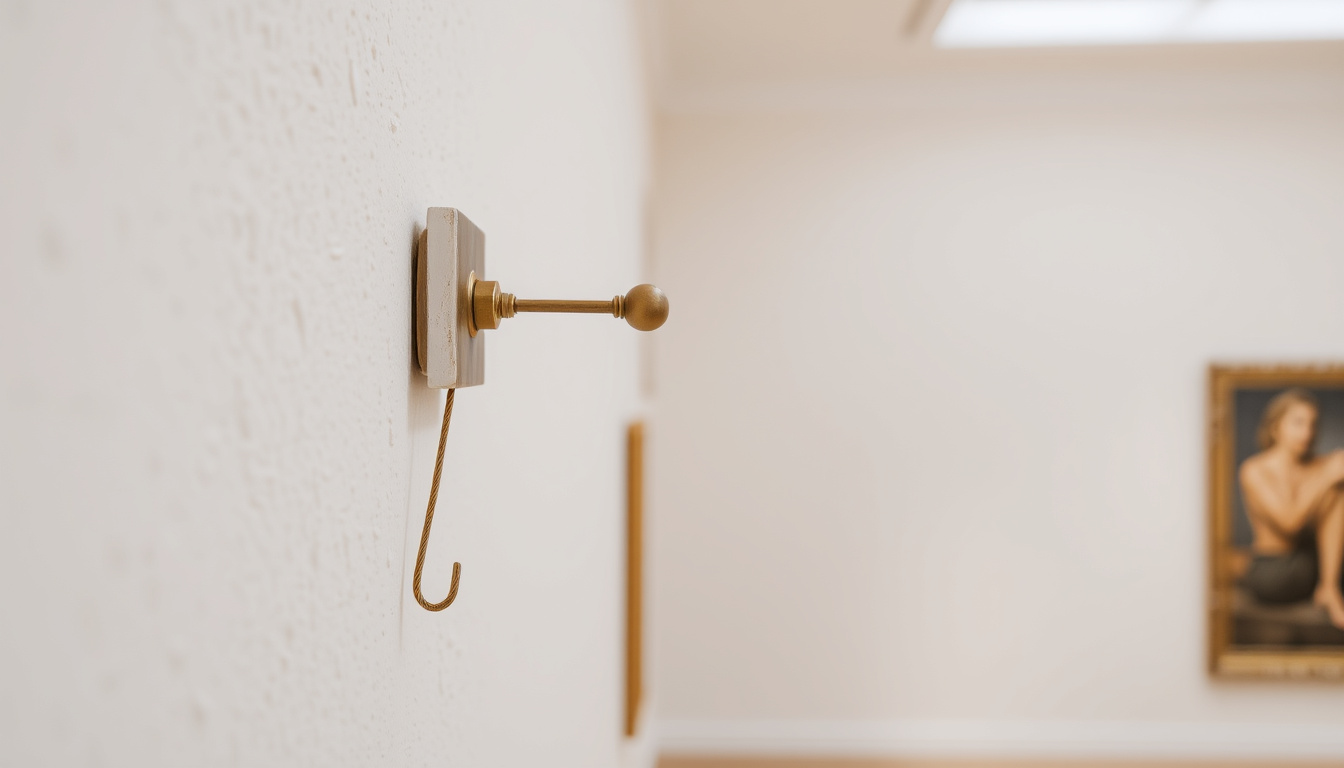
A picture rail is a horizontal moulding fitted high on the wall and designed to carry framed pictures with hooks and wire. Instead of putting a nail or screw into the wall for every frame, the rail takes the weight, which makes it easy to move and rearrange artwork without damaging the plaster.
The system has been used in British interiors since the 19th century and is still a familiar feature in Victorian and Edwardian homes. Recently, adjustable hanging systems and a wider range of materials have brought picture rails back into contemporary decorating as well.
The main things to understand are the moulding itself, the materials available, the hooks and hanging kits, and where to buy them in the UK — including B&Q, IKEA and specialist online suppliers.
What Is Picture Rail Moulding and How Does It Work?
A picture rail is best understood as a permanent hanging point. The moulding is fixed to the wall near the ceiling, and picture rail hooks are clipped over its top edge. The frame then hangs from the lower loop of the hook using wire, chain or cord.
Because the hook is not screwed into the wall, it can be slid along the rail to change the position of a picture in seconds. This is what makes picture rails different from direct wall hooks: the wall stays clean, and the same rail can support a completely different arrangement next week.
One point that confuses shoppers is the difference between picture rails and dado rails. Many UK retailers group dado and picture rails under the same category, but the two mouldings are not interchangeable. A picture rail is installed high on the wall and is designed for hanging artwork, while a dado rail is a lower moulding fitted for a different purpose.
What — Picture rail: A horizontal moulding fitted high on the wall, designed for hanging pictures with hooks and wire.
Why — Wall protection and flexibility: Lets you move artwork without creating new nail holes and adds period character.
Materials — Pine, oak, MDF and brass: Different price points and aesthetics; brass can refer to both rails and hooks.
Hardware — Hooks and hanging systems: Includes simple loop hooks, moulding rail hanging kits, and STAS-style adjustable systems.
The practical side of choosing a picture rail comes down to a few points:
- Picture rails sit near the ceiling and use hooks plus wire, chain or cord to support frames.
- The main advantage over direct wall hooks is flexibility: artwork can be moved along the rail without creating new holes.
- Pine, oak, MDF, PVC and brass each bring a different price point and aesthetic.
- Hooks must match both the rail profile and the weight of the frame.
- Some hanging kits include the hook, cable and fittings needed for a complete set-up.
- STAS-style systems are designed for easy rearrangement of frames, mirrors and other decoration.
- B&Q, IKEA and specialist UK suppliers are the main retail options for picture rails.
Picture Rail Facts at a Glance:
| Fact | Detail |
|---|---|
| Type | Interior moulding / picture hanging system |
| Typical position | High on the wall, near the ceiling |
| Main purpose | Hang framed pictures and artwork without repeated wall fixings |
| Common materials | Pine, oak, MDF, PVC and brass |
| Required hardware | Picture rail hooks plus wire, chain, or cord |
| Retail options | B&Q, IKEA, specialist online moulding suppliers |
Which Picture Rail Materials Should You Choose: Pine, Oak, MDF or Brass?
Material choice usually depends on whether the rail will be painted or left visible, and on the style of the room. Pine and MDF are common options for painted interiors, oak is chosen when the natural finish matters, and brass appears in the category more often as hardware than as a rail material.
What Is a Pine Picture Rail?
Pine is one of the most commonly stocked picture rail materials in the UK. It is frequently used for traditional profiles that are finished in paint, which makes it a practical option for rooms where the rail needs to disappear into the existing woodwork.
What Are the Benefits of Oak Picture Rails?
Oak is the material that UK suppliers most often describe as durable, with a visible and rich finish. The wood grain is part of the appeal, which is why oak rails are commonly left in their natural finish rather than painted over.
What Is a Brass Picture Rail?
Brass appears in the picture rail category in two ways: as a metal rail or, more commonly, as the finish on hooks and fittings. In many product listings, brass refers to the hanging hardware rather than the moulding itself, so the description needs to be checked before ordering.
The phrase “brass picture rail” can mean a solid brass rail or brass hooks, depending on the listing. In many retail pages, brass refers to the hooks and fittings rather than the moulding itself. Checking the product description before ordering avoids confusion.
Which Picture Rail Hooks and Hanging Kits Fit Your Frames?
The fitting used on a picture rail has several names in the UK — picture rail hook, moulding hook, S-hook, picture hanging hook and Victorian moulding hook. The working principle is the same across all of them: the hook sits over the top edge of the rail, and the artwork hangs from the lower loop.
How Does a Moulding Picture Rail Hanging Kit Work?
A moulding hanging kit typically combines hooks with the wire, chain or cable needed to suspend frames. The hook clips over the rail, and the frame is attached to the lower loop. Because the hook is not fixed to the wall, it can be slid along the rail to change the position of each picture without making new holes.
Some kits are sold with a load rating, such as the moulding hook kit with a 40 kg rating from Picture Hanging Direct, which gives a practical reference point for heavier frames.
What Is a STAS Picture Rail System?
STAS is a complete rail-and-hook hanging system designed for easy rearrangement. A STAS system allows you to hang and reposition frames, artwork, mirrors and even plates or quilts without re-drilling the wall. The hooks and cables are compatible with the system’s rails, and the components work together as a single package.
For a closer look at compatible fittings, the moulding hooks / picture rail hooks sold by Picture Rail UK come in packs of ten and clip directly over the rail edge.
How Much Weight Can a Picture Rail Support?
There is no single answer, because the safe load depends on how well the rail is fixed, the wall construction behind it, and the strength of the hook itself. UK specialists sell hook kits with specific load ratings, so the manufacturer’s specification is the best guide for heavy items.
For more detail on fittings, Picture World’s guide to picture rail hooks explains how different hooks behave on different mouldings.
For heavier pictures, use two hooks per frame and position them roughly a third of the way in from each side. This distributes the load across the rail and keeps the frame more stable.
Where Can You Buy Picture Rails? B&Q, IKEA and Specialist Retailers
UK searches for picture rail often name B&Q and IKEA, which shows that shoppers expect these products in mainstream home-improvement stores. Availability is not guaranteed everywhere, so checking a store’s current range matters.
Does B&Q Sell Picture Rails?
B&Q is a recognised UK home-improvement retailer and a common first stop for interior mouldings. Picture rails may be part of the range, but profiles and finishes depend on the store. The B&Q website is the most reliable way to confirm current local availability.
Does IKEA Sell Picture Rails?
IKEA is another recognised retailer in this space. Its range may include picture rail moulding and hanging systems, but the exact options change by store and season. The IKEA website shows what is currently available.
What Do Specialist Picture Rail Suppliers Offer?
Specialist UK suppliers carry the widest choice. Picture Rail UK and Picture Hanging Direct sell moulding hooks, kits and compatible cables, and some offer complete systems with rails, cable and hooks together. The Victorian moulding picture hanging collection at Picture Hanging Direct, for example, keeps traditional profiles available for period interiors.
When buying hooks separately, check that the hook profile matches the moulding shape and thickness. Product listings commonly state which rail edges or system components the hooks are compatible with.
How Do You Hang Pictures from a Picture Rail?
Hanging pictures from a rail is a straightforward two-stage process. The rail itself must be fixed securely first. Then the hooks, wires and frames can be added.
How Far Below the Ceiling Should a Picture Rail Be Installed?
Picture rails are typically positioned high on the wall, near the ceiling. The exact gap below the ceiling depends on the room, the ceiling line and the intended hanging drop, so the fixture height should be decided before the rail or hooks are fitted. In older UK homes, ceilings can be uneven, and suppliers suggest using a spirit level or laser level to keep the rail straight. MDF Skirting World’s picture rail height advice covers this part of the process.
How Do You Attach Hooks and Wires to a Picture Rail?
Mark the hook positions with a pencil or masking tape and check alignment with a level. Then hang the moulding hooks over the rail edge or groove and attach the cord or wire to the lower loop. The overall sequence is described by Sandwich Handyman in its fitting a picture rail guide.
Before loading artwork, test each hook and the final hanging with a gentle tug or a trial weight. Picture World’s how to choose and use picture hooks guide recommends this check, and it matters most for heavy frames.
Can You Retrofit Picture Rails to Existing Walls?
Yes. A picture rail can be added to an existing wall. On timber-frame walls, screw into studs or noggins. On masonry, use suitable plugs and screws. On dot-and-dab plasterboard, use cavity-rated fixings. BookaBuilderUK covers these picture rail fixing options in its height-and-installation guide.
Pre-drill timber moulding to prevent splitting and secure larger rails at regular intervals. A picture rail calculator can help estimate the quantity of moulding needed for a room.
Fix the picture rail securely first, then make sure the hook profile matches the moulding edge. Test every hook and the final hanging with a gentle tug or trial weight. The safe load depends on the rail fixing, the wall construction and the hook quality.
How Has the Picture Rail Evolved Over Time?
Picture rails have a long history in British interiors, and their role has shifted as wall materials and hanging habits have changed.
- — Picture rails become standard in Victorian and Edwardian homes for hanging art without damaging plaster.
- — Picture rails remain common in formal interiors and period properties.
- — Direct wall hooks and new wall materials reduce reliance on picture rails.
- — Restoration, heritage projects and period design revivals keep picture rails in demand.
- — Modern adjustable hanging systems and minimalist rails renew interest in picture rails for flexible wall decor.
What Is Known for Certain About Picture Rails?
Some facts about picture rails are well established. Others depend on the specific product, retailer or building.
| Established information | What remains unclear |
|---|---|
| Picture rails are mouldings installed near the ceiling for hanging art. | Exact B&Q and IKEA stock, dimensions and finish options vary by store and season. |
| Picture rail hooks loop over the rail and connect to picture wire or chain. | Load capacity depends on the rail fixing, wall construction and hook quality; manufacturer specs are needed for exact numbers. |
| Rails are commonly made from pine, oak, MDF and occasionally brass. | Whether “brass picture rail” means a solid brass rail or brass hooks is ambiguous. |
| Specialist systems such as STAS allow easy rearrangement of artwork. | Historical details are general; specific heritage claims are best checked against authoritative sources. |
| B&Q and IKEA are recognised retailers whose ranges may include picture rails. | Their current stock is best confirmed online, as ranges change regularly. |
Why Use a Picture Rail Instead of Direct Wall Hooks?
The original reason for fitting a picture rail was practical: it kept nails and screws out of plaster. In Victorian and Edwardian homes, where interiors were rearranged regularly, a rail made it simple to change pictures without leaving scars on the wall.
The same logic applies today. A picture rail gives a room flexibility because hooks and wires can slide along the rail to adjust the layout of a whole wall display. It also adds the period character that many homeowners want, which is why organisations such as Historic England and the Victoria and Albert Museum document and help preserve period interior features of this kind.
Modern versions go further. Adjustable systems combine a slim rail with cables and sliding hooks, allowing art to be rearranged as often as needed. In both heritage and contemporary settings, the appeal remains the same: walls that are easy to change without damage.
What Do UK Suppliers Say About Picture Rails?
Much of the published information on picture rails comes from the suppliers themselves. Their product copy describes the materials, the hook mechanisms and the benefits of complete systems.
Crafted from high-quality oak, these rails are durable and feature a rich, classic finish that complements both modern and traditional interiors.
Skirting Boards Direct — oak picture rails
A unique, easily adjustable bee-line hook
Sign Holders — moulding picture rail hanging kit
A STAS picture rail system allows you to easily hang and rearrange your frames, artwork, mirrors, quilts, plates and other decoration
Hanging Systems — STAS picture rail systems
What Should You Remember Before Choosing a Picture Rail?
A picture rail offers a clean, flexible way to hang artwork, and the main decisions are the material, the hook type and how securely the rail is fixed to the wall. Pine and MDF suit painted interiors, oak is chosen for its natural finish, and brass usually refers to the hooks. Check current stock at B&Q or IKEA for convenience, or use specialist suppliers for the widest range of hooks, kits and complete hanging systems.
What Do People Commonly Ask About Picture Rails?
Can a picture rail be painted?
Yes. Pine and MDF rails are commonly finished in the same way as other interior mouldings, which is why they are often specified when a rail needs to match existing paintwork. Oak rails are more often left with their natural finish, with suppliers highlighting their durability and classic look.
Are picture rails suitable for modern interiors?
Yes. Oak rail suppliers say their rails complement both modern and traditional interiors. Modern adjustable hanging systems and minimalist rail profiles have renewed interest in picture rails for flexible wall decor, so the finish and profile determine how well the rail fits a contemporary room.
How do you cut and join picture rail moulding?
Measure the wall and decide the hanging height before installation. Mark positions with a pencil or masking tape and check alignment with a level. Pre-drill timber moulding to prevent splitting, and secure larger rails at regular intervals. A picture rail calculator can help estimate the lengths required.
What tools do you need to install a picture rail?
You need a pencil or masking tape for marking, a level for alignment, and a drill with the right fixings. On timber-frame walls, screw into studs or noggins. On masonry, use appropriate plugs and screws. On dot-and-dab plasterboard, use cavity-rated fixings.
Can you use a picture rail with plasterboard walls?
Yes. For dot-and-dab plasterboard, use cavity-rated fixings. Where timber studs or noggins sit behind the plasterboard, screw directly into them. Test the fitted rail and hooks with a gentle tug before hanging artwork.

Oliver Reeves leads fact-checking, source verification and editorial standards at RegionalReport.co.uk.