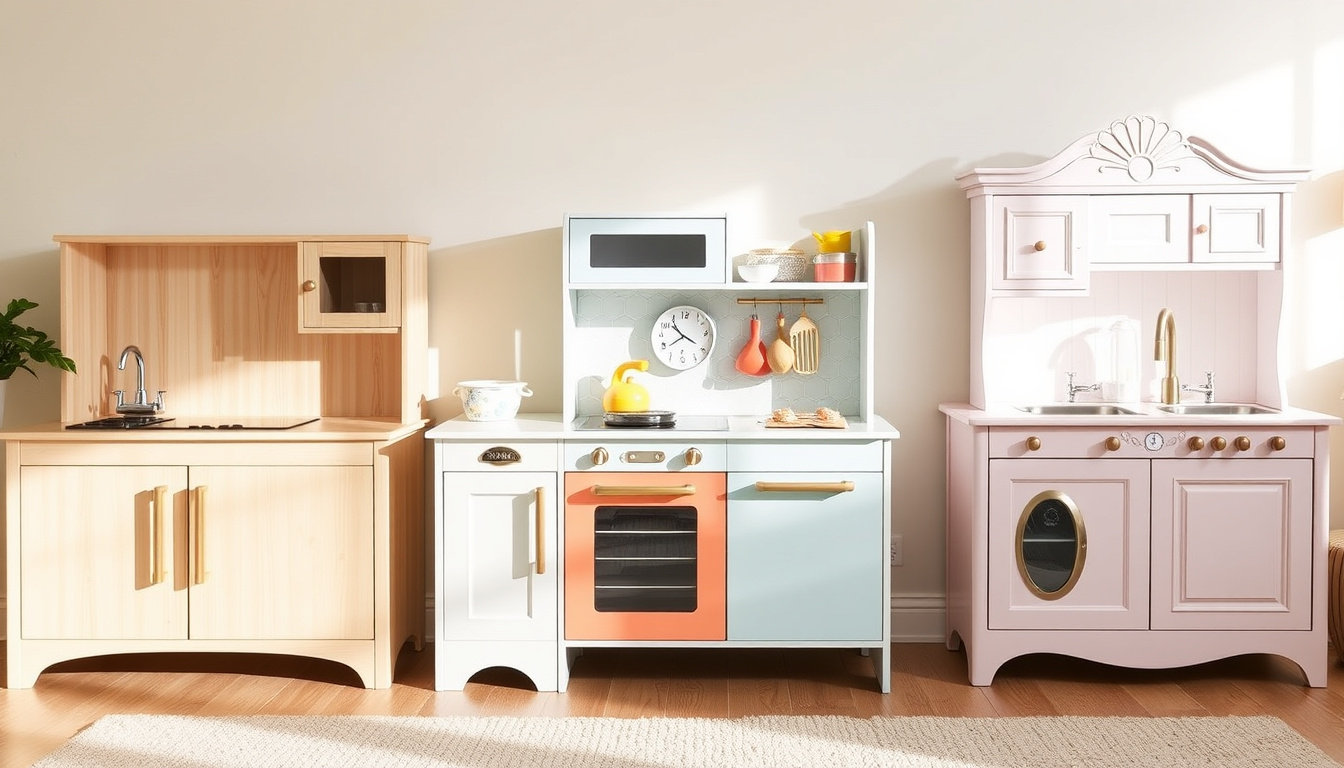
Top Play Kitchen Brands: Aldi, IKEA, and Little Dutch Compared
| Category | Price Range | Age Recommendation | Key Feature |
|---|---|---|---|
| Budget Play Kitchens (Aldi) | Under £50 | 3+ | Seasonal availability, limited-time Specialbuys |
| Modular & Modern (IKEA) | £50–£100 | 3+ | DUKTIG model, customisable, grows with the child |
| Premium Wooden (Little Dutch) | £100–£200 | 3+ | Sustainable materials, award-winning design |
| Interactive Play Kitchens | £80–£150 | 2+ | Lights, sounds, clicking knobs, accessory sets |
- Wooden play kitchens are generally more durable and recommended for ages 3 and older.
- Aldi offers budget-friendly options during seasonal Specialbuys, but availability is limited and unpredictable.
- IKEA’s DUKTIG kitchen is a top-rated modular choice that can be adapted as children grow.
- Little Dutch kitchens are recognised for their sustainable construction and design quality.
- Gender-neutral designs are increasingly common; kitchens marketed “for girls” often differ only in colour palette, not functionality.
- Plastic models tend to be lighter and easier to clean, while wood offers greater longevity.
- Interactive features such as lights and sounds are most popular in the 3–6 age range.
| Brand / Model | Best For | Price | Age | Material |
|---|---|---|---|---|
| Square House Play Kitchen | Overall value and aesthetic | ~$149 | 2+ | Wood composite |
| Lalo Play Kitchen | Premium / Scandinavian style | ~$225+ | 2–6 | Wood |
| Tiny Land Play Kitchen | Adjustable height | $110–$150 | 2–6 | Wood |
| Step2 Fun with Friends | Budget plastic option | ~$100 | 2+ | Plastic |
| KidKraft Ultimate Corner | Multiple kids / corner layout | $170–$230 | 3+ | Engineered wood |
| KidKraft Vintage Wooden Kitchen | Retro style | Not listed | 3+ | Wood |
| Melissa & Doug Wooden Chef’s Kitchen | Classic wooden option | Varies | Not listed | Wood |
| IKEA DUKTIG | Budget minimalist pick | £85 | Not listed | Not listed |
| Chad Valley wooden kitchen (breakfast bar) | Best all-round UK pick | £120 | Not listed | Wood |
| Teamson large wooden play kitchen | Modern style | £140 | Not listed | Wood |
Wooden Play Kitchens: Benefits and Top Picks
Why Choose a Wooden Play Kitchen?
Wooden play kitchens are widely regarded as the most durable option. They tend to be heavier than plastic models, which makes them less likely to tip over during play. Many parents and reviewers also note that wood better withstands years of daily use. According to a guide from KidKraft, wood kitchens are often seen as a long-term investment, while plastic models serve as a more affordable entry point. Wood also offers a natural aesthetic that blends more easily with home decor, which is one reason the style range from modern Scandinavian to vintage cottage has expanded in recent years. For those interested in a Premium Wooden (Little Dutch) option, the brand is known for its sustainable materials and award-winning design.
Top Wooden Models Compared
Among the most frequently recommended wooden kitchens are the Square House Play Kitchen, the Lalo Play Kitchen, and the Tiny Land Play Kitchen. Square House is praised for its balance of price and function, while Lalo is positioned as a premium, design-forward option. Tiny Land offers adjustable height, which allows the kitchen to be raised as the child grows. In UK roundups, the Chad Valley wooden kitchen with a breakfast bar was named a best all-round pick, and the Teamson large wooden kitchen was noted for its modern look. The IKEA DUKTIG, though not fully wooden, is a low-cost modular alternative that has earned a strong following for its flexibility.
When choosing a wooden play kitchen, check for non-toxic paints and finishes. Many premium brands, including Little Dutch, use sustainable wood and comply with the EN71 safety standard. Look for chunky knobs and large doors that are easy for small hands to operate. Storage shelves and hooks for pretend food and utensils add practical value. Wood kitchens are heavier than plastic ones, so measure your available space and confirm the floor is level before assembly.
Play Kitchens for Girls: What to Look For
Does a “Girls’ Play Kitchen” Actually Exist?
There is no functional difference between a play kitchen marketed for girls and one marketed for boys. The research shows that the core features, materials, and age recommendations are identical across genders. The main distinction is colour: some brands offer pastel pink or lavender finishes alongside more neutral or primary colour options. The same models, such as the IKEA DUKTIG or the KidKraft Ultimate Corner, are often sold in multiple colourways. Many parents and reviewers now recommend choosing a kitchen based on the child’s interests rather than marketing labels, and gender-neutral designs have become increasingly popular as a result.
What to Prioritise Regardless of Gender
For any child, the most important factors are safety, age-appropriate features, and space. A kitchen with low countertops, rounded edges, and no small detachable parts is suitable for toddlers as young as 18 months. For older children, interactive elements such as clicking knobs, opening doors, and pretend food sets extend the play value. The material choice also matters: wood is durable and eco-friendly but heavier, while plastic is lighter and easier to clean. The best choice depends on the child’s age, the available space, and the family’s budget.
Best Play Kitchens for Kids: Age, Safety, and Features
Age Recommendations at a Glance
Most play kitchens are designed for children aged 2 to 6, but the most common manufacturer recommendation is 3+ due to small parts and safety considerations. For toddlers younger than 3, the best fit is a compact or tabletop kitchen with few detachable accessories, low counters, and simple features. For children aged 3 and up, more realistic kitchens with clicking knobs, pretend food cutting, and multiple appliances are appropriate. The research from multiple sources, including a guide by Parents and a Forbes shopping article, confirms that the 3+ rating is the most widely used across the industry.
Safety and Material Considerations
All play kitchens sold in the UK must meet the EN71 toy safety standard and carry the CE mark, as stated in the UK Government’s Toy Safety Regulations 2011. Wooden kitchens are generally considered safer because they have fewer sharp edges than some plastic models, but they require regular inspection for splinters. Plastic kitchens are lighter and easier to clean, but cheaper models may have thinner walls that can crack under heavy use. The KidKraft buying guide notes that plastic is typically the cheaper option, while wood and premium designer kitchens cost more. A sturdy, tip-resistant construction is the single most important safety feature to check, regardless of material.
Before buying, verify that the kitchen has rounded edges, a stable base that won’t tip, and no small parts that could become choking hazards. Look for the CE mark and EN71 compliance. For children under 3, choose a model rated 2+ with minimal accessories. Always follow the assembly instructions and check for loose screws or splinters periodically during use.
Essential Features for a Good Play Kitchen
Reviewers consistently recommend several practical features. Sturdy, tip-resistant construction is the top priority. Low countertops allow younger children to reach all areas. Chunky knobs and large doors are easier for small hands to operate. Storage for food and dishes helps keep the play area organised. The kitchen should also have enough space for one or more children to play comfortably. For group play, larger corner or walk-in models such as the KidKraft Ultimate Corner are frequently recommended. For interactive play, Step2 models with lights and sounds are a popular choice.
Avoid kitchens with sharp edges, unstable frames, or small detachable parts if the child is under 3. Be cautious with budget plastic models that may have thin, brittle walls. For wooden kitchens, check that the paint is non-toxic and that there are no rough surfaces. Always measure the room before purchasing, as some corner and walk-in models require significant floor space. Seasonal offers, such as Aldi’s Specialbuys, may sell out quickly and cannot be restocked.
How Have Play Kitchens Evolved Over Time?
- 1950s–1970s: Early metal and plastic kitchen sets became popular, often modelled after adult kitchen appliances of the era.
- 1980s–1990s: Pretend play grew in prominence, and brands like Little Tikes introduced large, durable plastic kitchens with bright colours.
- 2000s: A wooden design renaissance began, led by companies such as Plan Toys and KidKraft, focusing on natural materials and realistic details.
- 2010s: IKEA launched the DUKTIG kitchen in 2009, and Aldi introduced seasonal Specialbuys. Premium brands such as Scandiborn and Little Dutch entered the market.
- 2020s: Interactive kitchens with lights, sounds, and extensive accessory sets became the norm. Sustainability and gender-neutral design gained attention from both manufacturers and buyers.
What Do We Know — and Not Know — About Play Kitchen Safety?
| Established Information | Information That Remains Unclear |
|---|---|
| All play kitchens sold by UK retailers must meet the EN71 safety standard. | Exact release dates or restock schedules for Aldi play kitchens are not published in advance. |
| Aldi play kitchens are only available during specific Specialbuy events, which are seasonal and limited. | Long-term durability of budget plastic kitchens has not been systematically studied across brands. |
| Little Dutch kitchens are made from sustainable wood and use non-toxic paints, according to the brand. | Whether “for girls” versions offer different play value or function compared to neutral versions has not been independently verified. |
| Wooden kitchens are generally heavier and less likely to tip than plastic models. | The frequency of splintering in wooden kitchens over years of use is not tracked by any central authority. |
What Should You Consider Before Buying a Play Kitchen?
Choosing a play kitchen involves more than comparing brands and prices. The available space in the room is a primary factor; corner and walk-in models require more floor area, while compact and tabletop kitchens fit smaller rooms. The child’s age determines which features are safe and engaging. For toddlers under 3, simple role-play with a low counter and a few utensils is ideal. For children aged 3 and older, realistic features such as clicking knobs, a toy microwave, and pretend food sets add depth to play. Material choice also matters: wood is eco-friendly but heavier, while plastic is lighter and easier to clean. Gender-specific marketing should not be a deciding factor, as the core functionality is identical across all colour options. A good toy kitchen should also include storage for accessories and be sturdy enough to withstand active play.
What Do Official Sources Say About Toy Kitchen Safety?
According to the UK Government, all toys must carry the CE mark and meet the requirements of the Toy Safety Regulations 2011.
— UK Government, Toy Safety Guidance
The US Consumer Product Safety Commission recommends checking for loose parts, sharp edges, and stability when selecting any toy for a young child.
The ASTM F963 standard is the leading consumer safety specification for toys sold in the United States, covering mechanical, electrical, and flammability hazards.
What Is the Best Play Kitchen for Your Child?
The best play kitchen depends on the child’s age, the available space, and the budget. For a toddler under 3, a compact wooden or plastic model with few small parts and low counters is the safest choice. For children aged 3 to 6, a more realistic kitchen with interactive features such as lights, sounds, and multiple appliances offers the greatest play value. IKEA’s DUKTIG is a flexible, budget-friendly option that can be customised over time. Little Dutch and Square House are strong picks for families who prioritise design and durability. For siblings or group play, a corner or walk-in model such as the KidKraft Ultimate Corner works well. Aldi’s seasonal Specialbuys provide a low-cost entry point, but availability is unpredictable. Ultimately, the right kitchen is one that fits the child’s interests, the home’s layout, and the family’s safety expectations. For more guidance on choosing safe, age-appropriate toys, see our Toy Box – Safety, Size, and Materials Guide.
Frequently Asked Questions About Play Kitchens
What is the best material for a play kitchen?
Wood is more durable and eco-friendly but heavier. Plastic is lighter and easier to clean but may crack under heavy use. The choice depends on budget and space.
Are play kitchens safe for 2-year-olds?
Yes, but only if the model is rated 2+ with no small detachable parts, rounded edges, and low countertops. Compact tabletop kitchens are often the best fit for this age.
Do play kitchens require assembly?
Yes, most models require assembly. Wooden kitchens typically take longer to assemble than plastic ones. Always follow the manufacturer’s instructions.
How long do play kitchens usually last?
Wooden kitchens can last for several years and are often passed down. Plastic kitchens may last 2–4 years depending on usage and build quality.
Can play kitchens be used outdoors?
Some plastic models are suitable for outdoor use, but wooden kitchens should be kept indoors or under cover to prevent weather damage. Mud kitchens are a better outdoor alternative.
Do play kitchens need batteries?
Only models with lights, sounds, or electronic features require batteries. Simple wooden kitchens do not need any power source.
What accessories are most useful?
Pretend food, pots and pans, utensils, and a play phone are common additions. Storage bins and hooks help keep accessories organised.
Are there gender-neutral play kitchens?
Yes, many brands now offer neutral colours such as white, grey, or natural wood. The functionality is the same regardless of colour.
How do I clean a play kitchen?
Wipe plastic kitchens with a damp cloth and mild soap. Wooden kitchens should be dusted and wiped with a barely damp cloth to avoid water damage.
What is the EN71 safety standard?
EN71 is a European safety standard that all toys sold in the UK must meet. It covers mechanical, chemical, and flammability safety. Learn more about EN71.

Margaret Ellison is Editor-in-Chief at RegionalReport.co.uk, overseeing editorial policy, corrections, standards and publication decisions. She writes occasional leader columns and major regional news stories.