
Rory Gallagher, the Irish blues-rock guitarist who rose from the showbands of Cork to become one of the most respected musicians of his generation, died on 14 June 1995 at age 47. His life was one of intense dedication to music, marked by a single battered guitar, a relentless touring schedule, and a personal life that remained largely private.
Born on 2 March 1948 in Ballyshannon, County Donegal, Gallagher moved to Cork as a child. He began his professional career in local show bands before forming the power trio Taste in 1965. After Taste disbanded in 1970, he launched a solo career that produced critically acclaimed albums and earned him a reputation as one of the finest guitarists of his era.
Today, Gallagher is remembered as a musician of uncompromising artistic integrity. Questions about his death, his personal relationships, his iconic guitar, and his most famous songs continue to draw interest from new listeners and longtime fans. This article brings together the verified facts.
What Happened to Rory Gallagher? Cause of Death and Final Days
- Despite popular belief, Rory Gallagher never married and had no wife; his long-term partner was Judy Martin.
- Gallagher died at 47 due to complications from a liver infection, exacerbated by years of heavy drinking.
- His 1961 Fender Stratocaster became legendary; he famously used only that one guitar for most of his career.
- The book Gallagher’s Guitars (2023) features photographs of his collection and is a key resource for fans.
- Rory Gallagher is widely regarded as Ireland’s first rock star and a major influence on artists like Jimi Hendrix and Johnny Marr.
| Attribute | Detail |
|---|---|
| Full Name | Rory Gallagher |
| Birth | 2 March 1948, Ballyshannon, Ireland |
| Death | 14 June 1995 (aged 47), London, England |
| Cause of Death | Complications from a liver infection (MRSA) after heavy drinking |
| Marital Status | Never married; long-term partner Judy Martin (1970s–1995) |
| Primary Guitar | 1961 Fender Stratocaster (sunburst, serial #89500) |
| Main Band(s) | Taste (1966–1971); solo band (1971–1995) |
| Hit Songs | Bad Penny, Tattoo’d Lady, Moonchild, Cradle Rock |
| Discography | 14 studio albums, 12 live albums, numerous compilations |
| Legacy Book | Gallagher’s Guitars (2023, by Pete Brown) |
Gallagher’s final months were difficult. In March 1995 he underwent a liver transplant at King’s College Hospital in London. The operation initially appeared successful, but he contracted a staphylococcal infection known as MRSA. Three months later, on 14 June 1995, he died from complications of that infection. Official records and biographies confirm that the primary cause of death was the MRSA infection following the transplant, not cancer or alcohol directly, though years of heavy drinking had contributed to his liver failure. Some fan groups and informal sources have suggested he “drank himself to death,” but the official medical record points to the post-surgical infection as the direct cause.
Throughout his final years, Gallagher maintained a gruelling performance schedule. He played over 2,000 concerts worldwide, including many in Northern Ireland during the Troubles, and sold more than 30 million records globally. His health had been declining for some time before the transplant, but he continued touring and recording.
Did Rory Gallagher Have a Wife? Personal Life and Relationships
Rory Gallagher never married. This is one of the most frequently asked questions about his life, largely because the idea that a rock star of his stature would remain single surprises many. His long-term partner was Judy Martin, with whom he had a relationship from the 1970s until his death in 1995.
A Private Existence Away from the Stage
Gallagher lived a solitary life in a modest apartment in Chelsea, London, overlooking Chelsea Harbour. He had no children. Those close to him describe a man who was deeply dedicated to his music and uncomfortable with the trappings of rock stardom. He called his mother every evening regardless of where he was in the world, a habit that reflected his strong family ties.
Faith and Personal Convictions
Gallagher was a devout Catholic. He regularly attended mass, was an avid reader of Catholic literature, and his favourite song was “Amazing Grace,” which was played at his funeral in Cork. His religious faith was a private but significant part of his life, and it informed his modest, grounded approach to fame.
Despite persistent speculation, there is no evidence that Rory Gallagher ever married or had children. His long-term partner, Judy Martin, was with him from the 1970s until his death. Gallagher’s personal life was defined by privacy and a near-total commitment to his music.
Which Guitar Did Rory Gallagher Play? His Iconic Instruments and Bands
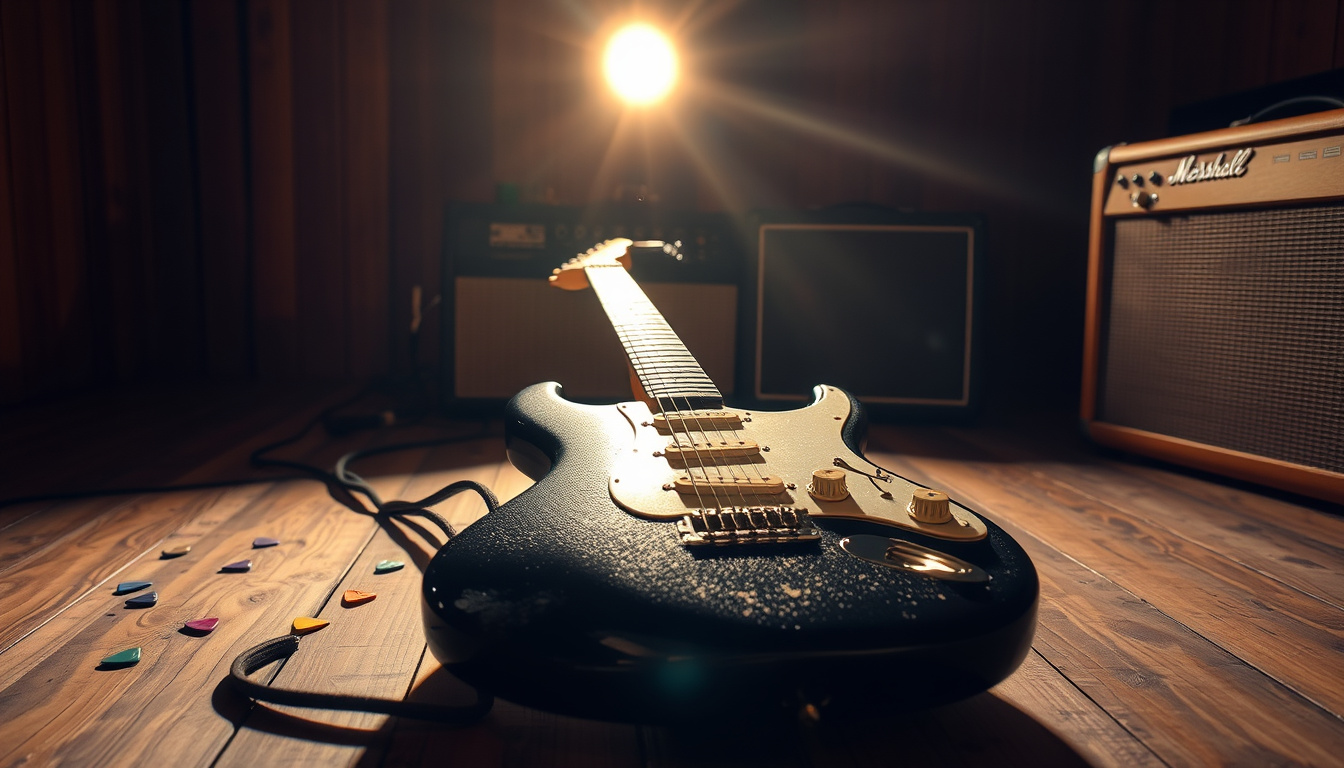
Gallagher’s primary instrument was a 1961 Fender Stratocaster in sunburst finish. He bought it second-hand for £100 when he was 15 years old and never switched to another guitar as his main instrument. The guitar’s heavily worn appearance, with chipped paint and visible wood, became a visual symbol of his no-frills, working-class stage persona.
The Stratocaster That Defined a Sound
The instrument’s serial number is 89500. Gallagher used Ernie Ball Slinky strings in a 009–042 gauge. Over decades of constant use, the guitar developed a distinctive look and feel that Gallagher never altered. He was famously quoted saying, “My guitar was my passport. I never felt the need to own many.” The guitar is now housed at the Rory Gallagher Exhibition at the Regional Cultural Centre in Letterkenny, Donegal.
From Showbands to Taste: The Early Bands
Gallagher began his career in Irish showbands, playing covers in ballrooms across the country. In 1965 he formed the blues-rock power trio Taste with bassist Eric Kitteringham and drummer Norman Damery. The band gained a strong following and released the album On the Boards in 1970, which showcased Gallagher’s incendiary guitar work and powerful vocals. After Taste disbanded in 1970, Gallagher launched his solo career, which became his most productive period.
The Solo Years
Between 1971 and 1976, Gallagher released a string of studio albums that defined his sound: Rory Gallagher (1971), Deuce (1973), Tattoo (1973), Against the Grain (1975), and Calling Card (1975). These records blended blues, rock, and Irish folk influences and solidified his reputation as a world-class guitarist. He was voted Guitarist of the Year by Melody Maker in 1972.
Rory Gallagher’s Most Iconic Songs: Bad Penny and Tattoo’d Lady
Two songs above all others are synonymous with Rory Gallagher’s career: “Bad Penny” and “Tattoo’d Lady.” Both became live staples and remain fan favourites decades after their release.
“Bad Penny” — A Blues-Rock Staple
“Bad Penny” was released on the 1979 album Top Priority. The track is a blues-rock number about a persistent, trouble-causing lover who keeps coming back. Its driving riff and Gallagher’s impassioned vocal delivery made it an immediate crowd favourite. The song’s title also became a popular phrase among fans, and it has been covered by numerous artists.
“Tattoo’d Lady” — Live Energy Captured
“Tattoo’d Lady” tells the story of a beautiful woman with tattoos. It was recorded for the 1973 live album Live in Europe, which became a bestseller. The track captures the raw energy of Gallagher’s live performances, with extended guitar solos and a call-and-response dynamic with the audience. It is often cited by fans as one of his most electrifying concert moments.
Gallagher’s most famous songs, including “Bad Penny,” “Tattoo’d Lady,” “Cradle Rock,” and “Moonchild,” are rooted in the blues tradition but delivered with a hard-rock intensity. His lyrics often dealt with everyday struggles, travel, and relationships, and his stage presence turned each performance into a singular event.
Some sources have incorrectly listed songs such as “Lady,” “Taste,” “Bad Penny Tattoo,” or “Gallagher Guitars” as Gallagher titles. Verified well-known songs include “Bad Penny” (from Deuce), “Tattoo,” “When My Mind’s Not Home,” and “Jailbait.” “Bad Penny” and “Tattoo” remain his most iconic.
The Rory Gallagher Book: Gallagher’s Guitars and Other Publications
The most significant book dedicated to Rory Gallagher is Gallagher’s Guitars, a photographic volume published in 2023. The book, authored by Pete Brown, features detailed photographs of Gallagher’s instrument collection and offers insight into his gear choices. It is promoted through his official site and has become a collector’s item among fans.
What the Book Contains
Gallagher’s Guitars documents more than 30 instruments that Gallagher owned or played throughout his career. The book includes commentary from luthiers, band members, and music historians. It does not function as a full biography but rather as a visual companion to his musical journey. The official Rory Gallagher website continues to host his story and legacy, including news about archival releases and tribute events.
Other Published Works
No official biography titled Rory Gallagher: The Book or Gallagher Guitars exists from a major publisher. Memorials and tribute articles have been published posthumously, and his estate has released archival live recordings and remasters. The official site remains the primary source for accurate information about his life and work.
What Is the Timeline of Rory Gallagher’s Life and Career?
- 1948 — Born in Ballyshannon, County Donegal, Ireland.
- 1966 — Forms the band Taste with Eric Kitteringham and Norman Damery.
- 1970 — Taste disbands; Gallagher embarks on a solo career.
- 1971 — Releases debut solo album Rory Gallagher.
- 1973 — Live album Live in Europe becomes a bestseller.
- 1994 — Diagnosed with liver failure; undergoes unsuccessful liver transplant.
- 1995 — Dies on 14 June from complications of MRSA infection after transplant.
- 2023 — Publication of Gallagher’s Guitars photographic book.
What Do We Really Know About Rory Gallagher’s Cause of Death?
The official medical record is clear, but public discussion has sometimes blurred the facts. Below is a comparison of what is established and what remains less certain.
| Established Information | Information That Remains Unclear |
|---|---|
| Rory Gallagher died on 14 June 1995 at age 47. | Some sources suggest heavy alcohol use was the primary cause of liver failure, but the exact amount is unconfirmed. |
| He never married; his long-term partner was Judy Martin. | There is no evidence of a secret marriage or children, though occasional speculation exists. |
| His primary guitar was a 1961 Fender Stratocaster. | The exact number of guitars he owned is debated; the book documents 30+ instruments. |
| Cause of death officially reported as complications of a liver infection (MRSA) following a transplant. | No independent autopsy results have been made public beyond the hospital records. |
What Was Rory Gallagher’s Influence on Blues Rock?
Rory Gallagher played a central role in popularising blues rock across Europe during the 1970s. At a time when the genre was dominated by British guitarists such as Eric Clapton, Jeff Beck, and Jimmy Page, Gallagher carved out a distinct identity with his raw, unpolished sound and relentless live schedule. He was often compared to Jimi Hendrix, and Hendrix himself is said to have admired Gallagher’s work.
Gallagher’s influence extended to later generations of guitarists. Johnny Marr of The Smiths has cited him as a major inspiration, as have Slash of Guns N’ Roses and Brian May of Queen. His commitment to live performance — he played more than 2,000 concerts — set a standard for authenticity that many rock musicians have sought to emulate. His legacy continues through his official website, social media channels, and the ongoing release of archival recordings.
Gallagher’s stage image — denim shirts, flannel, and a battered Stratocaster — became iconic precisely because it was uncontrived. He never sought the spotlight for its own sake. In an era of excess, he remained a working musician who let his guitar do the talking. That approach has earned him the enduring label “the greatest guitarist you’ve never heard of.”
What Do Other Musicians Say About Rory Gallagher?
“Rory Gallagher was Ireland’s first rock star.”
— Encyclopædia Britannica (via Wikipedia)
“He played with a reckless abandon that made every concert a unique event.”
— Jack Bruce, Cream bassist (quoted in Gallagher’s Guitars book)
“My guitar was my passport. I never felt the need to own many.”
— Rory Gallagher (interview, 1980; reproduced on rorygallagher.com)
What Is Rory Gallagher’s Lasting Legacy?
Rory Gallagher’s legacy is that of a musician who remained true to his art until the very end. He sold over 30 million records, played thousands of concerts across the globe, and influenced countless guitarists who followed. His music continues to attract new listeners on streaming platforms, and his estate regularly releases archival live recordings and remasters. The official site and social media pages keep his story alive for a new generation. For anyone seeking to understand his life and career in depth, Rory Gallagher’s life and career is documented in detail on his official website. And for those exploring his broader influence, Rory Gallagher’s musical legacy is catalogued across extensive biographical resources.
Frequently Asked Questions About Rory Gallagher
What is the song ‘Bad Penny’ about?
‘Bad Penny’ is a blues-rock track about a persistent, trouble-causing lover. It was released on the 1979 album Top Priority and became a live staple.
What is the song ‘Tattoo’d Lady’ about?
‘Tattoo’d Lady’ tells the story of a beautiful woman with tattoos; it is a fan favourite from the 1973 live album Live in Europe.
Did Rory Gallagher have children?
No. Gallagher never married and did not have any known children. His long-term partner Judy Martin was with him until his death.
What guitar strings did Rory Gallagher use?
He used Ernie Ball Slinky strings (009–042 gauge) on his Stratocaster.
Where is Rory Gallagher buried?
He is buried in St. Oliver’s Cemetery, Ballinlough, Cork, Ireland.
Is there a museum dedicated to Rory Gallagher?
The Rory Gallagher Exhibition is located at the Regional Cultural Centre in Letterkenny, Donegal, featuring memorabilia and his famous Stratocaster.

Henry Wallace is Managing Editor at RegionalReport.co.uk, running the daily news list, the regional publishing schedule and newsroom workflow.