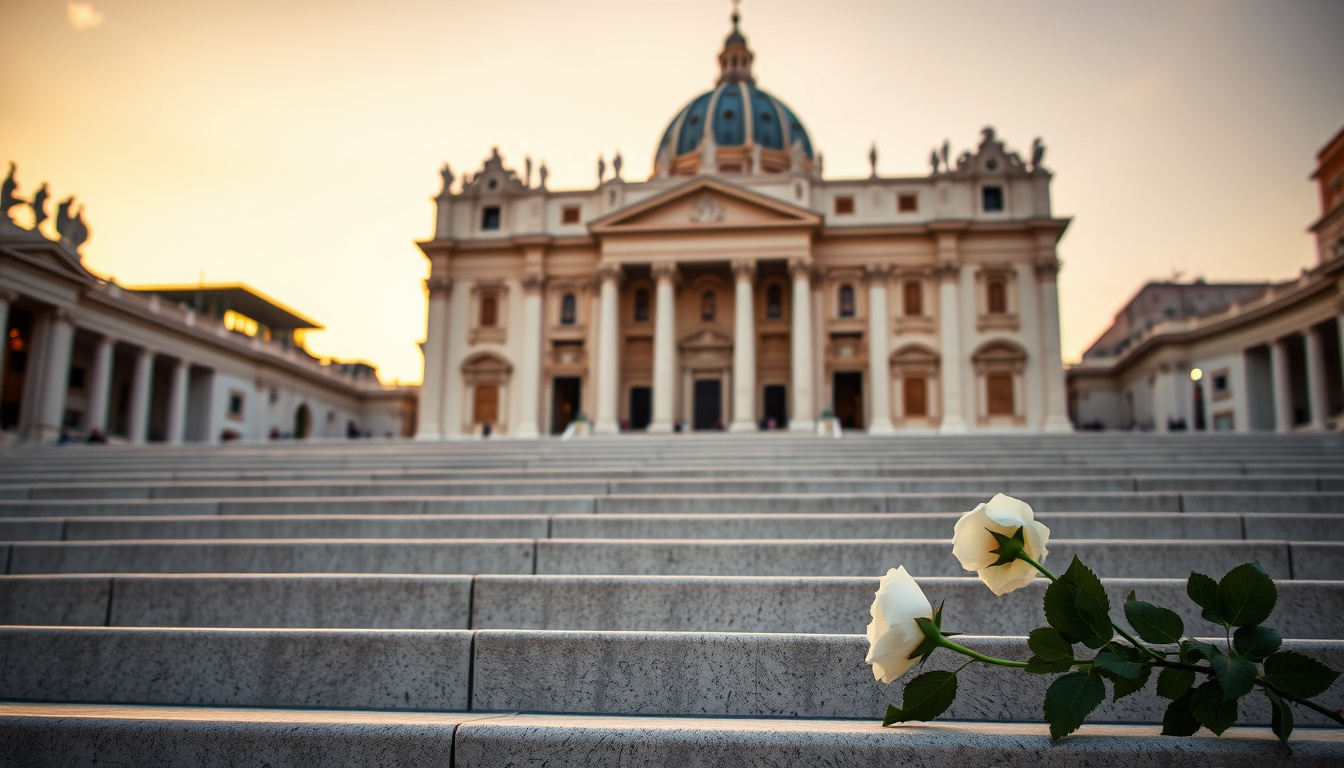
Karol Józef Wojtyła, known to the world as Pope John Paul II, was the first non-Italian pontiff in 455 years and one of the most influential figures of the 20th century. His nearly 27-year papacy reshaped the Catholic Church’s relationship with the modern world. From surviving an assassination attempt to his role in the fall of communism, his life story is one of profound resilience and faith.
Born in Wadowice, Poland, on 18 May 1920, his early years were marked by personal tragedy and global conflict. He lost his mother at age nine, his older brother soon after, and his father during the Nazi occupation. These experiences forged a deep spiritual character that would define his leadership as the 263rd successor to Saint Peter.
What Was the Cause of Pope John Paul II’s Death?
Key Insights
- Pope John Paul II was the longest-serving pope of the 20th century and played a key role in the fall of communism in Eastern Europe.
- He survived an assassination attempt on 13 May 1981 and publicly forgave his would-be assassin.
- He wrote 14 encyclicals, numerous apostolic letters, and influential books like Crossing the Threshold of Hope.
- His cause of death was formally septic shock due to a urinary tract infection, compounded by Parkinson’s disease.
Key Facts About Pope John Paul II
| Fact | Detail |
|---|---|
| Full Name | Karol Józef Wojtyła |
| Date of Birth | 18 May 1920 |
| Date of Death | 2 April 2005 |
| Papal Name | John Paul II |
| Papal Motto | Totus Tuus (Totally Yours) |
| Canonization | 27 April 2014 (with Pope John XXIII) |
| Feast Day | 22 October |
| Height | Approximately 1.78 m (5 ft 10 in) |
| Major Writings | 14 encyclicals, including Redemptor Hominis, Evangelium Vitae |
| Assassination Attempt | 13 May 1981 by Mehmet Ali Ağca |
Details of His Final Illness and Passing
John Paul II died on 2 April 2005 in Vatican City at age 84. His death was caused by septic shock and heart failure resulting from a prolonged illness, including Parkinson’s disease and recurrent infections. Pope Benedict XVI beatified him on 1 May 2011, and Pope Francis canonized him as Saint John Paul II on 27 April 2014, recognizing miracles attributed to his intercession.
How Did the Assassination Attempt on Pope John Paul II Unfold?
On 13 May 1981, Pope John Paul II was shot and critically wounded in St. Peter’s Square by Mehmet Ali Ağca, a Turkish gunman and member of a militant fascist group. The attack occurred during a Wednesday general audience. The Pope survived after multiple surgeries, crediting his survival to divine intervention and the prayers of the faithful.
Who Shot Pope John Paul II and Why?
Mehmet Ali Ağca was arrested, tried, and later released. The Pope famously forgave him, meeting with him in 2000. Ağca’s motives have been a subject of speculation, but his affiliation with a militant group is well documented. The Pope’s forgiveness became one of the most powerful moments of his papacy.
What Books Did Pope John Paul II Write?
Saint John Paul II authored 14 encyclicals (e.g., Veritatis Splendor, Fides et Ratio), 15 apostolic exhortations, 11 apostolic constitutions, and 45 apostolic letters. He also wrote five major books, including The Spirit of the Liturgy and Memorial and Identity. His writings emphasized the universal call to holiness, and he canonized 482 saints and beatified 1,338 people.
Major Encyclicals and Theological Works
- Veritatis Splendor (1993): On moral truth.
- Fides et Ratio (1998): On the relationship between faith and reason.
- Ecclesia de Eucharistia (2003): On the Eucharist.
John Paul II’s encyclicals continue to shape Catholic teaching on moral theology and the relationship between faith and reason. Fides et Ratio in particular is studied in seminaries worldwide for its philosophical depth.
What Was Pope John Paul II’s Early Life and Education?
Childhood and Schooling in Poland
Karol Wojtyła was born in Wadowice, Poland, the youngest of three children to Karol Wojtyła and Emilia Kaczorowska. In 1938, he enrolled at the Jagiellonian University in Kraków, studying Polish language, literature, theater, and poetry. His academic career was interrupted by World War II; while working in a quarry and a chemical factory under Nazi occupation, he enrolled in a clandestine underground seminary directed by Archbishop Adam Stefan Sapieha in 1942.
Path to the Priesthood and Bishopric
Karol was ordained a priest on 1 November 1946 by Cardinal Sapieha. He then traveled to Rome to complete his doctoral studies at the Pontifical Athenaeum Angelicum, earning a doctorate in theology in 1948. Upon returning to Poland, he served as an assistant pastor in Niegowice and later became a chaplain for university students in Kraków. He earned a doctorate in philosophy and taught ethics at the Catholic University of Lublin. In 1958, he was appointed auxiliary bishop of Kraków by Pope Pius XII, becoming the youngest bishop in Poland’s history at age 38.
His education during the Nazi occupation was illegal. Underground seminaries were a form of resistance, and participants risked imprisonment or death. This experience deeply shaped his later commitment to human rights and religious freedom.
Is There a Pope John Paul III?
No, there is no Pope John Paul III. After Pope John Paul II’s death in 2005, the papal conclave elected Cardinal Joseph Ratzinger, who took the name Benedict XVI. The numbering of papal names follows tradition; John Paul III does not exist.
Successors After John Paul II
Pope Benedict XVI succeeded John Paul II, serving from 2005 to 2013. He was followed by Pope Francis. The numbering system of papal names means that a John Paul III is possible in the future, but no such pope has ever reigned.
Key Milestones in the Life of Pope John Paul II
- 1920: Born in Wadowice, Poland
- 1938: Began studies at Jagiellonian University in Krakow
- 1942: Entered underground seminary during Nazi occupation
- 1946: Ordained a priest
- 1958: Appointed Auxiliary Bishop of Krakow
- 1964: Became Archbishop of Krakow
- 1967: Created Cardinal
- 1978: Elected Pope (16 October)
- 1981: Shot in St. Peter’s Square (13 May)
- 2005: Died on 2 April; beatified 2011; canonized 2014
What Is Known and What Is Still Unclear
| Established Information | Information That Remains Unclear |
|---|---|
| Pope John Paul II’s cause of death: septic shock (official Vatican statement). | There is no ‘Pope John Paul III’ – any search for this is a confusion with the numbering system (John Paul II’s successor was Benedict XVI). |
| He was shot by Mehmet Ali Ağca; Agca was captured and imprisoned. | The exact progression of his Parkinson’s disease in the last decade is not fully documented. |
| He wrote 14 encyclicals; the full list is public. | His height is often stated as 5’10” (1.78 m) but varies in sources; official Vatican records do not list height. |
| His education included studies at Jagiellonian University and at the Angelicum in Rome. | The complete details of his daily life during the final year of his papacy remain private. |
Analysis and Historical Context
Pope John Paul II’s papacy coincided with major geopolitical shifts: the Solidarity movement in Poland, the fall of the Berlin Wall, and the end of the Soviet Union. His strong stance against communism and his global travel made him a symbol of freedom. Theologically, he reinforced traditional Catholic teachings on moral issues. The 1981 assassination attempt and his subsequent forgiveness became defining moments. His later years were marked by declining health due to Parkinson’s, which he accepted with public grace. Understanding his life requires examining both his Polish roots and his global impact.
Key Quotes and Authoritative Sources
“Be not afraid!” – often repeated during his papacy.
“I forgive you” – to Mehmet Ali Ağca in prison (1983).
“The family is the first and fundamental school of social living.” – from his apostolic exhortation Familiaris Consortio.
Summary of Pope John Paul II’s Legacy
Saint John Paul II is remembered for his global travels, visiting 120 countries, his role in ending communism in Eastern Europe, and his defense of human dignity. His canonization in 2014 marked him as a pivotal figure in modern Catholicism, with his feast day celebrated on 22 October. For further context on the papacy, explore the biography of the Saint Peter – Biography, Death, and Lasting Legacy, the first pope.
Frequently Asked Questions
How old was Pope John Paul II when he became pope?
He was 58 years old at the time of his election on 16 October 1978.
What is Pope John Paul II’s feast day?
His feast day is 22 October, the anniversary of his inauguration as pope.
How many languages did Pope John Paul II speak?
He was fluent in Polish, Italian, French, German, English, Spanish, Portuguese, and Latin, and could read several others.
Where is Pope John Paul II buried?
He is buried in St. Peter’s Basilica in Vatican City, in the Chapel of St. Sebastian.
What was Pope John Paul II’s first encyclical?
His first encyclical was Redemptor Hominis (The Redeemer of Man), published in March 1979.
Did Pope John Paul II visit the United States?
Yes, he made seven pastoral visits to the United States between 1979 and 1999.
How many saints did Pope John Paul II canonize?
He canonized 482 saints and beatified 1,338 people, more than any pope in the previous 500 years.
What was Pope John Paul II’s papal motto?
His motto was “Totus Tuus” (Totally Yours), reflecting his devotion to the Virgin Mary.
Who succeeded Pope John Paul II?
Cardinal Joseph Ratzinger succeeded him as Pope Benedict XVI in 2005.
What role did John Paul II play in the fall of communism?
His support for the Solidarity movement in Poland and his strong criticism of communist regimes helped galvanize opposition to Soviet control in Eastern Europe.
Henry Wallace is Managing Editor at RegionalReport.co.uk, running the daily news list, the regional publishing schedule and newsroom workflow.