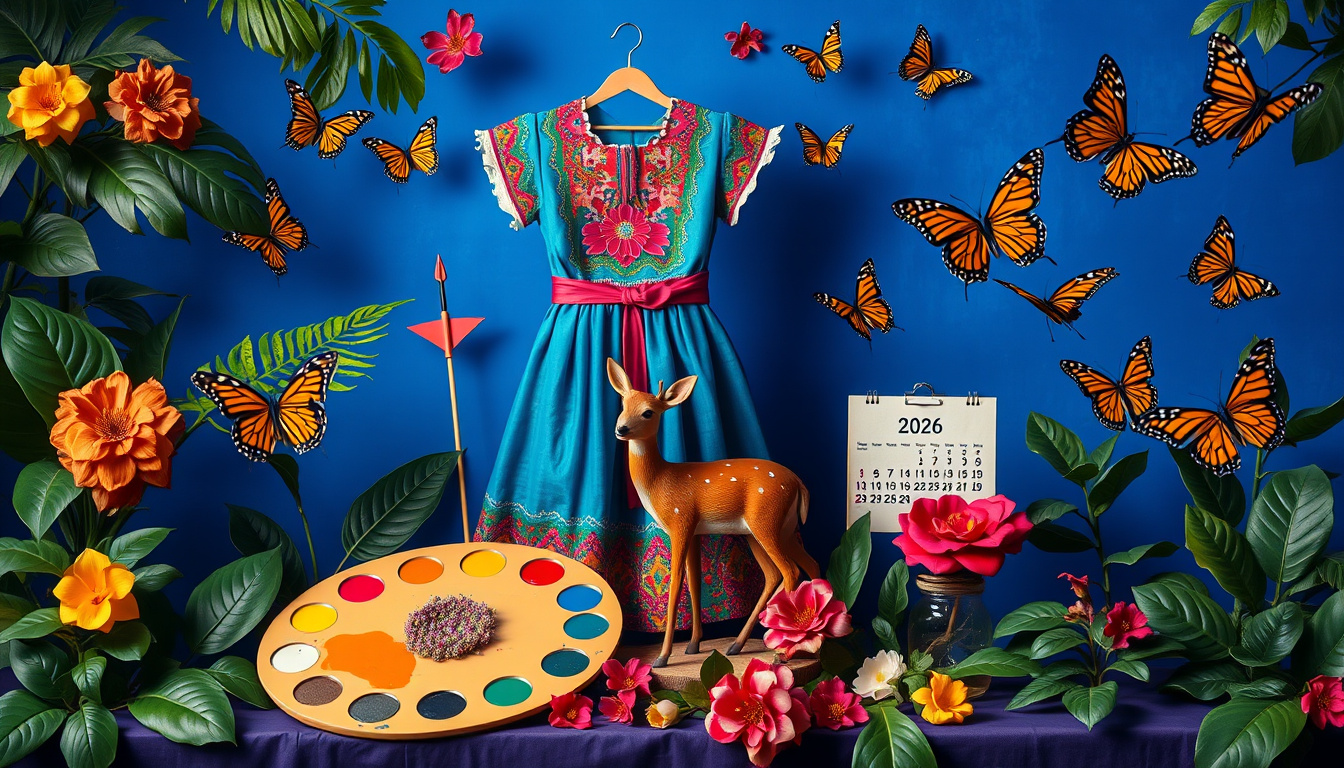
Frida Kahlo, the celebrated Mexican painter, turned a life of immense physical pain and personal turmoil into some of the most recognisable and emotionally charged art of the 20th century. Known for her piercing self-portraits and use of vivid, symbolic imagery, she is remembered not only as a groundbreaking artist but also as a powerful feminist and cultural icon. Her story, marked by a devastating accident, a turbulent marriage to Diego Rivera, and a relentless exploration of identity, continues to captivate audiences worldwide.
Born in Coyoacán, Mexico, in 1907, Kahlo’s life was a series of battles against illness and injury. From contracting polio as a child to surviving a near-fatal bus accident at 18, she channelled her suffering into her work, creating a legacy that would redefine self-portraiture. Today, her paintings are studied for their raw honesty, while upcoming major exhibitions point to an enduring fascination with her life and art.
Who Was Frida Kahlo? Life, Accident, and Husband
July 6, 1907, Coyoacán, Mexico
Diego Rivera (m. 1929; div. 1939; remarried 1940)
Self-portraits, Mexican folk art style
July 13, 1954 (age 47), cause: pulmonary embolism
Key Insights into Her Life and Work
- Frida Kahlo’s art was deeply autobiographical, often reflecting her physical pain and emotional turmoil.
- Her marriage to Diego Rivera was tumultuous but profoundly influential on both artists’ work.
- She remains a powerful feminist and LGBTQ+ icon decades after her death.
- The 2026 Tate Modern exhibition marks one of the largest retrospectives of her work in the UK.
- Her paintings frequently drew on Mexican culture and indigenous motifs.
- She transformed personal suffering into a universal visual language.
Key Facts About Frida Kahlo
| Fact | Detail |
|---|---|
| Full name | Magdalena Carmen Frida Kahlo y Calderón |
| Polio at age 6 | Left her with a permanent limp. |
| Bus accident at 18 | Severe injuries caused lifelong pain and infertility. |
| Total paintings | Completed 143 paintings, 55 of which are self-portraits. |
| Louvre milestone | First Mexican artist to have a painting purchased by the Louvre. |
| Political affiliation | Politically active; often described as a communist or radical figure. |
| Artistic style | Known for vivid colour, symbolic imagery, and exploration of suffering. |
| First solo exhibition | New York in 1938, followed by Paris in 1939, and Mexico in 1953. |
Frida Kahlo’s Most Famous Paintings and Artistic Style
The Central Role of the Self-Portrait
Kahlo’s artistic output is dominated by the self-portrait. This was not merely a stylistic choice but a deep, analytical process. As she herself stated, she painted herself because she was the subject she knew best. These works, including the iconic Self-Portrait with Thorn Necklace and Hummingbird, are dense with personal symbolism, often blending her own image with elements of Mexican flora, fauna, and religious iconography to explore pain, identity, and mortality.
Kahlo’s work is known for its vivid colour and symbolic imagery, often drawing on Mexican culture, indigenous motifs, personal suffering, and bodily fragility. The self-portrait became the central form through which she examined her own identity and pain, transforming personal tragedy into a universal exploration of the human condition.
The Meaning Behind ‘The Two Fridas’
Painted in 1939 following her divorce from Diego Rivera, The Two Fridas is perhaps her most famous work. It depicts two versions of herself sitting side-by-side. One Frida wears a traditional Tehuana dress, representing the side of herself Rivera loved, while the other wears a modern European garment, representing the independent self he rejected. Both hearts are exposed, connected by a single artery, illustrating her profound heartbreak and fractured identity.
Why She Is Considered a Feminist Icon
Kahlo’s posthumous rise as a feminist icon stems from her unflinching portrayal of female experiences, including miscarriage, childbirth, and domestic violence. She refused to soften her appearance or her pain for the male gaze, instead presenting her body and emotions with brutal honesty. Her work challenged traditional gender roles and celebrated the strength and complexity of women, making her a lasting symbol of female resilience.
Frida Kahlo Cause of Death: What Really Happened?
The official cause of Frida Kahlo’s death on July 13, 1954, at the age of 47, is documented as a pulmonary embolism. This is the widely accepted conclusion found in mainstream biographical references, including Encyclopaedia Britannica. Given her severely weakened state from decades of chronic pain, surgeries, and infections, a pulmonary embolism is a medically consistent explanation.
Despite the official record, rumours have persisted that Kahlo may have died from a deliberate overdose of painkillers. Some sources mention speculation about this possibility, linked to her prior suicide attempts and severe depression. However, no conclusive evidence supports this theory, and the documented cause remains a pulmonary embolism, as accepted by most historians.
Frida Kahlo Exhibition 2026 and Where to See Her Work Today
One of the most anticipated events in the art world is the major 2026 exhibition at the Tate Modern in London, titled Frida: The Making of an Icon. This retrospective is set to be one of the largest showings of her work in the UK, bringing together key paintings and exploring how her image became a global phenomenon. For more details, visit the Tate Modern exhibition page.
Beyond the upcoming London show, the most significant permanent location for her work is the Frida Kahlo Museum, known as La Casa Azul (The Blue House), in Coyoacán, Mexico City. This is where she was born, lived much of her life, and ultimately died. The museum holds a vast collection of her personal belongings and paintings, offering an intimate look at her world.
Major art institutions around the world hold her paintings. The National Institute of Fine Arts in Mexico also maintains a significant collection. For enthusiasts, the upcoming 2026 Tate exhibition provides a rare opportunity to see a concentrated collection of her most famous pieces in Europe.
Books, Movies, and Documentaries About Frida Kahlo
Recommended Biographies and Books
For those looking to read about her life, the biography Frida: A Biography of Frida Kahlo by Hayden Herrera is widely considered the definitive text. It was the basis for the major film and provides a comprehensive, detailed account of her life and work. Other excellent options include illustrated books focusing specifically on her paintings and their symbolism.
The Accuracy of the ‘Frida’ Movie
The 2002 film Frida, starring Salma Hayek, is the most well-known cinematic depiction of her life. While it captures the emotional essence of her relationship with Diego Rivera and her physical suffering, it takes dramatic liberties for storytelling. For a more factual account, documentaries such as Frida Kahlo: The Life of an Icon and various BBC features offer a more direct look at historical records and her artistic process.
Frida Kahlo Life Timeline
- 1907: Born in Coyoacán, Mexico.
- 1913: Contracts polio; permanent leg damage.
- 1925: Severe bus accident; begins painting during recovery.
- 1929: Marries Diego Rivera.
- 1932: Miscarriage; paints Henry Ford Hospital.
- 1937: Hosts Leon Trotsky at the Blue House.
- 1939: Divorces Rivera; paints The Two Fridas.
- 1940: Remarries Rivera.
- 1953: First solo exhibition in Mexico.
- 1954: Dies at age 47; official cause: pulmonary embolism.
What We Know and What Remains Unclear
| Established Information | Information That Remains Unclear |
|---|---|
| Official cause of death is a pulmonary embolism. | Claims that she died by overdose are speculative. |
| She was born and died in Coyoacán, Mexico. | The exact number of paintings varies slightly across catalogs. |
| She had polio at age 6 and a severe bus accident at 18. | The full extent of some of her medical treatments is debated. |
Why Frida Kahlo Matters: Art, Identity, and Influence
Frida Kahlo transformed personal suffering into a universal visual language. Her work explores identity, postcolonialism, gender, class, and race in Mexican society. She was one of the few female artists of her era to achieve international recognition, and her posthumous rise as a commercial and feminist icon is a phenomenon worthy of study. Her continued influence in fashion, memes, and popular culture proves that her story and style remain deeply relevant.
Quotes and Sources on Frida Kahlo
I paint self-portraits because I am so often alone, because I am the person I know best.
Frida Kahlo
Frida Kahlo is one of the most influential female artists and a feminist icon.
Biography.com (2026)
Her paintings deal with identity, the human body, and death.
Encyclopaedia Britannica (2026)
Summary: The Enduring Legacy of Frida Kahlo
Frida Kahlo’s life was one of immense pain, passion, and creative output. From the streets of Coyoacán to the galleries of Paris and London, her self-portraits have made her a global figure. Whether you are exploring her Rene Magritte – Biography, Works, and Surrealist Analysis for stylistic context or looking into Black Panthers – History, Ideology, and Lasting Legacy to understand the political climate of her time, Kahlo’s work offers a profound lesson in turning personal struggle into enduring art.
Frequently Asked Questions About Frida Kahlo
How many paintings did Frida Kahlo paint?
She completed 143 paintings, 55 of which are self-portraits.
Did Frida Kahlo have children?
No. The bus accident in 1925 caused severe injuries that led to infertility, and she experienced several traumatic miscarriages.
What museum has Frida Kahlo’s art?
The Frida Kahlo Museum (La Casa Azul) in Mexico City is the primary location, but her work is held in museums worldwide.
Is the Frida Kahlo movie accurate?
No, the 2002 film takes dramatic liberties. The book by Hayden Herrera is a more reliable source for factual details.
Why did Frida Kahlo paint self-portraits?
She stated that she painted herself because she was often alone and was the subject she knew best.
Was Frida Kahlo disabled?
Yes. Polio at age six left her with a limp, and the bus accident caused lifelong pain and limited mobility.
How tall was Frida Kahlo?
She was quite short, standing at approximately 5 feet 3 inches (1.60 meters).
Where did Frida Kahlo die?
She died in her home, La Casa Azul, in Coyoacán, Mexico City.

Henry Wallace is Managing Editor at RegionalReport.co.uk, running the daily news list, the regional publishing schedule and newsroom workflow.