
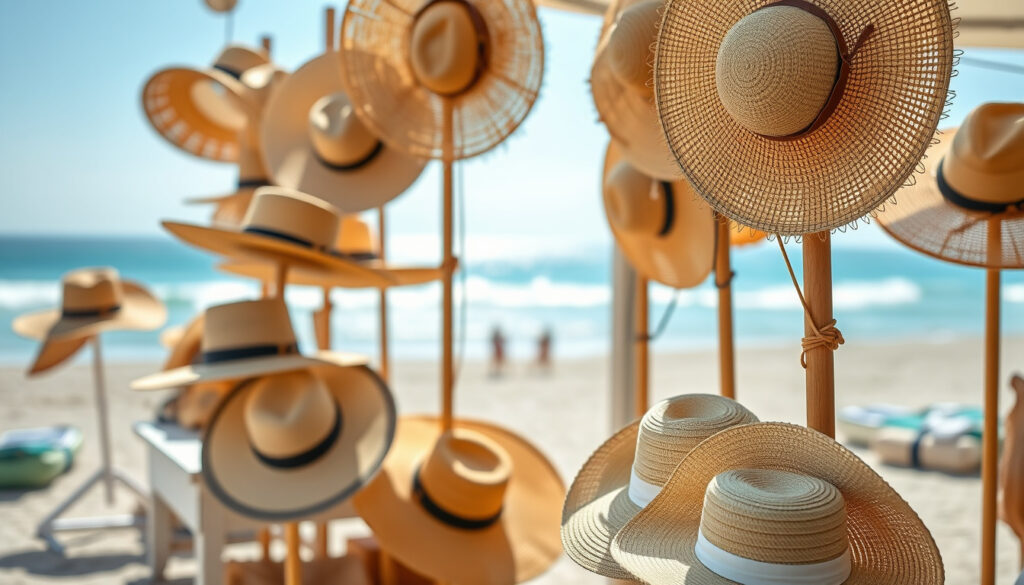
Straw hats remain a defining accessory for warm-weather dressing, balancing style with practical sun protection. For 2025, the options range from traditional Panama weaves to modern wide-brim fedoras, but choosing the right one requires more than just picking a shape you like. Factors such as brim width, UPF rating, fit, and material all play a role in whether a hat performs well through the summer months. This guide covers what to look for, which styles suit different needs, and how to keep a straw hat in good condition.
What are the best straw hats for women?
Women’s straw hats in 2025 span a wide range of silhouettes, from floppy beach hats to structured fedoras. The best choice depends on how you intend to wear it — whether for daily sun protection, travel, or a city outing.
- Wide-brim sun hats – Often designed with brims of 10 cm or more, these offer the most shade and frequently carry a UPF 50+ rating.
- Panama-style fedoras – A versatile option that works with both casual and smart outfits, provided the brim is wide enough for coverage.
- Boater hats – A structured, flat-brimmed style that suits summer events but provides less sun protection than wider brims.
- Packable bucket hats – Made from flexible straw or raffia, these are easy to fold and ideal for travel.
Key insights for women’s straw hats
- Wide brims of at least 3 inches are recommended for meaningful sun coverage, according to hat retailers and gear-testing sources.
- UPF 50+ blocks about 98% of UV radiation; Outdoor Gear Lab notes that even UPF 40 blocks 97.5%, but 50+ remains the preferred benchmark.
- Brands such as Lack of Color, Brixton, and Stetson frequently appear in women’s straw hat collections.
- Many women’s straw hats are one-size-fits-most, using hidden adjustment ribbons or chin ties to customise the fit.
- Tighter weaves provide more solid shade and hold their shape better than loose, open weaves.
- Chin straps and packability are useful extras if you plan to take the hat to the beach or on holiday.
- Retailers like Lack of Color and Hatstore UK offer wide selections with detailed product images.
| Feature | Details |
|---|---|
| Material | Natural straw (toquilla, raffia, paper) or synthetic blends |
| UPF Rating | Commonly UPF 50+ for wide-brim styles; UPF 40 also effective |
| Brim Width | 5 cm (fedora) to 10+ cm (sun hat); 3 inches (7.6 cm) minimum recommended |
| Popular Brands | Brixton, Stetson, Lack of Color, Failsworth, FURTALK |
| Care | Hand clean, reshape when damp, store in a box or on a form |
| Fit | One-size-fits-most with hidden ties, or full size ranges for men |
What are the best straw hats for men?
For men, straw hats often centre on the fedora and Panama styles, but wide-brim options are gaining traction. The key is to find a hat that stays secure without feeling tight, and that offers sufficient coverage for the face and neck.
Wide-brim fedora vs Panama hat
A true Panama hat is defined by its material — straw woven from toquilla palm fibres, traditionally made in Ecuador. A fedora, by contrast, is a shape defined by its pinched crown and brim, and can be made from felt, straw, or fabric. When a retailer labels a hat a “Panama fedora,” it usually means a straw hat in a fedora style, not a classic felt fedora. This distinction matters because the straw version will be lighter and more breathable, but less resistant to rain.
A wide-brim fedora or Panama hat gives better sun protection than stingy-brim styles like trilbies. Brims of 3 inches or more are common among top-rated sun-protection models, according to Outdoor Gear Lab.
Men’s sizing and fit
Men’s straw hats typically come in full size ranges rather than one-size-fits-all. Measuring head circumference is essential. A properly fitted hat should be snug enough not to blow off in a breeze but not so tight that it causes discomfort or headaches. Hat retailers advise that the hat should not sit too high, should not press down on the ears, and you should be able to slide a finger between the brim and your ear. Some Panama-hat sellers recommend buying half a size larger if you prefer a looser fit.
Brands offering men’s straw hats include Stetson, Bailey of Hollywood, and Brittoli. For UK shoppers, The Hat Company stocks a variety of men’s straw styles, and Hats & Caps UK offers a filterable collection.
How do I choose the right straw hat shape?
Shape affects both appearance and functionality. The main distinction is between brim width and crown structure. A wide brim offers more shade but can feel conspicuous; a shorter brim is easier to wear in town but leaves more skin exposed.
Fedora vs wide-brim straw hat
The fedora’s characteristic pinched crown and brim (usually 5–7 cm) make it a versatile style that works with many outfits. A wide-brim straw hat, sometimes called a sun hat or beach hat, has a brim of 8 cm or more and is often unstructured. For 2025, wider brims are increasingly popular because they provide stronger UV protection. As noted by Hats in the Belfry, a wide-brim fedora can balance style and coverage if the brim is wide enough and the crown fit is correct.
What is a Panama straw hat?
A Panama hat is a lightweight, finely woven straw hat traditionally handcrafted in Ecuador from toquilla fibers. It is not a style but a material designation. Panama hats can be found in fedora, fedora-brim, or even flat-top shapes. Because of the fine weave, they tend to be cooler and more breathable than coarser straw hats.
Sources consistently recommend a brim of at least 3 inches for meaningful coverage of the face, ears, and neck. Tighter, flatter weaves provide more solid shade than loose weaves.
Are straw hats one-size-fits-all?
Not universally. Men’s hats usually have specific sizes (e.g., 7 ⅛ to 7 ⅞). Women’s floppy or rounded-crown straw hats are often one-size-fits-most, with hidden ribbons or ties to tighten the fit. If you have a larger head measurement (above 60 cm), look for brands that offer XL sizes — many do.
Do straw hats provide sun protection?
Yes, but the level of protection depends on the hat’s construction. A straw hat with a loose weave will let sunlight filter through, while tighter weaves block more UV. Many modern straw hats are labelled with a UPF rating. UPF 50+ means the fabric blocks about 98% of ultraviolet radiation. According to Outdoor Gear Lab’s testing, many respected sun hats cluster around UPF 50+ and cost roughly $30–$50, though premium options exist.
The brim width is just as important as the fabric: a hat with a 3-inch brim covers the face and ears, but a wider brim also protects the neck. For full sun protection, a combination of UPF 50+ and a brim of 3 inches or more is ideal.
Fine natural straw hats, including most genuine Panama hats, are not suitable for rain. Moisture can cause the straw to lose its shape or develop mildew. Some synthetic straw hats are water-resistant, but always check the product label.
Best straw hat for summer travel
For travel, look for hats labelled packable or compressible. These are made from flexible raffia or synthetic straw that can be folded without permanent damage. Chin straps and hidden adjustment ribbons are also useful if you are moving between windy environments. Avoid packing non-packable hats — they are better stored on a shelf or hat form.
When do straw hat collections arrive and go on sale?
- Spring (March–May): New-season collections arrive in stores. This is the best time to find the widest choice.
- Summer (June–August): Peak season for straw hats. Prices are generally full, but travel-friendly models are widely available.
- Autumn (September–November): Off-season sales begin. Many retailers discount their straw hat inventory to make room for winter headwear.
- Year-round: Classic Panama and fedora styles remain stocked by specialist retailers, though seasonal variety may be limited.
What do we know about straw hat materials and care, and what remains uncertain?
| Established information | Information that remains unclear |
|---|---|
| Straw hats are made from natural fibres (toquilla, raffia, paper) or synthetic blends. | Exact UPF ratings vary by brand and brim width — always check the product label. |
| Straw hats are breathable and lightweight, making them ideal for warm weather. | Shape retention over multiple seasons depends on the quality of the weave and how the hat is stored. |
| Wide brims (3+ inches) offer better sun protection than narrower brims. | The long-term durability of synthetic vs natural straw is not consistently documented in general buying guides. |
| A properly fitted hat should not press on the ears and you should be able to slide a finger between the brim and ear area. | Some brands advise buying half a size larger for comfort, but this is not universal advice. |
Why are straw hats a summer staple?
Straw hats have been a warm-weather accessory for centuries, valued for their breathability and lightweight feel. The market remains dominated by heritage brands such as Stetson and Failsworth, alongside modern labels like Lack of Color. Most online retailers focus on product listings without educational content, which creates a gap for detailed buying guides. In 2025, wider brims, sustainable materials, and unisex styles are growing trends.
Where do expert recommendations come from?
The recommendations in this article are based on information from specialist hat retailers (Hats in the Belfry, American Hat Makers), gear-testing publications (Outdoor Gear Lab), and official product pages from brands such as FURTALK, Stetson, and Bailey of Hollywood. No independent expert quotes were available in the provided sources, but the guidance aligns with consistent patterns across multiple retailers.
“UPF 50 blocks about 98% of UV rays; UPF 40 blocks 97.5%, so the practical difference is small, but 50+ is still the preferred benchmark for stronger protection.” — Outdoor Gear Lab
“A wide-brim fedora can provide a strong balance of style + coverage if the brim is wide enough and the crown fit is correct.” — Hats in the Belfry / American Hat Makers
What should you remember when buying a straw hat?
A good straw hat should have a wide brim (at least 3 inches), a UPF 50+ rating for strong sun protection, and a fit that stays secure without causing discomfort. Choose a style that suits how you will wear it — a Panama-style fedora for versatility, a packable hat for travel, and a wide-brim sun hat for beach days. Measure your head before buying, and always store the hat on a form or box when not in use. For a deeper dive into fit and selection, the Ultimate Guide to Choosing the Perfect Summer Straw Hat offers additional detail. If you want to understand the material difference between Panama hats and fedoras, the Panama Hat vs Fedora guide is a useful reference.
Frequently asked questions about straw hats
How do I shape or bend the brim of a straw hat?
Use steam or a damp cloth to soften the straw, then gently shape it and let it dry completely. Never force dry straw – it may crack.
Are straw hats suitable for men with large heads?
Yes. Many brands offer XL sizes. Always check the size chart; sizes above 7 ⅞ are available from specialist retailers.
Can I wear a straw hat in the rain?
Fine natural straw hats are not recommended for rain. Some synthetic straw hats are water-resistant; check the label.
What is a Panama straw hat?
A lightweight, finely woven straw hat traditionally made in Ecuador from toquilla palm fibres. It is defined by material, not by shape.
What is UPF 50+ in straw hats?
UPF 50+ means the fabric blocks about 98% of ultraviolet radiation, providing excellent sun protection.
How do I clean a straw hat?
Hand clean with a soft brush or damp cloth. Reshape while damp and let it air dry away from direct heat. Store in a box to maintain shape.
Are straw hats one-size-fits-all?
Not always. Men’s hats often have specific sizes. Many women’s hats are one-size-fits-most with internal adjustment ribbons.
Which UK retailers stock straw hats?
Hatstore UK, Hats & Caps UK, The Hat Company, and Lack of Color all offer straw hats with UK delivery.
Is a fedora or a wide-brim straw hat better for sun protection?
A wide-brim hat provides more coverage, but a wide-brim fedora can balance style and protection if the brim is 3 inches or more.
Can I pack a straw hat in luggage?
Only if the hat is labelled packable or compressible. Non-packable hats should be stored on a form or box to avoid permanent damage.

Henry Wallace is Managing Editor at RegionalReport.co.uk, running the daily news list, the regional publishing schedule and newsroom workflow.