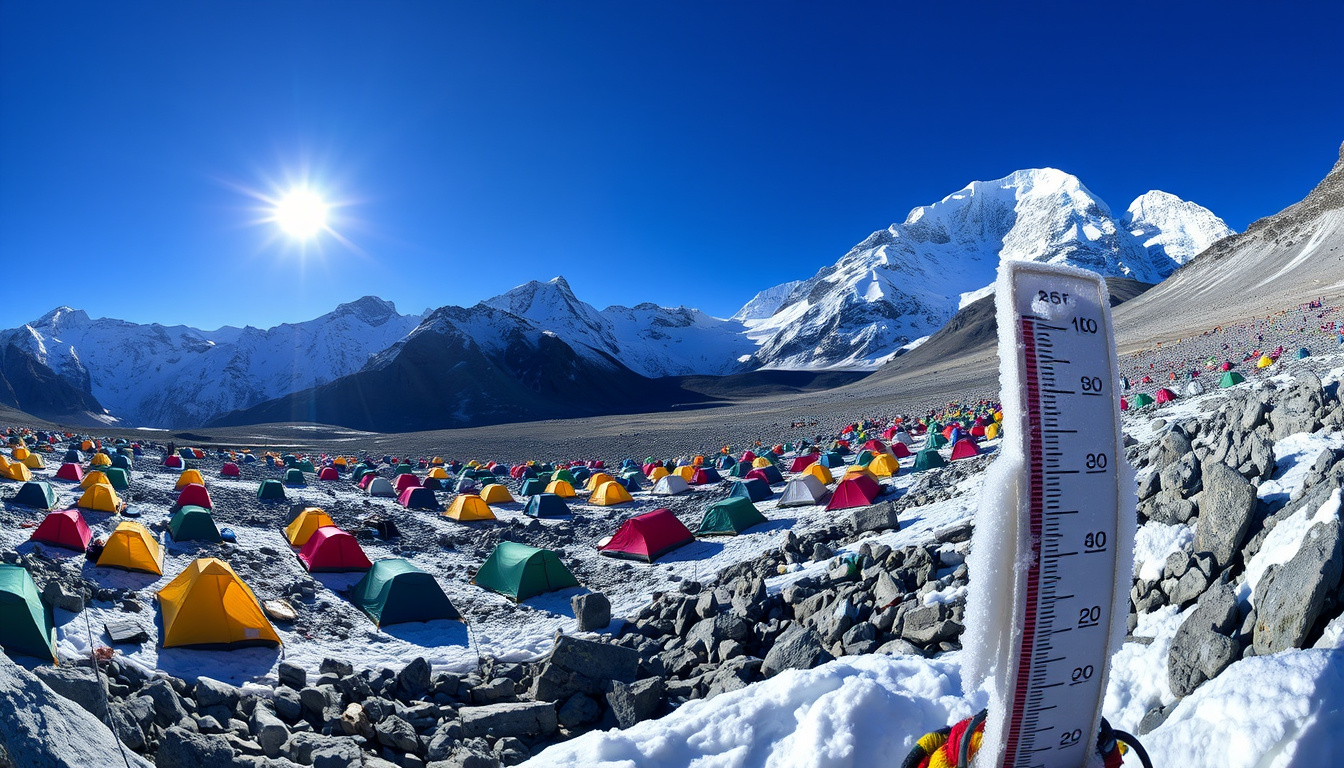
The Everest Base Camp trek is one of the most iconic Himalayan journeys, drawing thousands of hikers each year to the foot of the world’s tallest mountain. It requires no technical climbing skills but demands respect for altitude, weather, and endurance.
Situated in the Khumbu region of Nepal within Sagarmatha National Park, the trek follows a well-established route from Lukla through Sherpa villages, suspension bridges, and alpine landscapes. Most itineraries take between 12 and 16 days, covering roughly 120 to 140 kilometres round trip.
Whether you are a seasoned trekker or a determined beginner, understanding the key facts about height, cost, temperature, duration, and difficulty is essential. This guide brings together verified data and practical insights from official sources and experienced operators.
What Is the Height of Everest Base Camp?
- Everest Base Camp sits at 5,364 m (17,598 ft), roughly the same elevation as the summit of Mont Blanc.
- The trek cost varies widely based on whether you go independently (budget ~$1,200) or with a full-service company (~$2,500+).
- Daytime temperatures at Base Camp can drop below freezing even in peak season (October/November).
- The total walking distance from Lukla to Base Camp and back is about 130 km (80 miles).
- Base Camp is a temporary seasonal city, with hundreds of tents catering to climbers and trekkers during the spring and autumn.
- The highest sleeping point on the trek is usually Gorak Shep, around 5,164 m.
- No ropes, crampons or mountaineering experience are normally needed – the main challenges are altitude, long days, and cold.
| Attribute | Value |
|---|---|
| Country | Nepal (Sagarmatha National Park) |
| Nearest Town/Airport | Lukla (2,860 m) |
| South Base Camp (Nepal side) altitude | 5,364 m (17,598 ft) |
| North Base Camp (Tibet side) altitude | 5,150 m (16,900 ft) |
| Typical trek start | Lukla via flight from Kathmandu |
| Peak trekking seasons | March–May and September–November |
| Required permits | Sagarmatha National Park entry, TIMS card, Khumbu Rural Municipality fee |
| Average daily walking time | 5–7 hours |
| Highest point on the trek (before Base Camp) | Kala Patthar (5,545 m / 18,192 ft) |
| Base Camp to Everest Summit distance | Approx. 8.5 km (5.3 mi) vertical gain and distance combined |
How Much Does It Cost to Trek to Everest Base Camp?
A guided package commonly costs approximately US$1,200–$3,500 per person, depending on group size, guide and porter support, accommodation, flights, meals and service level. Budget group treks start around $1,200–$1,700, mid-range guided options fall between $1,700–$2,500, and higher-end or private treks can exceed $2,500–$3,500.
One operator recommends budgeting about US$1,000–$1,500 for personal and unforeseen costs, though actual needs vary widely. Potentially separate expenses include a Nepal tourist visa, international flights, domestic flights to and from Lukla, trekking permits and local entry fees, guide and porter tips, travel insurance with high-altitude evacuation coverage, hotels in Kathmandu, snacks, bottled or treated water, charging and Wi-Fi, hot showers and laundry, gear rental or purchase, extra accommodation caused by flight delays, and emergency evacuation.
Prices fluctuate with season, group size, inflation, and currency exchange. The figures above are based on multiple trek operators and should be verified with current quotes from licensed agencies.
What Permits Are Required and What Do They Cost?
The usual permit requirements are a Sagarmatha National Park entry permit, a Khumbu Pasang Lhamu Rural Municipality entry fee, and a TIMS card or equivalent trekking registration. One current published fee schedule lists, for foreign trekkers, approximately NPR 3,000 for the national park permit, NPR 3,000 for the Khumbu local fee, and NPR 2,000 for TIMS, although fees and implementation rules can change.
Several current travel sources state that Nepal requires trekkers in the Everest region to use a licensed guide, and that independent unguided trekking is not permitted under the current rules. Confirm the latest requirements with a licensed Nepal trekking agency or official Nepal authorities before departure.
What Is the Temperature at Everest Base Camp?
Temperatures at Base Camp vary dramatically by season. Daytime highs in peak spring and autumn (March–May, September–November) can reach around 10°C (50°F), while overnight lows frequently drop well below freezing. In winter (December–February), daytime temperatures may hover around -5°C to -10°C, and night-time lows can plunge to -15°C or colder.
Even in the best trekking months, trekkers should prepare for sub-zero nights and sudden weather changes. Wind chill and direct sun exposure both play significant roles in how conditions feel.
Forecasts beyond three to five days are unreliable in the Khumbu region. Rapid shifts in cloud cover, wind, and precipitation can occur at any time of year, making layered clothing and flexible itinerary planning essential.
How Long Is the Everest Base Camp Trek?
The total distance from Lukla to Everest Base Camp and back is approximately 120–140 km, depending on the exact route and side trips. Most standard itineraries are designed to be completed in 12 to 14 days, with 12-day versions being faster and 16-day plans allowing extra acclimatization.
Distance from Base Camp to the Everest summit is about 8.5 km in horizontal distance combined with immense vertical gain; the summit towers more than 3,400 m above the camp. For trekkers, however, the journey ends at Kala Patthar or Gorak Shep.
Classic Everest Base Camp Trek – Day-by-Day Timeline
- Day 1: Flight from Kathmandu to Lukla (2,860 m), trek to Phakding (2,610 m).
- Day 2: Trek to Namche Bazaar (3,440 m) – gain 830 m.
- Day 3: Acclimatization day in Namche – hike to Everest View Hotel or Khumjung.
- Day 4: Trek to Tengboche (3,860 m) – visit Tengboche Monastery.
- Day 5: Trek to Dingboche (4,410 m).
- Day 6: Acclimatization day – hike to Chhukung or Nagarjun Hill.
- Day 7: Trek to Lobuche (4,940 m) past Khumbu Glacier.
- Day 8: Trek to Gorak Shep (5,170 m), then hike to Everest Base Camp (5,364 m).
- Day 9: Early morning ascent of Kala Patthar (5,545 m) for Everest views, then descend to Pheriche (4,200 m).
- Day 10: Descend to Namche Bazaar.
- Day 11: Descend to Lukla.
- Day 12: Morning flight back to Kathmandu.
Times and distances may vary; acclimatization days are critical. Faster itineraries reduce margin for illness or weather delays.
How Difficult Is the Everest Base Camp Trek?
The trek is classified as moderate-to-strenuous or challenging. The main obstacles are altitude, long walking days (4–10 hours), steep terrain, and cold – not technical climbing. Multiple sources agree that no ropes, crampons or mountaineering experience are normally needed.
Beginners with good physical fitness can complete the trek, provided they allow enough time for acclimatization and pace themselves. Prior preparation including cardiovascular training, leg strength work, and hiking with a loaded pack is strongly recommended.
What Is Clear and What Remains Uncertain About the Trek
| Established Information | Information That Remains Unclear |
|---|---|
| Altitude of Everest Base Camp (South side) is 5,364 m (17,598 ft) – based on multiple surveys. | Exact cost can fluctuate due to season, group size, inflation, and currency exchange. |
| The classic trek from Lukla to Base Camp and back is approximately 130 km. | Weather conditions can change rapidly; forecasts beyond 3–5 days are unreliable. |
| The trek typically takes 12–14 days to allow proper acclimatization. | Trail conditions vary each year due to landslides, snow, or construction. |
| Temperature at Base Camp drops below freezing at night for most of the year. | The availability of teahouses and their pricing is subject to change. |
| Required permits: Sagarmatha National Park entry fee and TIMS card. | Altitude sickness affects individuals differently; no guaranteed prevention. |
Why Is Everest Base Camp So Significant?
Everest Base Camp is the starting point for mountaineers attempting the South Col route to the summit. For trekkers, it offers a non-technical way to stand at the foot of the world’s highest peak. The trek passes through Sherpa villages, Buddhist monasteries, and the stunning Khumbu region.
The first successful Everest summit in 1953 used the South Base Camp route. Since then, Base Camp has evolved from a remote tent city to a well-organized base with medical facilities, dining tents, and even satellite internet for climbers. The North Base Camp in Tibet is at 5,150 m (16,900 ft) and is accessible by vehicle, but requires a China-issued permit. The Nepal side remains more popular for trekkers due to easier access from Lukla and richer cultural experiences.
The Khumbu region faces challenges from waste management and overtourism. Recent regulations require trekkers to carry a garbage bag, and the Sagarmatha Pollution Control Committee (SPCC) oversees cleaning efforts.
What Do Authoritative Sources Say?
“Base Camp is among the most unique settlements in the world – a temporary city that springs up every year in some of the planet’s harshest conditions.”
– Mountain Kingdoms blog
“The classic Everest Base Camp trek from Lukla to EBC and back is 130 km long – 65 km each way.”
– ebctrekguide.com
For official information, the Sagarmatha National Park Official Website provides data on altitude, permit fees, and park regulations. The Government of Nepal – Department of Tourism offers updates on trekking permits. Reputable travel advice is available from Lonely Planet – Everest Base Camp Trek Guide. Historical weather data can be found at World Weather Online – Everest Base Camp Climate, and the American Alpine Club provides verified altitude figures.
What Should You Do After Reading This Guide?
Now that you have a clear picture of the trek’s height, cost, temperature, duration, and difficulty, the next steps involve practical preparation. Check current weather and flight status for Lukla, compare tour operators on trusted platforms, begin cardiovascular and leg-strength training, and book permits through a local agency or the Nepal Tourism Board. Ensure your travel insurance covers high-altitude trekking and helicopter evacuation. For detailed physical preparation, see our guide on How to Train for a High-Altitude Trek, and for more background on the mountain itself, read about Mount Everest Climbing Routes and History.
Frequently Asked Questions
Do I need a guide for the Everest Base Camp trek?
While not mandatory, hiring a guide is highly recommended for safety, cultural insight, and logistics. Many trekkers also hire porters. The Nepal government has recently required foreign trekkers to be accompanied by a licensed guide on some routes, but it is not yet enforced for the EBC trek. Check current regulations before departure.
What permits are needed for the Everest Base Camp trek?
You need a Sagarmatha National Park entry permit (approx. NPR 3,000) and a TIMS card (approx. NPR 2,000). As of 2025, some villages also require a Khumbu Rural Municipality fee (NPR 2,000). Permits can be obtained in Kathmandu or Monjo (park entrance).
Can beginners do the Everest Base Camp trek?
Yes, the trek is considered non-technical and suitable for beginners with good physical fitness. However, the altitude and long days of walking (5–7 hours) require prior preparation. Many beginners successfully complete it with proper acclimatization and pacing.
What is the best time to trek to Everest Base Camp?
The two most popular seasons are pre-monsoon (March to May) and post-monsoon (September to November). Spring offers rhododendron blooms and warmer temperatures, while autumn provides clear skies and stable weather. Winter trekking (December–February) is possible but very cold, and the monsoon (June–August) brings rain and leeches.
What accommodation is available on the trek?
Teahouses (simple lodges) are available along the entire route. They offer basic rooms with beds and blankets, and meals. At higher altitudes, teahouses become more basic. At Base Camp itself, climbers stay in tents; trekkers usually stay in Gorak Shep and visit Base Camp for the day.
How far is Everest Base Camp from the summit?
The horizontal distance from Base Camp to the summit is about 8.5 km (5.3 miles), but the vertical rise is over 3,400 m (11,000 ft). It is not a hike but a high-altitude mountaineering route requiring technical skills and weeks of effort.
How much does a permit cost for the Everest Base Camp trek?
Permit costs are approximately NPR 3,000 for the Sagarmatha National Park entry, NPR 3,000 for the Khumbu local fee, and NPR 2,000 for the TIMS card. Total around NPR 8,000 (roughly US$60) per person, subject to change.
What is the temperature at Everest Base Camp in January?
January is the coldest month. Daytime highs average around -5°C to -10°C (23°F to 14°F), while night-time temperatures can drop to -15°C (5°F) or lower. Wind chill makes conditions feel even colder.
Is the Everest Base Camp trek dangerous?
The trek carries risks from altitude sickness, weather, trail conditions, and physical strain. Proper acclimatization, fitness, and preparation significantly reduce dangers. Hiring an experienced guide and carrying insurance with evacuation coverage is strongly advised.

Sophie Kendall is Culture & Communities Editor at RegionalReport.co.uk, covering community stories, arts, culture, festivals, local events and heritage.