Jimi Hendrix remains one of the most influential figures in rock history, known for transforming the electric guitar into an instrument of explosive expression. This article covers his short but remarkable life, his iconic songs, his studio albums, the bands he led, his legendary Woodstock performance, and the circumstances surrounding his death at age 27.
Born Johnny Allen Hendrix in Seattle, he changed his name to James Marshall and taught himself guitar by listening to Chicago blues legends. After a brief stint in the Army, he worked as a backup guitarist for artists such as Little Richard and Sam Cooke before moving to London in 1966. There he formed The Jimi Hendrix Experience and quickly rose to international fame.
His career lasted barely four years, yet he released three landmark studio albums and delivered performances that redefined rock music. The following sections answer the most common questions about his life, music, and enduring legacy.
How Did Jimi Hendrix Die?
Jimi Hendrix died in London on September 18, 1970, at the age of 27. The official cause of death was asphyxia due to a barbiturate overdose – he asphyxiated on his own vomit after taking an overdose of a prescription sleep aid. This determination was made by the coroner and has been widely reported in reliable sources such as Wikipedia and Britannica.
Despite the official ruling, some uncertainty remains about the exact circumstances. Questions have been raised about whether the overdose was accidental or intentional, and alternative theories have been proposed, but no definitive conclusion has been universally accepted.
Quick Overview
- Full Name: James Marshall Hendrix
- Born: November 27, 1942
- Died: September 18, 1970 (age 27)
- Known For: Electric guitar virtuoso, psychedelic rock, iconic songs like “Purple Haze”
Key Insights
- Jimi Hendrix transformed electric guitar technique with feedback, wah-wah, and innovative use of distortion.
- His career lasted only four years (1966–1970) yet he released three studio albums that are rock milestones.
- His death at age 27 cemented his legend, though the exact cause remains a subject of debate.
- Woodstock 1969 performance of “The Star-Spangled Banner” is one of the most iconic moments in rock history.
- Despite short life, his influence spans genres – rock, blues, funk, and heavy metal.
Fact Table
| Category | Fact |
|---|---|
| Real Name | James Marshall Hendrix |
| Born | November 27, 1942, Seattle, Washington, U.S. |
| Died | September 18, 1970, London, England (age 27) |
| Cause of Death | Asphyxia due to barbiturate overdose (official determination) |
| Main Band | The Jimi Hendrix Experience |
| Debut Album | Are You Experienced (1967) |
| Iconic Songs | Purple Haze, Hey Joe, All Along the Watchtower, Voodoo Child (Slight Return) |
| Woodstock Performance | August 18, 1969 – featured “The Star-Spangled Banner” |
What Are Jimi Hendrix’s Most Famous Songs?
Hendrix released a relatively small body of work during his lifetime, but several of his songs became anthems. Among the most recognised are “Purple Haze,” “Hey Joe,” “The Wind Cries Mary,” “Foxey Lady,” “Fire,” and “Voodoo Child (Slight Return).” His cover of Bob Dylan’s “All Along the Watchtower” is also critically acclaimed.
What Is “Purple Haze” About?
“Purple Haze” was one of the first UK top-ten hits for The Jimi Hendrix Experience. Its lyrics are often interpreted as a dreamlike or psychedelic experience, though Hendrix himself described it as a love song. The song’s distinctive opening riff and use of the chord known as the “Hendrix chord” (E7#9) became hallmarks of his style.
“Purple Haze” appears on Hendrix’s debut album Are You Experienced (1967), which also includes “Foxey Lady” and “Fire.” The album is considered a psychedelic rock landmark.
Who Wrote “Hey Joe”?
“Hey Joe” was not written by Hendrix. The song originated in the 1960s and was first recorded by the band The Leaves. Hendrix’s version, released as his debut single with The Jimi Hendrix Experience in 1966, became a UK top-ten hit and helped launch his career.
Why Did Jimi Hendrix Cover “All Along the Watchtower”?
Hendrix recorded “All Along the Watchtower” in 1968 for his album Electric Ladyland. His version transformed Bob Dylan’s original folk song into a powerful rock statement. Dylan later praised Hendrix’s interpretation, and the cover became one of Hendrix’s most enduring recordings.
What Is “Voodoo Child” Known For?
“Voodoo Child (Slight Return)” is the final track on Electric Ladyland and is famous for its heavy riff, wah-wah pedal use, and improvised feel. It showcases Hendrix’s mastery of feedback and distortion and remains a favourite among guitarists.
What Albums Did Jimi Hendrix Release?
During his lifetime, Hendrix released three studio albums with The Jimi Hendrix Experience and one live album with his later group, Band of Gypsies. Several posthumous collections have also been issued.
Debut Album: Are You Experienced (1967)
This was Hendrix’s first album and is widely regarded as a psychedelic rock classic. It includes hits such as “Purple Haze,” “Foxey Lady,” and “Fire.” The album reached the top five in both the UK and US charts.
Second Album: Axis: Bold as Love (1967)
Released later in 1967, this album features songs like “Spanish Castle Magic” and “Little Wing.” It continued Hendrix’s exploration of studio effects and sonic layering.
Third Studio Album: Electric Ladyland (1968)
Electric Ladyland was Hendrix’s most commercially successful album, reaching number one on the US Billboard 200. It includes the singles “All Along the Watchtower” and “Voodoo Child (Slight Return).” The double album is noted for its experimental production and use of stereo panning.
Band of Gypsies (1970)
This live album was the only official release by Hendrix’s second group during his lifetime. A second volume, Band of Gypsies 2, was released posthumously in 1986.
What Was Jimi Hendrix’s Band?
Hendrix led two main groups during his short career, along with a temporary ensemble for his Woodstock appearance.
The Jimi Hendrix Experience (1966–1969)
Formed in London in 1966, the classic lineup consisted of Hendrix (guitar, vocals), Noel Redding (bass), and Mitch Mitchell (drums). This trio recorded the three studio albums released during Hendrix’s lifetime and became famous for their explosive live shows.
Despite the high turnover, the original Experience lineup lasted less than three years, yet their output defined the psychedelic rock era. Hendrix’s relationship with Redding was often strained, contributing to the group’s dissolution.
Woodstock: Gypsy Sun & Rainbows (1969)
For his headlining set at the Woodstock Festival, Hendrix formed a temporary band known as Gypsy Sun & Rainbows. The group included bassist Billy Cox, drummer Mitch Mitchell, percussionist Juma Sultan, and second drummer Jerry Velez. This ensemble performed Hendrix’s iconic version of “The Star-Spangled Banner.”
Band of Gypsies (1970)
After the Experience disbanded, Hendrix formed a new group with Billy Cox (bass) and Buddy Miles (drums). The Band of Gypsies played a New Year’s Eve concert in 1969, which was released as a live album. The group focused more on funk and R&B influences.
Band of Gypsies disbanded after only a few months. Hendrix briefly reformed The Jimi Hendrix Experience with Billy Cox on bass before his death in September 1970.
What Happened at Jimi Hendrix’s Woodstock Performance?
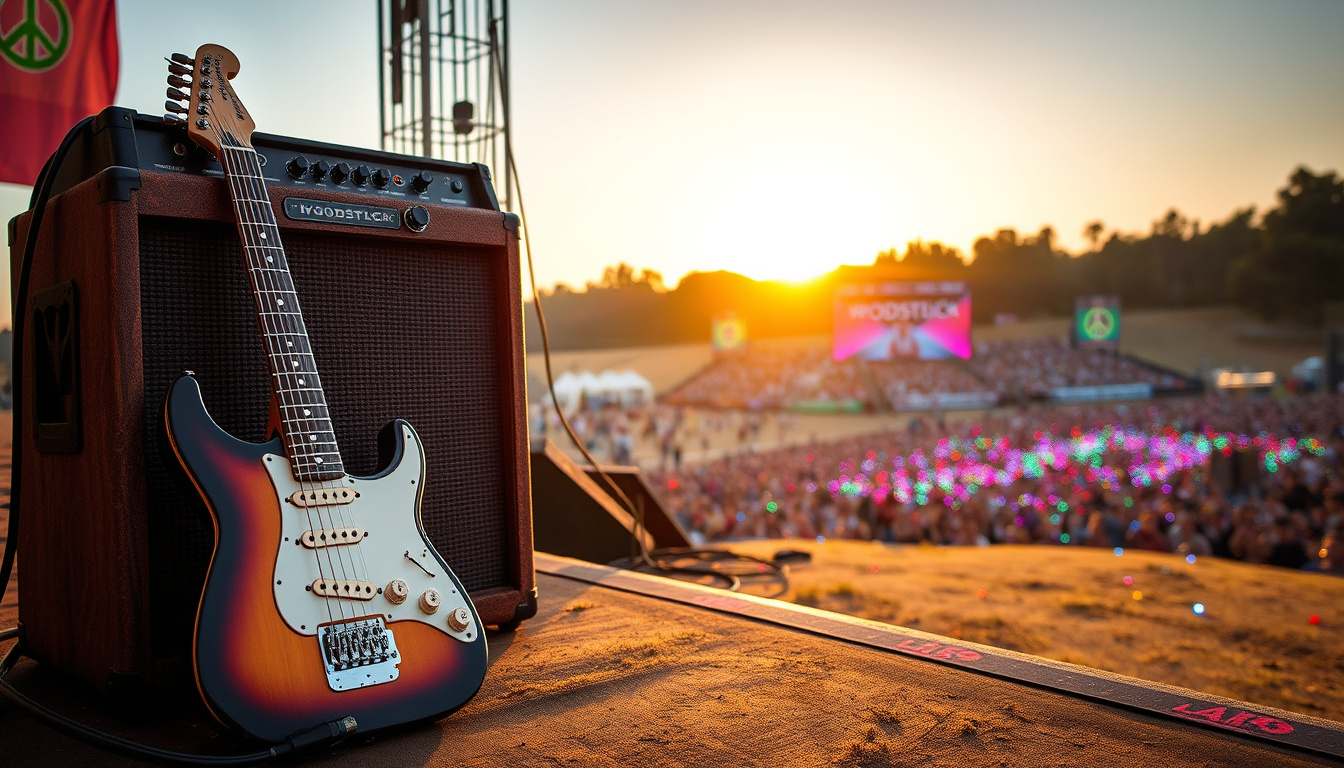
Jimi Hendrix closed the Woodstock Festival in the early morning of August 18, 1969. His set is considered one of the most iconic moments in rock history, particularly his distorted, expressive rendition of “The Star-Spangled Banner.”
The performance was originally scheduled for Sunday night but was delayed until Monday morning due to rain and logistical issues. Hendrix played for about two hours, performing songs from his albums as well as improvisations. The set included “Purple Haze,” “Fire,” “Voodoo Child (Slight Return),” and the now-famous national anthem.
Key Events Timeline
- 1942: Born in Seattle.
- 1958: Receives his first acoustic guitar.
- 1966: Moves to London, forms The Jimi Hendrix Experience.
- 1967: Releases debut album Are You Experienced; performs at Monterey Pop Festival.
- 1968: Releases Axis: Bold as Love and Electric Ladyland.
- 1969: Legendary performance at Woodstock.
- 1970: The Cry of Love tour; dies on September 18 in London.
How to Play Jimi Hendrix’s “Hey Joe” on Guitar?
“Hey Joe” is often one of the first songs aspiring guitarists learn when exploring Hendrix’s style. The song is based on a simple chord progression (C, G, D, A, E) and a straightforward rhythm, making it accessible for beginners. However, Hendrix’s recorded version adds his signature use of feedback, controlled distortion, and expressive phrasing.
Guitarists studying the song can analyse how Hendrix combines open chords with occasional hammer-ons and pull-offs. The solo section demonstrates his ability to move from melodic lines into explosive bursts of notes. For those seeking to capture his tone, a Fender Stratocaster played through a cranked tube amplifier with a fuzz pedal is the classic setup.
Hendrix played a right-handed Fender Stratocaster flipped over for left-handed use, which affected his string tension and contributed to his unique sound. He also used the wah-wah pedal extensively on tracks like “Voodoo Child.”
How Certain Are the Circumstances of Jimi Hendrix’s Death?
While the official cause of death is established, some details remain unclear. The table below separates what is known from what is still debated.
| Established Information | Information That Remains Unclear |
|---|---|
| Jimi Hendrix died on September 18, 1970, in London. | Whether the overdose was accidental or intentional. |
| Official cause: asphyxia due to barbiturate overdose. | Potential involvement or negligence of others present. |
| He was 27 years old at the time of death. | Alternative theories suggesting foul play have never been proven. |
What Do Experts Say About Jimi Hendrix?
“Jimi Hendrix expanded the vocabulary of the electric rock guitar more than anyone before or since.”
Spotify artist description
“He is widely regarded as one of the greatest and most influential guitarists in the history of popular music.”
Wikipedia
“In his short lifetime, he brought a fire and emotion to rock that still resonates.”
Facebook page description
What Is Jimi Hendrix’s Legacy?
Jimi Hendrix’s influence extends far beyond his brief career. He permanently changed the way the electric guitar is played and heard. His recordings continue to be studied and performed, and his status as a cultural icon remains undiminished. For those interested in other great guitarists, read more about Rory Gallagher – Biography, Death Cause, Guitar and Hit Songs and Brian May – Guitarist, Astrophysicist, and Animal Activist.
Frequently Asked Questions
What was Jimi Hendrix’s real name?
James Marshall Hendrix.
When did Jimi Hendrix die?
September 18, 1970.
How was Jimi Hendrix’s death ruled?
Asphyxia due to barbiturate overdose, ruled accidental.
What guitar did Jimi Hendrix play?
Fender Stratocaster (often a 1965 model), famously played upside down for left-handed use.
Did Jimi Hendrix play all instruments on his albums?
No, he was primarily guitarist and vocalist; band members played bass and drums.

Margaret Ellison is Editor-in-Chief at RegionalReport.co.uk, overseeing editorial policy, corrections, standards and publication decisions. She writes occasional leader columns and major regional news stories.