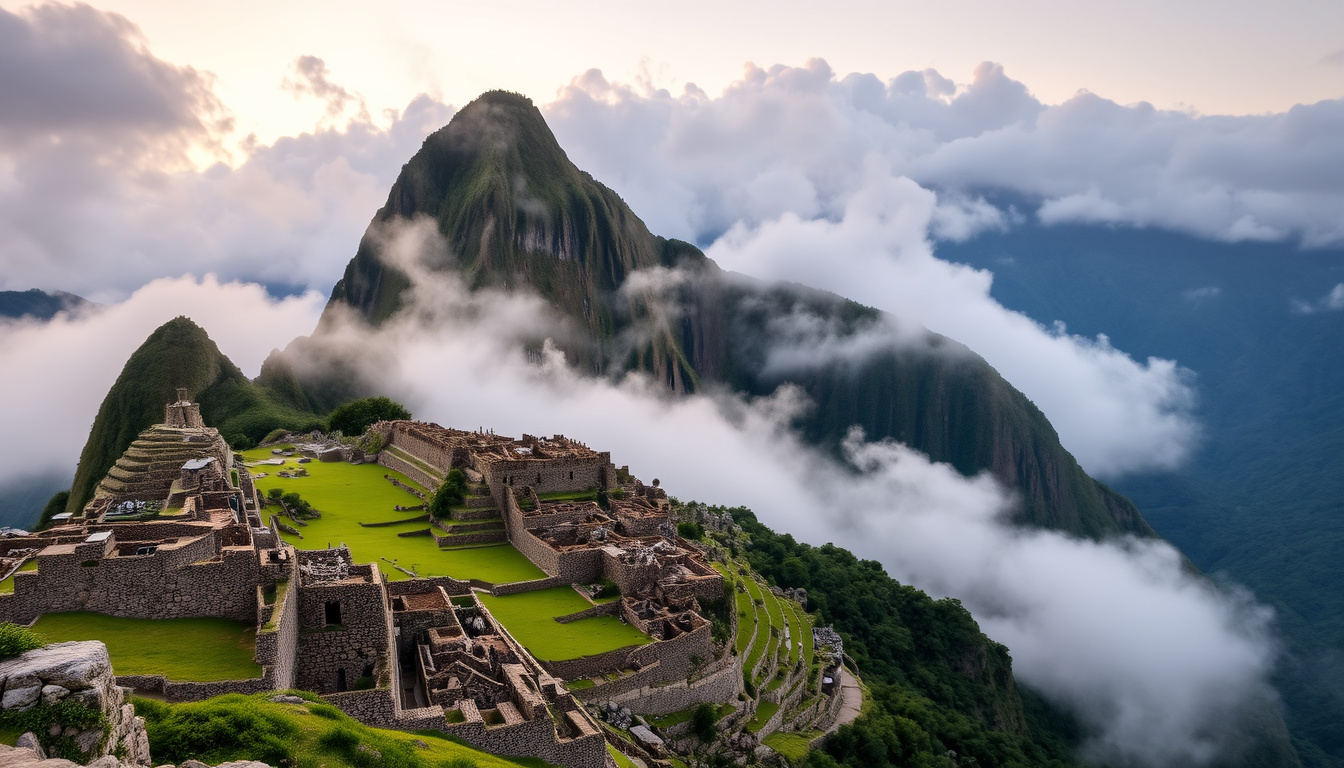
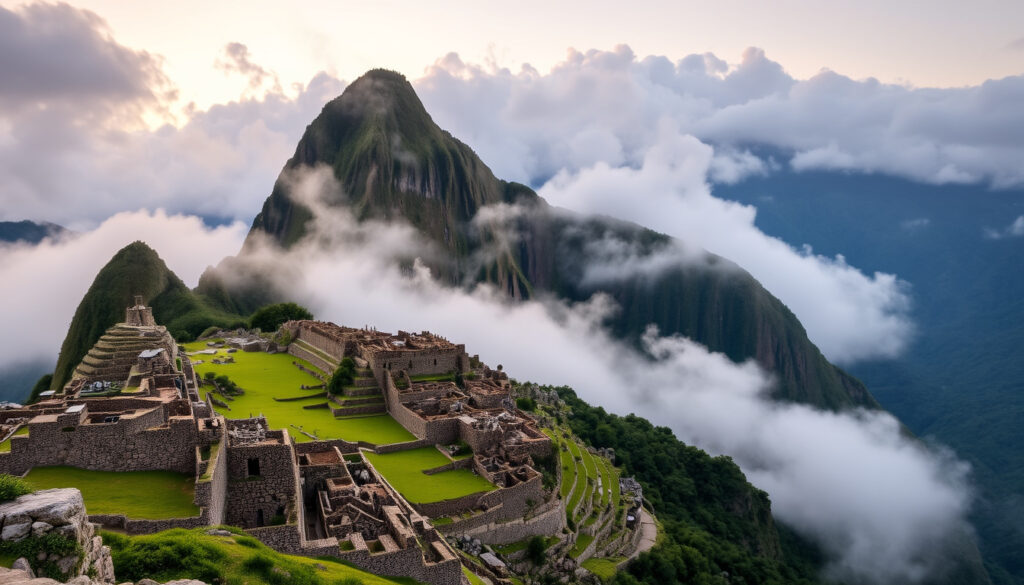
Machu Picchu is a 15th-century Inca citadel in Peru, roughly 80 km northwest of Cusco and about 2,430 m (7,970 ft) above sea level. The site sits on a mountain ridge above the town of Aguas Calientes, also known as Machu Picchu Pueblo, and is one of the most recognized archaeological monuments in South America.
Planning a trip for 2025 comes down to a few practical essentials: booking tickets well ahead, preparing for the altitude, deciding how to get there, and choosing whether to hike the Inca Trail. Different travel guides report slightly different figures for visitor limits and opening times, and the exact numbers depend on the source.
The Inca Empire built Machu Picchu in the 15th century, and the site gained worldwide attention after Hiram Bingham brought it to broader notice in 1911. UNESCO lists it as a World Heritage site, and it draws well over a million visitors each year.
Where Is Machu Picchu and How High Is It?
Machu Picchu is in the Cusco region of Peru, within the Machu Picchu district and the Historic Sanctuary of Machu Picchu. It stands on the eastern slope of the Andes, above Aguas Calientes and west-northwest of Cusco. The nearest train stop is Aguas Calientes, from where visitors continue by bus or on foot.
The citadel sits at roughly 2,430–2,438 m (7,970–8,000 ft) above sea level, depending on the source. One Peru travel guide places it at 2,430 m and notes that Cusco itself sits significantly higher, which matters for acclimatization.
| Location | Peru, near Cusco, 2,430 m (7,970 ft) |
|---|---|
| Type | 15th-century Inca citadel, UNESCO World Heritage site |
| Built | circa 1450–1460 AD |
| Meaning | ‘Old Mountain’ in Quechua |
Key insights for planning
- Machu Picchu is the most famous archaeological site in South America, drawing over 1.5 million visitors annually.
- The site is divided into two main circuits; tickets must be booked in advance, often months ahead.
- Altitude sickness is a real concern – the site sits at 2,430 m; acclimatize in Cusco first.
- The classic Inca Trail hike is a 4-day trek requiring permits that sell out quickly.
- The site is open year-round, typically from around 6:00 AM to 5:00 PM or 5:30 PM.
- Access is by train to Aguas Calientes, then bus or on foot; there is no direct road access.
- The rainy season runs roughly from November through April.
Fast facts about Machu Picchu
| Fact | Detail |
|---|---|
| Country | Peru |
| Altitude | 2,430 m (7,970 ft) |
| Foundation | c. 1450 AD |
| Area | About 5 km² (approx. 1.9 sq mi) |
| Population (historical) | Estimated 750–1,200 inhabitants |
| UNESCO designation | 1983 |
| Annual visitors | ~1.5 million (pre-pandemic) |
| Pronunciation | mah-choo pee-choo |
What Is the History and Significance of Machu Picchu?
Machu Picchu is widely described as an Inca stone city, or citadel, built in the 15th century. Several guides call it one of the most important archaeological and cultural sites of the Inca Empire.
Which civilization built Machu Picchu?
The Inca Empire built Machu Picchu. The commonly cited timeline places construction around 1450 AD under the Inca emperor Pachacuti, followed by its later abandonment in the years after the Spanish conquest.
Why was Machu Picchu built?
Scholars have not settled on a single explanation. The main possibilities are a royal estate, a religious or ceremonial site, or a combination of both. The refined stonework and the dramatic setting suggest the site carried particular importance within the Inca world.
What does the name Machu Picchu mean?
In Quechua, the name is generally translated as ‘Old Mountain.’ Some interpretations vary slightly, but this meaning appears consistently in historical and travel descriptions.
The purpose of Machu Picchu remains an open question in archaeology. Researchers agree it was built by the Inca Empire in the 15th century, but whether it operated mainly as a royal retreat, a religious center, or both is still debated.
How Do You Get to Machu Picchu?
The standard route begins with a domestic flight from Lima to Cusco, followed by a train to Aguas Calientes and a final ride or walk up to the ruins.
Is there a train to Machu Picchu?
Yes. Trains run to Aguas Calientes, the closest town to the sanctuary. Because there is no direct road access to Aguas Calientes, the train or a multi-day hike are the only ways in.
How long does the final climb take?
From Aguas Calientes, the walk up to the sanctuary takes about 75 minutes to two hours. A bus also runs up the hill, with frequent departures in the morning.
Do you need a guide?
For the Inca Trail, independent hiking is not allowed, and a licensed tour operator is required. Inside the citadel, visitors follow circuit-based routing; whether a guide is mandatory depends on the ticket and circuit.
Cusco sits significantly higher than Machu Picchu itself, and many travelers acclimatize in the Sacred Valley or Cusco before visiting. A short adjustment period there can make the climb to the citadel more comfortable.
How Much Do Machu Picchu Tickets Cost and How to Buy Them?
Travel guides do not agree on a single entrance fee for Machu Picchu, because prices depend on the circuit, visitor category, and season. What the sources share is a clear warning: tickets are limited, and booking late, especially in high season, means risking a sold-out visit.
How do I buy Machu Picchu tickets?
Tickets are sold through official channels, and one 2025 guide notes that tickets for that year were expected from mid-October 2024. Several guides recommend booking months ahead, particularly for peak travel dates. Refund policies are not described consistently across travel guides, so the terms set by the official ticket platform at the time of booking are the most reliable reference.
Are there visitor limits at Machu Picchu?
Yes. Sources give different figures, such as 4,500 in low season and 5,600 in high season, or 4,650 and 6,540. The exact numbers vary, but the pattern is clear: daily capacity is capped, and entry slots are limited.
Can I re-enter after leaving?
Some sources say there is no re-entry and that each ticket is tied to a limited time window. Combined with circuit-based routing, this makes punctuality important.
Tickets generally give access for a limited time window. With circuit-based routing and no re-entry in some cases, a late arrival can significantly reduce the time available inside the sanctuary.
Can You Hike to Machu Picchu?
Yes, but with conditions. The best-known route is the Classic Inca Trail, a 4-day hike that ends at Machu Picchu through the Sun Gate. Independent hiking is not allowed; travelers must use a licensed operator.
How many permits are available?
The Inca Trail is limited to about 500 permits per day, including porters and guides. Several sources say permits sell out quickly and that the trail is booked months in advance.
Is the Inca Trail open all year?
One guide notes that the Inca Trail closes in February for maintenance. The citadel of Machu Picchu itself is described as open year-round.
What Are the Best Tips for Visiting Machu Picchu?
Many travelers ask when to go. The rainy season generally runs from November through April. The dry season from May to September offers clearer skies, but it is also the busiest. Shoulder months such as April and October can be good compromises.
How do you pronounce Machu Picchu?
In English, the name is usually pronounced approximately ‘MAH-choo PEEK-choo.’ This reflects common usage in English-language travel sources.
Are there hotels near Machu Picchu?
Aguas Calientes, also called Machu Picchu Pueblo, is the main base for overnight stays. Many guides suggest flying to Cusco, taking the train, and spending time in Aguas Calientes before the site visit.
Is Machu Picchu ever closed?
The site is described as open year-round, typically from about 6:00 AM to 5:00 PM or 5:30 PM, depending on the source. For current closures, strikes, or maintenance work, official government channels are the best place to check before traveling.
When Was Machu Picchu Built and How Was It Rediscovered?
The timeline most often repeated in heritage and travel sources, from Inca construction to the modern era, is as follows.
- c. 1450 – Construction begins under Inca emperor Pachacuti.
- 1532 – Spanish conquest; Machu Picchu is abandoned, and was likely not discovered by the Spanish.
- 1911 – Hiram Bingham brings the site to global attention.
- 1983 – Designated a UNESCO World Heritage site.
- 2007 – Voted one of the New Seven Wonders of the World.
- 2020 – Temporary closure due to the COVID-19 pandemic; reopens later with restrictions.
What Do We Actually Know About Machu Picchu — and What Is Still Debated?
Some facts about Machu Picchu are firmly established, while others remain open to interpretation. The comparison separates the two.
| Established information | Information that remains unclear |
|---|---|
| Machu Picchu is located in Peru on the eastern slope of the Andes. | The exact original purpose, whether royal estate, religious site, or both, is debated among scholars. |
| It was built by the Inca Empire in the 15th century. | The meaning of the name ‘Machu Picchu’ is accepted as ‘Old Mountain’, but some interpretations vary. |
| It is a UNESCO World Heritage site and a major tourist destination. | The exact population that lived there is estimated but not precisely known. |
| The altitude is 2,430 m (7,970 ft). | Reported daily visitor caps vary across sources. |
Why Does Machu Picchu Matter?
Machu Picchu is widely regarded as a masterpiece of Inca engineering and urban planning, set in a dramatic cloud forest. Its rediscovery reshaped Western understanding of pre-Columbian civilizations by revealing the scale and sophistication of Inca construction.
The site also illustrates the pressure that global tourism places on heritage landmarks. Travel and heritage observers point to overtourism, erosion, and climate impact as ongoing challenges. Other heritage cities have seen similar effects from tourism growth; a recent report on Bath’s Spa-Hotel Boom: Weekend Costs Push Past £400 as Demand Outstrips Supply documents how rising demand has pushed weekend hotel costs past £400.
Responsible travel — booking official tickets, respecting trails, and supporting local communities — helps preserve Machu Picchu for future generations.
Which Sources Provide the Most Reliable Information on Machu Picchu?
Machu Picchu is documented across a wide range of sources, from official heritage listings to practical travel guides. The most authoritative descriptions come from heritage organizations and historical accounts, while current operational details shift quickly and are best checked against official channels.
“Machu Picchu stands 2,430 m above sea-level, in the middle of a tropical mountain forest, in an extraordinarily beautiful setting.”
UNESCO
“Machu Picchu is tangible evidence of the urban Inca Empire …”
National Geographic
“Machu Picchu is a 15th-century Inca citadel located in the Eastern Cordillera of southern Peru on a mountain ridge at 2,430 meters.”
Wikipedia
What Should a First-Time Visitor Keep in Mind?
The essentials are straightforward: book tickets and Inca Trail permits well in advance, acclimatize in Cusco or the Sacred Valley first, choose the entry circuit that matches your itinerary, and verify current opening status through official channels before you travel. Machu Picchu rewards preparation, and the effort pays off in one of the most striking settings in the Americas. Travelers who enjoy cultural heritage stories may also appreciate Frida Kahlo – Biography, Death, Paintings & 2026 Exhibition, another feature on a cultural icon whose legacy continues to draw public attention.
Frequently Asked Questions About Machu Picchu
What is the best time of year to visit Machu Picchu?
The dry season from May to September offers clearer skies, but it is also the busiest. Shoulder months such as April and October can be good compromises.
Do I need a visa to visit Peru?
Many nationalities, including the US, UK, EU, Canada, and Australia, do not need a visa for tourism stays of up to 90 days. Always check your country’s specific requirements.
Can I visit Machu Picchu in one day from Cusco?
Yes, it is possible using a combination of train and bus, but time at the site will be limited. Most visitors stay overnight in Aguas Calientes.
Is Machu Picchu accessible for people with mobility issues?
Accessibility is limited. The site has steep stairs and uneven terrain, and a wheelchair-accessible route is not available.
What are the opening hours at Machu Picchu?
Most sources say the site opens around 6:00 AM and closes around 5:00 PM or 5:30 PM, and it operates year-round.
How far in advance should I book Machu Picchu tickets?
Several travel guides recommend booking months ahead, especially for high season. Inca Trail permits go on sale months before travel dates and can sell out quickly.
Is the Inca Trail the same as Machu Picchu?
No. Machu Picchu is the Inca citadel itself, while the Inca Trail is a multi-day hiking route that leads to the site, most commonly a 4-day trek ending at the Sun Gate.

Amelia Grant is Local Government Editor at RegionalReport.co.uk, covering council decisions, regional public policy, combined authorities, planning, housing and transport.