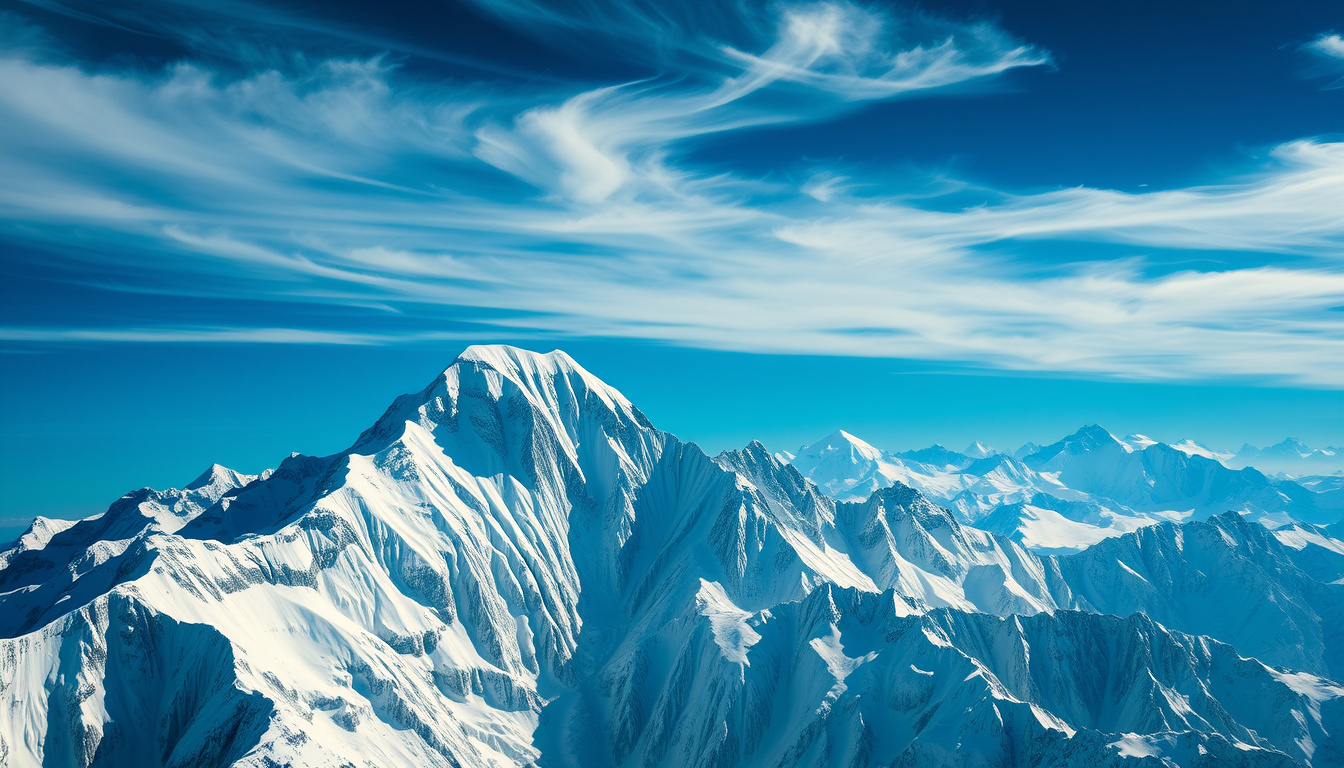
Mount Everest stands as the highest point on Earth above sea level, a colossal peak that has captivated explorers, scientists, and travelers for generations. Located in the heart of the Himalayas, its summit has been the stage for historic achievements, tragic disasters, and ongoing scientific debate. This guide provides a comprehensive overview of the mountain’s height, location, climbing routes, death toll, and rich history, grounded in verified facts.
From its official elevation agreed upon by Nepal and China to the cultural significance it holds for local communities, understanding Everest requires looking beyond the summit. The mountain, known locally as Sagarmāthā and Chomolungma, presents extreme challenges, including fierce weather, low oxygen, and the ever-present danger of avalanches and falls. The following sections address the most pressing questions about this iconic landmark.
How tall is Mount Everest and where is it located?
The official height of Mount Everest is 8,848.86 meters (29,031.69 feet). This figure was jointly announced by Nepal and China in December 2020, resolving a long-standing debate over whether to measure the rock height or the snow cap. The mountain lies on the border between Nepal and the Tibet Autonomous Region of China in the Mahalangur Himal sub-range of the Himalayas.
Key Insights:
- Mount Everest is the highest point on Earth above mean sea level.
- The official height is 8,848.86 m, jointly agreed by Nepal and China in 2020.
- The death zone above 8,000 m is where most fatalities occur due to hypoxia and exhaustion.
- The main climbing season (April–May) sees hundreds of summit attempts.
- The mountain holds deep cultural significance: Chomolungma (Tibetan) means “Goddess Mother of the World”; Sagarmatha (Nepali) means “Forehead of the Sky”.
- Commercial expeditions have made the climb accessible but also increased risks; cost ranges from $35,000 to over $100,000.
| Property | Value |
|---|---|
| Elevation | 8,848.86 m (29,031.7 ft) |
| Location | Mahalangur Himal, Himalayas |
| Countries | Nepal and China (Tibet) |
| First ascent | 1953 – Sir Edmund Hillary & Tenzing Norgay |
| First winter ascent | 1980 – Leszek Cichy & Krzysztof Wielicki (Polish) |
| First solo ascent | 1980 – Reinhold Messner |
| Fastest ascent (top to base) | 8 hours 10 minutes – Hans Kammerlander (1996) |
| Total successful summits | Over 11,000 (as of 2023) |
| Total deaths (recorded) | ~330+ (1922–2023) |
| Main climbing season | April–May (pre-monsoon) |
How many people have died on Mount Everest and why?
Everest is notorious for its high fatality count, driven by extreme altitude, harsh weather, avalanches, falls, and exposure. One cited figure from the British Mountaineering Council records that 265 people died on Everest between 1922 and 2014, with 159 fatalities on the Nepali side. More recent totals exceed 330, though the exact number depends on the counting method and reporting period.
The “death zone”, located above 8,000 meters, is where the majority of fatalities occur. Overcrowding on popular routes and traffic jams during short weather windows have become significant safety concerns in recent years, forcing climbers to spend more time in lethal conditions than is considered safe.
The exact number of bodies remaining on Mount Everest is unknown. Estimates vary, but it is widely accepted that over 200 bodies remain on the mountain. Recovery operations are extremely dangerous, costly, and often unsuccessful, leaving many bodies visible on the established routes.
The main causes include avalanches (e.g., the 2014 Khumbu Icefall avalanche that killed 16 Sherpas), falls, altitude sickness, and severe weather. The 1996 season, which saw 15 deaths during a single storm, remains one of the deadliest on record and highlighted the lethal unpredictability of the mountain.
What is it like to climb Mount Everest?
How long does it take to summit Everest?
A full expedition typically takes approximately two months. Climbers must spend weeks acclimatizing at Base Camp and rotating through higher camps before making their final summit push. The standard high-altitude camp progression on the south side is roughly Base Camp (~5,400 m), Camp 1 (~6,100 m), Camp 2 (~6,400 m), Camp 3 (~6,800 m), and Camp 4 (~8,000 m).
How much does a guided expedition cost?
The cost of a guided expedition is substantial, typically ranging from $35,000 to well over $100,000. This fee includes permits, logistics, Sherpa support, bottled oxygen, food, and guide services. Independent expeditions can be cheaper but require immense experience and management of complex logistics.
Which route is most popular?
The two main climbing routes are the Southeast Ridge from Nepal and the Northeast Ridge from Tibet. The Southeast Ridge, or South Col route, is the most popular for commercial expeditions because it is technically slightly less demanding than the North Ridge. However, both routes present extreme challenges. The North Ridge is often more exposed to high winds and colder temperatures.
The South Col route includes the technical challenge of the Khumbu Icefall, a constantly shifting glacier with towering seracs and deep crevasses. The North Ridge route approaches via the North Col and is known for its long, exposed traverses on the upper mountain.
Who first climbed Mount Everest and what are the records?
The first confirmed ascent of Mount Everest was achieved on May 29, 1953, by Edmund Hillary of New Zealand and Tenzing Norgay of Nepal. This milestone opened the modern era of high-altitude mountaineering. Since then, thousands have followed in their footsteps, setting numerous speed, age, and endurance records.
- 1921: First British reconnaissance expedition led by Charles Howard-Bury.
- 1922: First attempt to summit; George Mallory reaches ~8,220 m.
- 1924: Mallory and Andrew Irvine disappear; conjectured first ascent remains unconfirmed.
- 1953: First confirmed ascent by Edmund Hillary and Tenzing Norgay.
- 1963: First American summit (Jim Whittaker).
- 1975: First woman to summit (Junko Tabei, Japan).
- 1980: First winter ascent and first solo ascent (Reinhold Messner).
- 1996: Deadliest single season (15 deaths, including in a storm).
- 2014: Icefall avalanche kills 16 Sherpas.
- 2015: Nepal earthquake triggers avalanche on Everest, killing 22.
- 2020: Nepal and China agree on official height of 8,848.86 m.
Why is Mount Everest called Everest?
The mountain received its English name in 1865 in honor of Sir George Everest, a British surveyor-general of India. However, it had long been known locally as Chomolungma in Tibetan and Sagarmatha in Nepali. The naming has been subject to debate, with many advocating for the use of the local names to reflect the region’s cultural heritage.
| Established Information | Unresolved Questions |
|---|---|
| Everest is the highest mountain on Earth above sea level. | Whether Mallory and Irvine reached the summit in 1924 remains debated. |
| The first confirmed ascent was in 1953 by Hillary and Tenzing. | The exact number of bodies remaining on the mountain is uncertain. |
| The summit lies on the border of Nepal and Tibet. | The future impact of climate change on climbing conditions and route stability is unknown. |
What is the cultural and geological context of Everest?
Geologically, Mount Everest is part of the Himalayan range, formed by the ongoing collision of the Indian and Eurasian tectonic plates. This process continues to push the mountain higher at a rate of about 4 millimeters per year. The mountain is composed of various rock types, including marine limestone, evidence of its ancient origins beneath the sea.
Culturally, the mountain is sacred to the Sherpa people and other local communities in Nepal and Tibet. Climbing it is often accompanied by puja ceremonies to ask for safe passage and pay respect to the mountain spirits. The economic impact of Everest tourism is immense for Nepal, generating millions annually through permit fees and services, though it also brings environmental concerns such as waste and glacier retreat.
Sources and Further Reading
The following sources were used to compile the facts and figures in this guide. They offer authoritative perspectives on the geography, history, and risks associated with Mount Everest.
- Wikipedia – Mount Everest
- Britannica – Mount Everest
- National Geographic – New Height of Mount Everest
- The Guardian – 2020 Height Announcement
- AP News – Nepal-China Height Agreement
- BMC – Everest Facts and Figures
Summary and Future Outlook
Mount Everest remains the ultimate challenge in mountaineering, a symbol of human endurance and the power of nature. Climate change is altering glacier dynamics and potentially shortening climbing seasons. Tighter regulations, mandatory experience requirements, and improved technology are being considered to reduce overcrowding and enhance safety. The debate between making the mountain accessible to tourism and preserving its cultural and environmental integrity continues to evolve.
For those interested in exploring other iconic high-altitude destinations, the Machu Picchu – Complete 2025 Travel Guide for First-Time Visitors offers insights into another world-famous landmark. For travel logistics related to reaching these remote locations, see the Cathay Pacific – Check-in, Premium Economy & Reviews guide.
Frequently Asked Questions
Why is Mount Everest called Everest?
It was named in 1865 after Sir George Everest, a British surveyor-general of India. Its Tibetan name is Chomolungma and its Nepali name is Sagarmatha.
How many people summit Everest each year?
Approximately 800 to 1,200 people summit annually, with the vast majority of ascents occurring in the May weather window.
What is the weather like on Everest?
Summit temperatures frequently drop to -30°C (-22°F) in winter. During the May climbing season, temperatures typically hover around -20°C (-4°F) with high winds.
How does Mount Everest compare to other high mountains?
Everest is the highest above sea level. However, Mauna Kea is taller when measured from its oceanic base, and Mount Chimborazo is farther from the Earth’s center.
What is the easiest route to climb Everest?
The Southeast Ridge (South Col) route from Nepal is generally considered the most popular and slightly less technically demanding route, although it remains an extremely challenging climb.

Henry Wallace is Managing Editor at RegionalReport.co.uk, running the daily news list, the regional publishing schedule and newsroom workflow.