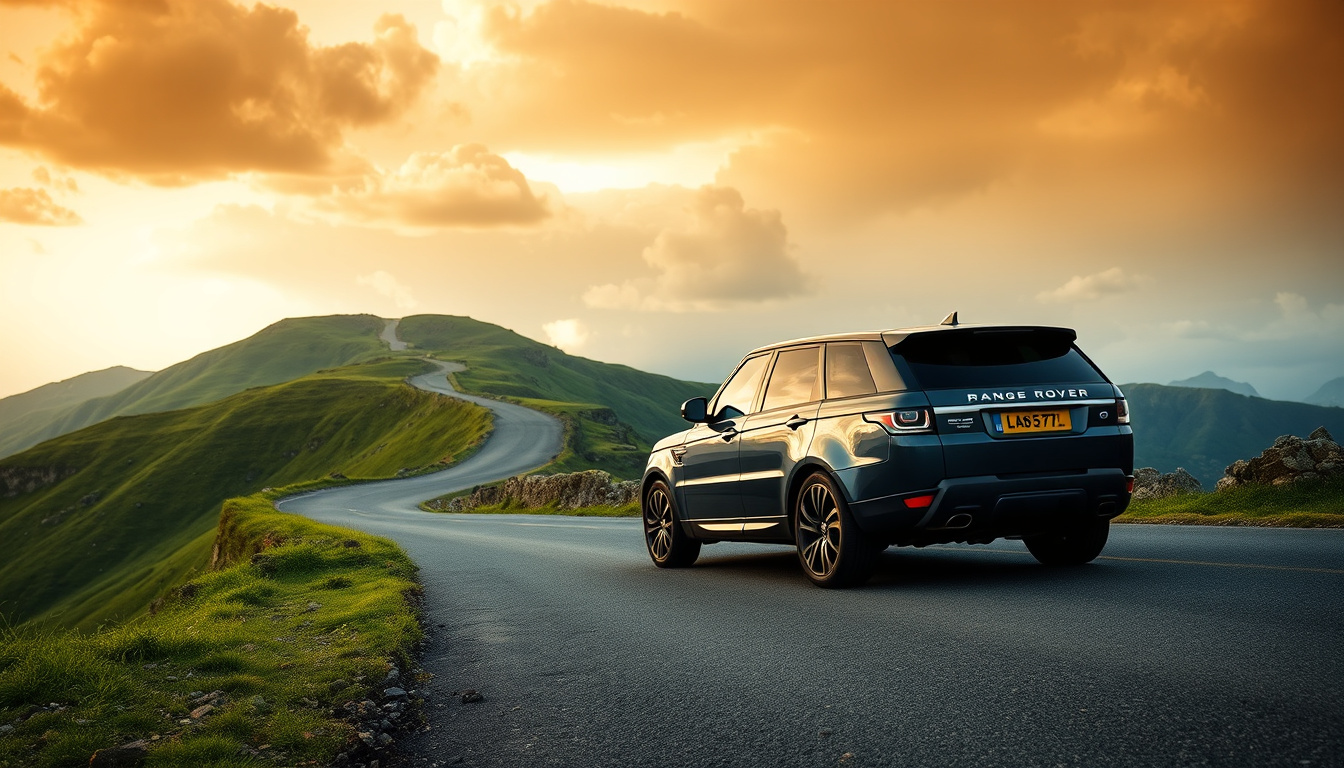
Range Rover remains the flagship of Land Rover: a luxury SUV combining a highly refined cabin and strong off-road ability, but at a substantial purchase and ownership cost. The latest fifth-generation model began in 2022 and competes with the Bentley Bentayga, Mercedes-Maybach GLS, BMW X7, Mercedes-Benz GLS, Lexus LX, Cadillac Escalade, Aston Martin DBX and, at the top end, the Rolls-Royce Cullinan.
The family has grown well beyond a single vehicle. Alongside the full-size flagship, the Range Rover line now includes the Sport, the Velar, the Evoque and the ultra-luxury SV.
New and used prices, reliability records and the brand’s position in the wider luxury SUV market all shape the decision to buy one.
What Is a Range Rover? Understanding the Luxury SUV Icon
Range Rover is the flagship luxury SUV model line from Land Rover, part of JLR. The name reflects the vehicle’s ability to traverse a wide range of terrains, combining on-road comfort with genuine off-road capability. Production began in 1970, and the line has since expanded from one model into a family of five distinct nameplates.
Land Rover and Range Rover are often used interchangeably, but they are not the same thing. Land Rover is the brand; Range Rover is its luxury flagship model family. Land Rover also sells the Defender and Discovery, which are separate model lines: the Defender emphasises rugged capability, while the Discovery prioritises family versatility.
A luxury SUV model line under Land Rover, produced since 1970.
Range Rover, Sport, Velar, Evoque and SV, with electric models on the way.
New prices range from below £60,000 for the smaller models to more than £200,000 for the SV; used examples start from about £16,000.
Mixed record; air suspension and electronics are the most commonly reported problem areas.
Key insights at a glance:
- Range Rover is the flagship luxury SUV model line from Land Rover, part of JLR.
- The line-up has grown from one model to five nameplates: Range Rover, Sport, Velar, Evoque and SV.
- The Range Rover Sport Electric has been confirmed for the 2024/2025 period.
- Depreciation is significant, which makes used models more accessible.
- Reliability varies by model year and from vehicle to vehicle.
- Maintenance history and inspection are critical when buying used.
- The fifth-generation Range Rover went on sale in 2022.
| Model | Body Style | Starting Price (approx.) | Key Feature | Electric Version |
|---|---|---|---|---|
| Range Rover | SUV | £100,000 | Flagship luxury | Expected around 2025 |
| Range Rover Sport | SUV | £68,000 | Sporty performance | PHEV now; BEV from 2024/2025 |
| Range Rover Velar | SUV | £55,000 | Stylish design | PHEV only |
| Range Rover Evoque | Compact SUV | £40,000 | City-friendly | PHEV only |
| Range Rover SV | Luxury SUV | £200,000+ | Ultra-luxury + performance | No |
Electric availability varies by market and model year. The full electric Range Rover flagship has been expected around 2025, but the specific launch date has not been officially confirmed.
Which Range Rover Model Is Best for You? A Complete Model Overview
The Range Rover family now spans five nameplates, each aimed at a different buyer. According to CarGurus’ model guide, the line-up runs from the compact, city-friendly Evoque to the long-wheelbase flagship and the SV at the very top.
Range Rover: The Full-Size Flagship
The standard Range Rover is the full-size flagship, offered in standard-wheelbase and long-wheelbase forms. The LWB version can be configured with seven seats or an ultra-luxurious four-seat layout, according to The AA and What Car?.
The powertrain range is broad. Buyers can choose six-cylinder mild-hybrid engines, plug-in hybrids and V8 models. The P400 six-cylinder returns an estimated combined economy of about 21 mpg in the US specification cited by Edmunds. Land Rover’s official specification lists the flagship V8 at about 537 hp and 750 Nm, with a 0–60 mph time of roughly 4.5 seconds with launch control. What Car? reports that the range-topping P615 produces 606 hp and completes 0–62 mph in around 4.5 seconds despite weighing about 2,500 kg.
The defining performance trait is breadth rather than outright sportiness: the Range Rover can deliver limousine-like comfort on the motorway, rapid acceleration and genuine off-road ability in the same vehicle.
Range Rover Sport: The Driver-Focused Alternative
The Sport is smaller, lower and more dynamically oriented than the flagship. The current generation shares modern underpinnings with the main Range Rover, while the previous 2013–2022 model was lighter and more compact, as What Car? notes in its used review.
Range Rover Velar: The Design-Led Mid-Size
The Velar sits between the Sport and the Evoque as the mid-size, design-focused model. It emphasises sleek styling, road comfort and a minimalist interior, and it is offered as a plug-in hybrid.
Range Rover Evoque: The Compact Entry Point
The Evoque is the smallest and generally most accessible model in the range. It targets urban buyers who want Range Rover styling and a premium cabin in a compact SUV, and it is also available as a plug-in hybrid.
Range Rover SV: Ultra-Luxury at the Top
The SV combines ultra-luxury appointments with high-performance powertrains. In the United Kingdom, the SV Black is priced around £188,025, and SV configurations can exceed £200,000 depending on specification.
The Electric Future: What Is the Newest Range Rover?
In the flagship line, the newest model is the fifth-generation Range Rover, revealed in 2021 and on sale since 2022. The most recently confirmed addition to the wider family is the Range Rover Sport Electric, expected in the 2024/2025 period. A full battery-electric Range Rover has also been expected around 2025, but the company has not yet announced a specific launch date. Plug-in hybrid versions already offer strong acceleration and can make particular sense for company-car users in markets where taxation rewards lower official emissions.
The line-up is split by priorities. The flagship Range Rover is the only model offered with seven seats or the ultra-luxurious four-seat rear layout. The Sport is tuned more toward driving dynamics, the Velar leads on design, and the Evoque is the easiest to live with in urban settings.
How Much Does a Range Rover Cost? Pricing & Buying Guide
Pricing varies considerably by market, powertrain, wheelbase, options and taxes. The figures cited here reflect list prices in the original reviews.
New Range Rover Pricing in the US and UK
In the United States, the 2027 Range Rover has a listed base MSRP of $113,300 before destination charges for the SE model. In the United Kingdom, pricing starts at approximately £105,675 for the SE and rises to about £188,025 for the SV Black. What Car? notes that the Range Rover is more expensive than mainstream premium rivals such as the Audi Q7 and BMW X7, but generally sits below the Bentley Bentayga and Aston Martin DBX.
Used Range Rover Prices
Used fifth-generation Range Rovers commonly range from roughly $60,000 to $135,000, depending on specification, age and condition. Older 2013–2016 examples can sometimes be found below $30,000, while well-equipped 2017–2019 Autobiography models can exceed $60,000.
In the United Kingdom, used second-generation Range Rover Sport examples begin around £16,000, with good 2018 facelift cars often requiring approximately £20,000; SVR versions start around £30,000.
Options and the Final Transaction Price
Options can add substantially to the transaction price. Long-wheelbase configurations, premium audio, executive rear seating, advanced driver assistance, larger wheels and SV powertrains can turn a high-priced SUV into a vehicle costing far above its base MSRP.
Because new Range Rovers are expensive and depreciation is significant, the used market is active. Used examples can become financially risky without detailed service documentation, so a full history and an independent inspection are strongly advisable.
How Reliable Is a Range Rover? Ownership Insights
Reliability is the central reservation in most Range Rover reviews. Land Rover has a long-standing reputation for faults involving electronics, air suspension, infotainment, warning systems and other complex components, and repair and parts costs can be unusually high. What Car? highlights the Range Rover’s high price and Land Rover’s weak reliability record, while The AA identifies reliability and repair expense as its principal weaknesses.
The Most Frequently Reported Problems
- Air suspension and suspension-height systems.
- Electrical faults, battery issues and body electronics.
- Infotainment and navigation failures.
- Warning lights and sensor faults.
- Cooling systems and engine-related components on some older vehicles.
- High-cost automatic gearbox, drivetrain and hybrid-system repairs.
- Recurring problems that may require multiple repair attempts.
What Reliability Scores Show
The picture is not uniformly negative. A dealer-published summary citing J.D. Power gives the 2025 Range Rover a reliability score of 80/100 and the 2023 model 81/100. The same source reports 74/100 for the Range Rover Sport and places it ahead of the Genesis GV80 and Volvo XC90 in its cited category.
Owner-survey and used-car sources continue to report inconsistent dependability. Some vehicles perform well; others experience repeated faults. Reliability can vary substantially from one car to another, which makes maintenance history and inspection especially important.
Which Generations Are Safer Bets?
CarGurus identifies the 2003–2012 third-generation Range Rover as one of the better used generations based on complaint and reliability data, while describing the 1995–2002 second generation as particularly problematic, especially for electrical and suspension issues.
That does not make every third-generation vehicle a safe purchase. Age, neglect and specialist repair costs remain major risks, and a well-maintained example is usually preferable to a newer but poorly documented one.
Electrical faults, air suspension problems and infotainment failures are the most commonly reported issues across the range. Repair and parts costs are unusually high, so a used Range Rover without a complete service record carries substantial financial risk.
Where Reviewers Agree: Strengths and Weaknesses
Strengths:
- Exceptionally quiet and comfortable ride.
- High-quality materials and an imposing, elegant design.
- Strong road presence and a highly prestigious badge.
- Genuine off-road ability, unlike many luxury SUVs that are primarily road vehicles.
- Broad engine range, including plug-in hybrid and high-performance V8 options.
- Available long-wheelbase and seven-seat configurations.
- Excellent seating comfort and a particularly luxurious rear compartment.
Weaknesses:
- Very high purchase prices.
- Expensive options and maintenance.
- Reliability concerns involving electrical, suspension and infotainment systems.
- Large dimensions make urban driving and parking difficult.
- Poor fuel economy for powerful petrol and V8 versions.
- Used examples can be financially risky without detailed service documentation.
- Interior technology and software have historically been less dependable than the luxury positioning suggests.
Range Rover History: How the Line-Up Evolved Over Time
The Range Rover’s evolution spans more than five decades, from a single pioneering model to a family of luxury SUVs.
- : The original Range Rover is launched, creating the luxury off-roader segment.
- : The second generation, known as the P38, is introduced.
- : The third generation (L322) arrives with a BMW V8.
- : The fourth generation (L405) debuts with an aluminium body.
- : The Range Rover Sport is launched as a separate model.
- : The Range Rover Velar is introduced.
- : The second-generation Range Rover Evoque goes on sale.
- : The fifth generation (L460) is revealed.
- : The fifth-generation flagship reaches showrooms, followed by the third-generation Range Rover Sport.
- : The Range Rover Sport Electric is announced for the 2024/2025 period.
These milestones are drawn from the generation histories and model timelines documented by CarGurus and What Car?.
What Is Certain and What Is Still Unclear About the Range Rover?
Some facts about the Range Rover are firmly established, while others depend on timing, market conditions and the source consulted.
| Established information | Information that remains unclear |
|---|---|
| Range Rover is a luxury SUV model line under Land Rover. | The specific launch date for the full electric Range Rover has not been officially confirmed. |
| Models include the Range Rover, Sport, Velar, Evoque and SV. | Reliability ratings vary by source, and independent data is limited. |
| The fifth-generation Range Rover launched in 2022. | Residual values depend on model year, specification and market conditions. |
Where Does the Range Rover Fit in the Luxury SUV Landscape?
The Range Rover competes directly with the Bentley Bentayga, Mercedes-Maybach GLS, BMW X7, Mercedes-Benz GLS, Lexus LX, Cadillac Escalade, Aston Martin DBX and, at the top end, the Rolls-Royce Cullinan. Its defining trait within that group is the combination of genuine off-road ability with limousine-grade comfort and a commanding driving position.
The brand has faced persistent questions about reliability, particularly around electronics and air suspension, although newer models have shown improvement. The move toward electrification, including the confirmed Range Rover Sport Electric and an expected electric flagship, signals a shift towards lower-emission powertrains while retaining the luxury positioning.
The used market stays active because of significant depreciation, which makes the Range Rover both an aspirational and, at times, a surprisingly accessible pre-owned choice. Running costs and repair bills remain high, so a thorough inspection matters more than the initial asking price. The same premium-pricing dynamic appears in other retail categories: Pottery Barn – UK Shipping and Availability Explained examines how a high-end American home goods brand handles UK pricing and availability.
What Do Leading Reviews Say About the Range Rover?
Established automotive publications and the manufacturer itself offer a consistent picture: the Range Rover is exceptionally capable and luxurious, but expensive to buy and maintain.
The Range Rover is the world’s most desirable luxury SUV.
Range Rover remains the ultimate SUV, but the price now approaches £100,000.
— Autocar
Range Rover is among the most luxurious SUVs, but reliability can be patchy.
Is the Range Rover Worth the Price? The Bottom Line
The Range Rover remains the definitive luxury SUV from Land Rover: a vehicle that pairs serious off-road ability with a supremely comfortable cabin and commanding road presence, but it asks a high price and demands careful maintenance. Buyers who value comfort, prestige and versatility above running costs will find few alternatives with the same breadth. Those who want lower ownership costs may be better served by mainstream premium SUVs such as the BMW X7 or the Mercedes-Benz GLS.
For readers who apply the same research discipline to other major purchases, the Clothes Washer Buying Guide 2025: Compare Washing Machines & Washer-Dryers offers a similarly detailed comparison of specifications and long-term costs.
Frequently Asked Questions About the Range Rover
What does Range Rover stand for?
The name reflects the vehicle’s ability to traverse a wide range of terrains, combining on-road comfort with off-road capability.
Which is bigger, Range Rover or Range Rover Sport?
The standard Range Rover is longer and offers more third-row seating options; the Sport is slightly smaller and more performance-oriented.
Is Range Rover made in England?
Yes, Range Rovers are primarily built at the Solihull plant in the UK.
What is the difference between Range Rover Velar and Evoque?
Velar is a mid-size luxury SUV positioned above Evoque, offering more space and a higher price point; Evoque is a compact entry-level model.
How much does it cost to service a Range Rover?
Annual servicing typically ranges from £400 to £1,200 depending on model and service type. Major services can exceed £1,500.
Where can I buy a used Range Rover?
Used Range Rovers are commonly sold through franchised Land Rover dealers and independent specialists. The market is active, with fifth-generation examples typically ranging from about $60,000 to $135,000 in the US.
How much is a Range Rover Sport?
Used second-generation Range Rover Sport examples in the UK begin around £16,000, with facelift models often close to £20,000. SVR versions start around £30,000.

Henry Wallace is Managing Editor at RegionalReport.co.uk, running the daily news list, the regional publishing schedule and newsroom workflow.